K-Drama Fangirl & Interior Designer Starts Adorable Halal Gimbap Biz
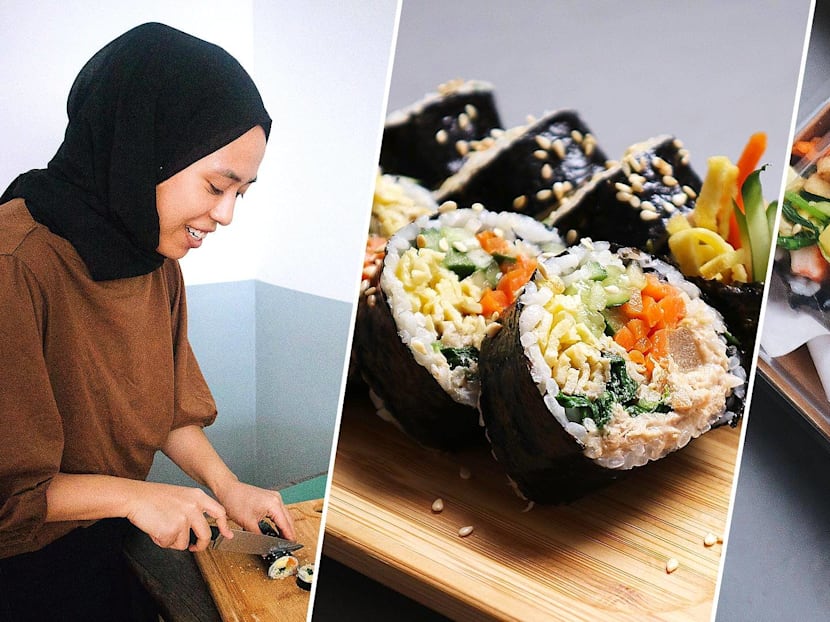
Her gochujang mayo is the condiment every table needs.
Every once in a while, amid the accounts of sasaeng fans penning letters to their idols in blood and hard stans attacking their oppas on the red carpet, you hear a story that makes you realise the K-scene is not entirely made up of deranged beings.
Like most of these stories, this one begins with an obsession with a Korean drama: The 2004 series Full House. But unlike the others, it ends with a love letter penned in something much less menacing: Delicate swirls of gochujang mayonnaise and soft wisps of beef bulgogi.
Ninez Ramlan, 28, spent her teenage years as many other teen K-fans do — obsessively watching her favourite shows. “I don’t want to admit that I’m a fangirl but I am!” she admits with a squeal. “I got hooked when I was 14 and started listening to Korean songs before progressing into full Korean fangirl mode. It became my lifelong dream to step onto South Korean soil.”
The interior designer started saving up the moment she got her first full-time job. Seven months later, in 2017, she was on her way to Seoul with friends. “When I got there, I felt connected with it because the culture was so similar to what I’d watched,” says Ninez, who’s learnt to speak Korean at a decent-enough level to order meals from kindly ajummas. “The people were so friendly and made me feel so warm.” The moment she got back, she booked a return trip and visited again last year.
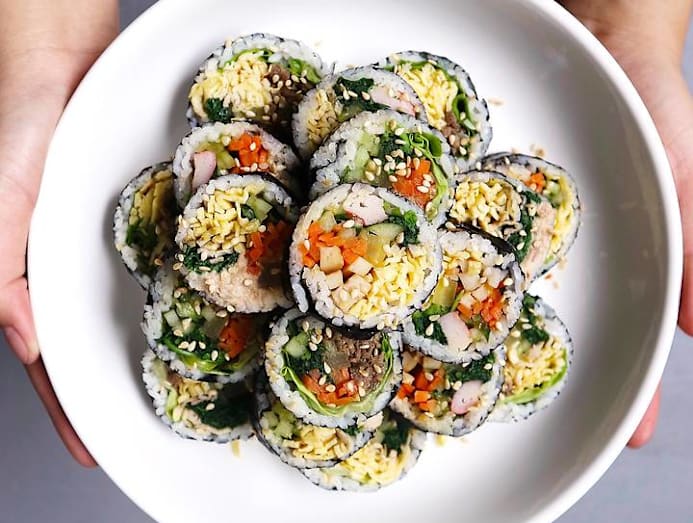
So when Ninez decided to start a home-based business while she was working from home during the Circuit Breaker, it was a no-brainer what she should make: Gimbap (sometimes spelled kimbap), Korean-style rice rolls bundled in seaweed and crammed with different fillings, which she tried multiple times on her trips. Think a larger, more rustic version of Japanese maki, with the rice typically seasoned with sesame oil and salt only instead of vinegar. “I wanted something that wouldn’t consume a lot of my time ’cos I’m still working from 9 to 6, and I really love gimbaps,” explains the self-professed foodie, who’s been cooking and baking since she was 13 and was inspired by her mum, a “really great cook”. “Plus they’re quite hard to find here in Singapore, especially halal ones.”
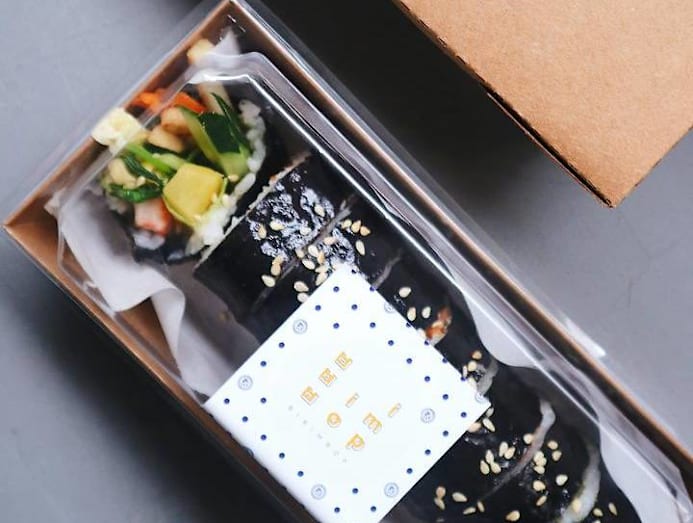
Enter the adorably named Bibimbop. The Instagram-marketed biz offers gimbaps in three flavours: Classic; Tuna; and Beef Bulgogi. There’s also a Trio bundle that has all three flavours for $23, and a side dip of gochujang mayonnaise for $1.50. Ninez wakes up at 6am on weekends to make everything fresh and sends out the orders via a delivery company on the day itself. Only 60 rolls each week — 30 on Saturday and 30 on Sunday — are available.
While she tries to stick to traditional recipes as far as possible — down to blanching the carrots and spinach and painstakingly rolling the rice in salt and sesame oil — she’s tweaked the filling to suit the Singaporean Malay palate. Non-halal ingredients like rice wine vinegar and Korean corn syrup have also been substituted for Ninez’s special blend of lime vinegar (used to marinate the beef) and a brown sugar-plum sauce mix, respectively.
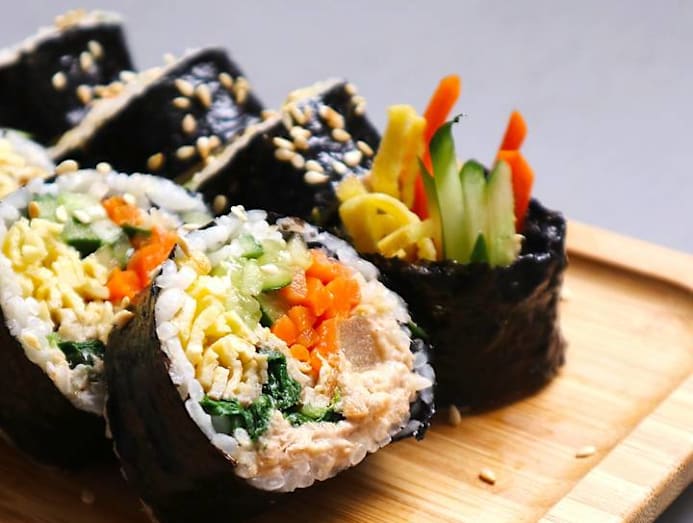
Of the three flavours, we like the Tuna best, with its smooth, familiar blend of canned tuna (Ninez uses only tuna in water for a cleaner finish) and Best Foods mayonnaise. It’s simple comfort food that we wouldn’t mind eating every day. The rolls — packed with lightly flavoured Vietnamese short grain rice — look a tad home-made and aren’t as expertly sliced as, say, in a Japanese restaurant. But they come in neat boxes with a cute Bibimbop sticker and card.
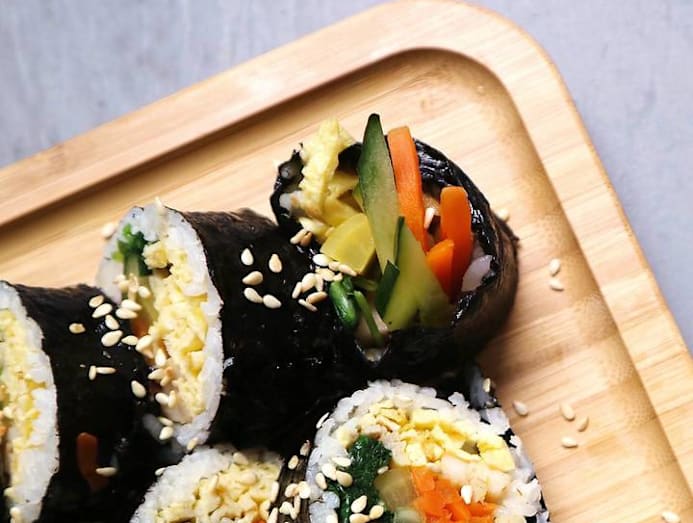
The more mildly flavoured Classic version (with crab stick and fish cake slices) on the other hand, is a nice canvas for Ninez’s yummy, umami homemade gochujang mayo, which we’d love to swirl everything from grilled chicken to veggie sticks in.
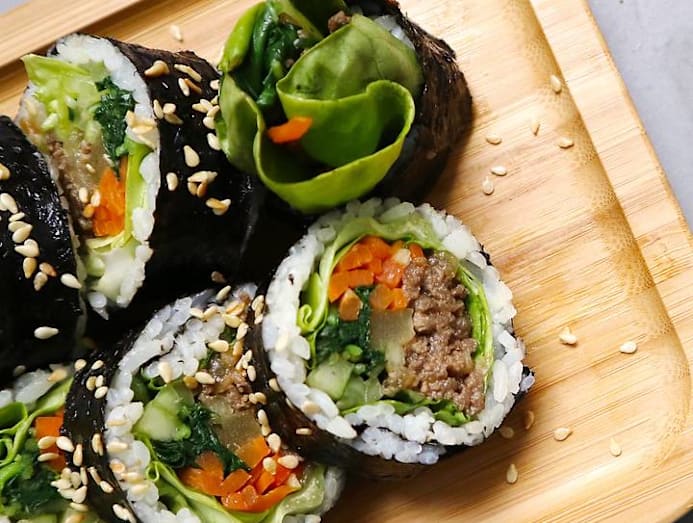
Our least favourite of the lot because the beef has a slightly gamey taste, but this is also the version Ninez says she’s still perfecting.

Everything you see on Bibimbop’s Instagram account, from the logo to its menus, was designed by Ninez herself, a Lasalle graduate. “I wanted to create something that would capture the mood [of Korean pop culture]. Something catchy, cute, bubbly and friendly,” she says. The multi-talented millennial also does all the Instagram marketing herself, and aims to launch special flavours in addition to her core menu every two weeks or so.
Still, she has no plans to make Bibimbop her full-time job. “I’m just fulfilling my need to cook every week instead of just lazing around on the weekends! I don’t want the biz to be so big and become a chore.”
Of course, the fangirl needs time for her third South Korea vacation too. In fact, she’d already booked a ticket when Covid-19 hit. “I can’t wait to enjoy Korea again when the situation gets better — I’ve been planning since I got back from my last trip!”
Order via Bibimbop’s IG @bibimbop.sg. Pre-orders for the weekend ahead open every Monday. Pick up is available from the Bukit Batok area. Alternatively, there’s islandwide delivery for $10.
Photos: Bibimbop