Bad knees holding you back? Cartilage repair may help you bounce back
An orthopaedic surgeon explains how treatment innovations are supporting knee health and speeding up recovery.
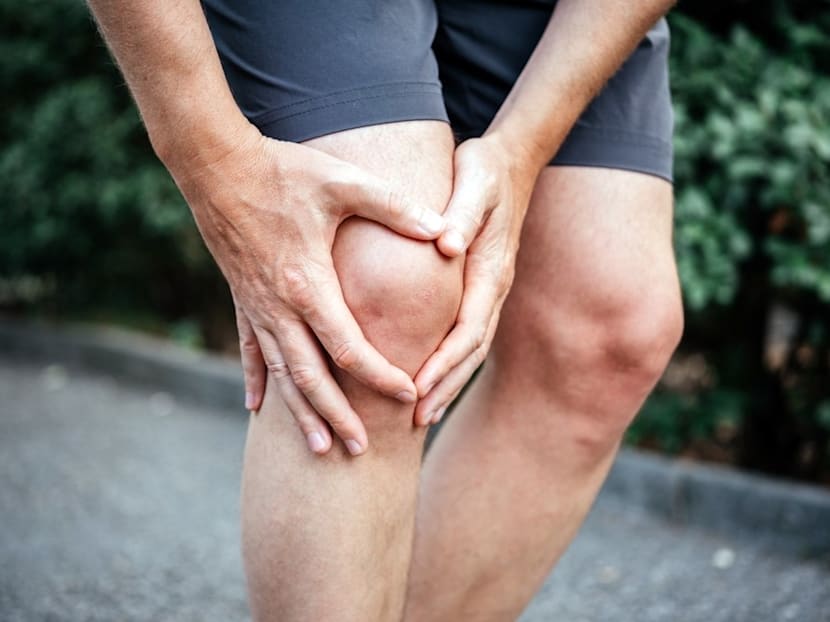
Many may not notice cartilage damage until it shows up as knee pain. Photo: Shutterstock

This audio is generated by an AI tool.


Brought to you by

Years of engaging in sporting activities had taken a toll on one of Dr Francis Wong Keng Lin’s patients, a man in his mid-50s. Despite undergoing treatments like injections and physiotherapy, the patient – a competitive golfer with an active lifestyle – continued to struggle with cartilage damage in his knee.
Cartilage is a thin layer of connective tissue that covers the ends of bones in a joint, such as in the knee, allowing smooth movement. With no blood or nerve supply, patients may not immediately notice damage caused by injury or ageing.
“You feel pain when the cartilage damage is so significant that the bone is no longer supported. This triggers a chain reaction, where other parts of the joint become inflamed constantly,” said Dr Wong, orthopaedic surgeon-scientist and senior consultant at Oxford Cartilage & Sports Centre, Oxford Orthopaedics, and adjunct associate professor in the department of orthopaedic surgery at the National University of Singapore.
“For my patient, when non-surgical treatments were no longer effective, he underwent cartilage repair together with a meniscus repair. The procedure restores the smooth surface of the knee joint, allowing it to function properly again,” he shared.
TREATMENT OPTIONS AND CONSIDERATIONS
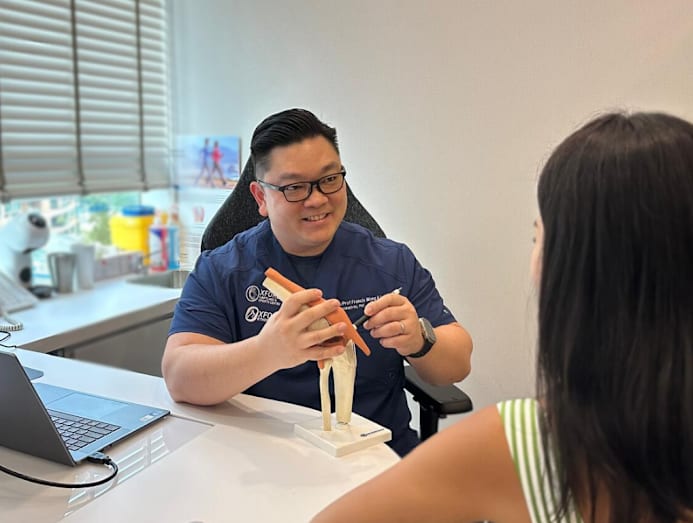
According to Dr Wong, there are several ways to treat cartilage damage, ranging from conservative measures like physical therapy and over-the-counter medications to intermediate treatments that use hyaluronic acid-based injections, and more invasive procedures like debridement or cartilage repair surgery.
He explained that when developing a treatment plan, each patient should be viewed holistically. This means taking into consideration their activity level, medical history and personal expectations, along with assessing the severity of the cartilage damage. Where possible, cartilage-preserving procedures – such as knee cartilage repair – are preferred over knee replacement, as maintaining the natural joint maximises options for any future treatments that may be required, said Dr Wong.
Patients who need surgical knee cartilage repair may also prefer minimally invasive treatment, choosing keyhole surgery over open procedures, he added. With keyhole surgery, injury to the muscles and tendons around the joint is minimised, enabling faster recovery.
WHAT TO KNOW ABOUT THE MICROFRACTURE TECHNIQUE
One of the earliest surgical methods used to treat cartilage damage is microfracture, a keyhole procedure where surgeons create small holes in the bone about 2mm to 4mm wide and 3mm deep. Microfracture is widely available, cost-effective and relatively straightforward to perform.
The main challenge with microfracture lies in its demanding recovery and the risk of “burning bridges” for future procedures. “Patients must avoid putting weight on the affected joint and refrain from exercise or sport for up to nine months. Once a microfracture is performed, the subchondral bone may have poorer response to subsequent cartilage treatments,” noted Dr Wong.
Other possible risks include trauma to the subchondral bone, the layer that supports the cartilage from beneath. In some cases, cysts or bone spurs may develop, causing further damage and accelerating wear and tear.
Research shows that cartilage formed through microfractures may be of poorer quality and less able to withstand normal knee stresses. “This is what we refer to as scarring cartilage. Eventually, it breaks down after two or more years and patients may once again experience joint pain,” said Dr Wong.
To overcome these limitations, newer approaches focus on enhancing the body’s natural healing response.
SUPPORTING CARTILAGE REPAIR WITH BIOLOGICAL SCAFFOLDING
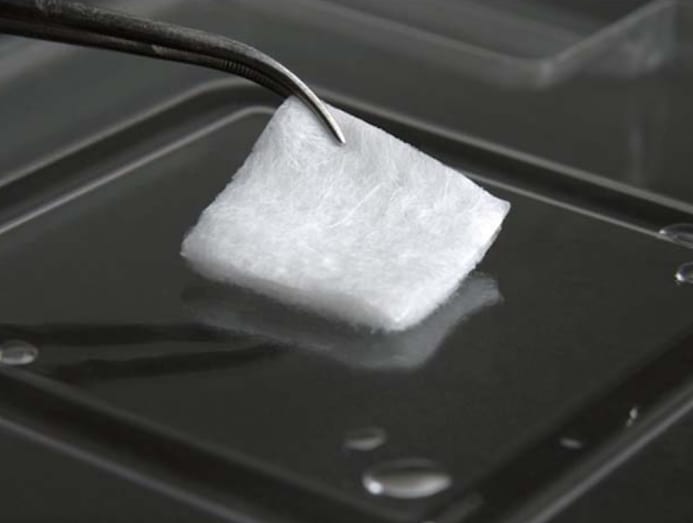
To encourage cartilage regeneration, Dr Wong uses a technique that supports the body’s own repair process. He prepares the bone surface to allow small punctate bleeding (tiny bleeds that release healing cells) from the bone marrow, then fills the damaged area with a biodegradable, non-woven scaffold made of hyaluronic acid fibres such as Hyalofast, which serves as a framework for new cartilage growth.
Dr Wong explained that hyaluronic acid is a key building block of cartilage. The scaffold captures bone marrow bleeding to form what he describes as a superclot, which stimulates nearby healthy cartilage to grow into the area. Over time, the scaffold dissolves, making way for new tissue to form.
In the golfer’s case, Dr Wong used the Hyalofast scaffold to repair the cartilage. Because the procedure is less restrictive in its recovery compared to older methods, the patient was able to participate in tournaments within six months.
BACK TO ACTIVE LIVING
For many patients, cartilage repair helps restore mobility and allows them to resume activities they enjoy. “I have patients back in sports with no issues,” said Dr Wong. “One is a basketballer in his 20s who returned to competitive training six months after his procedure.”
He advises individuals who undergo knee cartilage repair to focus on rebuilding their range, strength and balance through activities such as resistance training, yoga and reformer pilates. “For those unsure how to start, I always recommend a visit to their orthopaedic doctor or physiotherapist for an assessment of what can be done to improve their musculoskeletal health,” he said.
Speak to your orthopaedic surgeon about treatment options for knee pain.