10 million meatballs a year: All the things you didn’t know about IKEA Singapore’s food
We met Aeson Ong, who has looked after IKEA Singapore’s food offerings for the past decade. He reveals everything that goes into launching locally-inspired dishes, taste-testing the food before it goes on the menu, and fun facts about everyone’s favourite Swedish meatball dish.

Aeson Ong (left) taste-testing food for IKEA Singapore with CNA Lifestyle. (Photo: CNA/Try Sutrisno Foo)

This audio is generated by an AI tool.


Some people go to IKEA in search of laundry racks, ziplock bags and Billy bookcases. Others go for the chicken wings.
There’s a reason every table in the Swedish Restaurant seems to have a plate of the crispy, fried wings, in addition to the perennial global favourites of meatballs and salmon.
Did you know that the restaurant uses only wings from chickens that are at least 40 days old? As for the recipe, there’s no secret ingredient, IKEA Singapore’s Food Manager Aeson Ong divulged to us. “It’s basic marination. The magic is just in that they are served fresh and hot.”

Ong, 47, has the coolest job you’ve never heard of: It covers everything to do with IKEA Singapore’s food, from menu and user experience design to deciding what dishes to roll out or retire, sourcing for suppliers and even visiting the suppliers’ premises to make sure the workers are treated fairly.
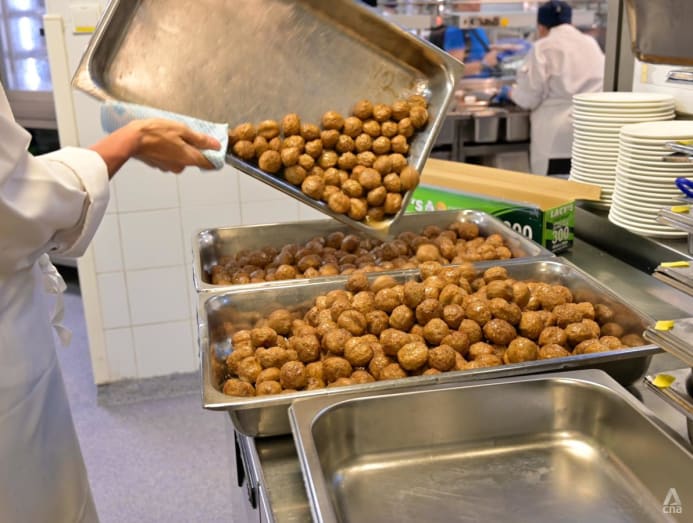
He’s full of interesting facts about your favourite dishes, such as the fact that IKEA Singapore sells an average of 10 million meatballs a year across its three outlets. How many plates is that? Well, the meatballs come in servings of eight, 12, 16 and 20, so you do the math.
And, did you know that suppliers are instructed to make sure the meatballs are not perfectly round? They should be a little oddly shaped, because that’s how a Swedish grandmother would make them by hand, he divulged. (The meatballs in Singapore contain beef and pork from Australia, while the halal meatballs are made of 100 per cent beef from Malaysia.)
Ong is also the man in charge of giving visitors new dishes to look forward to, such as the limited-run specials during each festive season.
For instance, there have been a pork mille-feuille loin fillet with truffle mushroom sauce for Chinese New Year; a caramelised gula melaka cream cake for Hari Raya celebrations; smoked turkey ham with herbs for Christmas; and even a crayfish with chilli crab sauce bun for Singapore’s National Day.
Some ideas for new dishes are born out of brainstorming sessions with his team, while other ideas originate with Ong, such as the truffle potato croquette currently available at the Swedish Bistro takeout counter, which went viral on TikTok; it came about because his eight-year-old daughter loves croquettes.
Ong, who has been with IKEA Singapore for 10 years, is, naturally, a foodie. How did he land the job, and what qualifies him for it?
“An ex-colleague first approached me back in 2014 to apply for the position of Kitchen Production Manager at IKEA Alexandra. I was initially hesitant because the role involved shift work and was highly operational. However, after the interview, I learned more about IKEA's vision and found the role inspiring. I realised that it aligned perfectly with my passion for food,” he said. Over the years, he worked his way up to his current position of Food Manager.

Although he earned a culinary diploma at age 30, his training was initially in business as well as electronic and computer engineering. His parents ran a business in apparel and embroidery, and although his father was a good cook, Ong often found himself alone at home after school, cooking himself a lunch of baked beans and mushrooms. Later, after going to cooking school, he interned at restaurants where he had the opportunity to learn about molecular gastronomy.
These days, he spends his time in management meetings, doing audits and rolling out things like “a 1kg snail-shaped sausage, Little Shark buns and alien macarons”.
“As we do not have any chefs or R&D teams in the IKEA Swedish Restaurant and Swedish Bistro, we often gather our kitchen teams to help brainstorm and sample new food. This can mean up to 150 samples per day when festivities are just around the corner,” Ong said.
“The process typically involves testing the various food components that make up the dish separately, and from there, we discuss how to pair the different flavours to make up one dish. Some of our key priorities during sampling would be taste, texture, and visual appeal,” he explained.
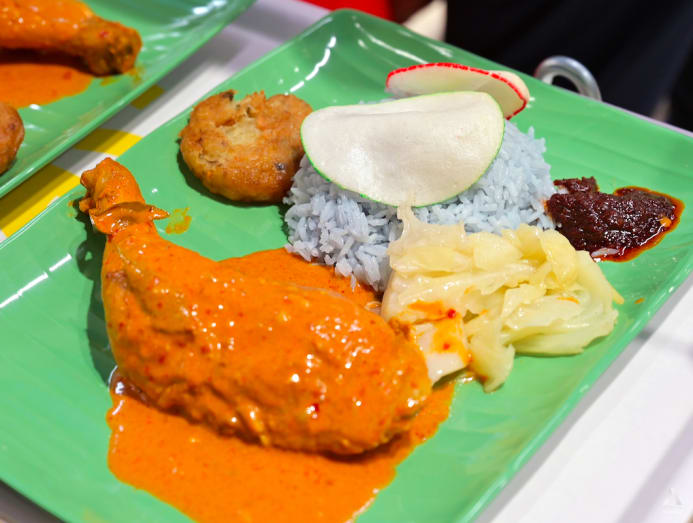
“Take, for example, the nasi kerabu and curry chicken leg that we launched for Raya celebrations earlier in March – we sampled different variations of the sauces and rice before deciding on the final dish that balanced the flavours to create a harmonious and satisfying meal experience for our customers.”
Apart from adding new local dishes to the menu at festive periods, IKEA Singapore also tweaks its offerings to inject locally relevant flavours with fusion cuisines. One such dish offered in the recent past was crayfish and organic spaghetti with mala sauce. This was “a combination of seafood, which is widely popular among the Swedish; and the mala flavour from the Chongqing and Sichuan regions loved by many,” Ong said.
Dishes that were dreamed up but ultimately rejected include deer sausage, durian ice cream and bubble tea. “We decided not to launch them as they were less compatible with local palates compared to other dishes like our D24 Durian Cream Cake,” Ong said.
To ensure the quality and consistency of the food served at the restaurant, ingredients are prepared throughout the day every two or three hours, Ong revealed. Effective communication in the kitchen is also emphasised.
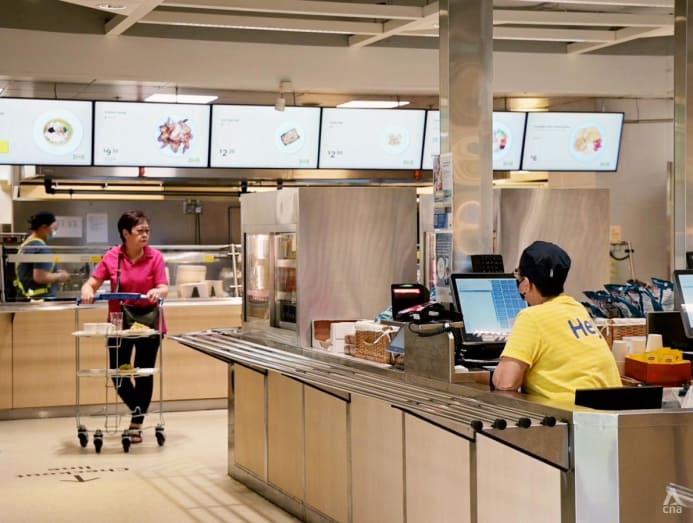
For instance,“The role of the first server in the line at the food counter goes beyond simply serving food. They also have to monitor the crowd and the queue closely, and share timely updates to ensure the kitchen team doesn’t over-prepare ingredients.”
As for the challenges of his job, one of his current projects is making sure that 50 per cent of the main meals offered at the restaurants are plant-based by 2025. The restaurants already have plant-based options such as Plant Balls, meatless lasagne and a salad range that has been expanded to include locally-grown greens, in response to “evolving consumer needs”.
Evolving food preferences are things that Ong must keep on top of. “In the past, consumers used to prefer dishes with richer flavours. Over time, we noticed a shift among locals towards healthier food options. Customers are increasingly looking for lighter, plant-based meals and incorporating more vegetables and lean protein into their diets,” he said.
And, “As consumers become increasingly health conscious and lean towards food offerings, we want to address customer preference for healthier food choices by offering dishes with lower sodium levels, less sugar, lower calories and less fats," he added.
"Moving forward, we will look at how we can provide lower-sodium menu items to help our customers manage their sodium intake for a healthier lifestyle, in line with the Health Promotion Board's goals to cut down the Singapore population’s sodium intake by 15 per cent over the next five years.”
On top of all that, “One of the most challenging parts of my job is maintaining a healthy body weight with all the food tasting sessions!” Ong admitted. “It is always interesting to try new dishes, but the calories add up quite quickly when we have to sample food often.”
That’s what happens when you’re in charge of piloting a Swedish meatball wonderland that also has nasi kerabu, mala pasta sauce, D24 durian cream cake – we could go on, but this is really making us want to grab a tray or two.