Pocky, Pretz and Osaka's 'Running Man': We went behind the scenes at Glico’s factory in Japan
CNA Lifestyle visited Glico’s facilities in Japan to find out how popular snacks like Pocky and Pretz were produced, and how the “running man” became an icon.

From left: The Glico running man signage in Osaka and the Glico factory in Kobe manufacturing Pretz biscuit snacks. (Photos: CNA/Marcus Mark Ramos)

This audio is generated by an AI tool.


Back in 1966, someone in Japan had an ingenious idea for a new snack: What if you took a crisp biscuit stick, dip it in smooth, velvety chocolate, and leave one end free as a “handle” for some mess-free munching?
The result was Pocky, one of the most instantly recognisable snacks from food company Glico. It was also the natural extension of yet another popular product it had debuted four years earlier, its more savoury cousin Pretz.

“We had Pretz (first) and our marketers created an idea. If we coated Pretz with chocolate, maybe it could be interesting,'' explained Hideaki Nagahisa, chief operating officer of Glico Asia-Pacific.
While both products have become synonymous with Glico, not many know that the company has actually been producing a diverse range of snacks for more than a century. And I was in Japan to find out more.
BAKING BISCUITS IN KOBE
My first stop was in Kobe for a behind-the-scenes tour at one of their factories, where one of their flagship snacks, Pretz, were made.
After donning protective gear and going through meticulous checks at various sanitary stations, I entered the building and was immediately greeted by the rich scent of freshly baked dough and the warm hum of machinery in motion.
I caught a glimpse of the familiar stick shaped biscuits lined up perfectly on moving conveyor belts, taking a journey through various stations that began with an industrial-size contraption kneading a huge quantity of dough.
The finished mixture was broken down into smaller pieces, and fed to another machine to be flattened. As the flattened dough ran along the conveyor belt, it was further split into even thinner strings, and the snack started to slowly take shape.
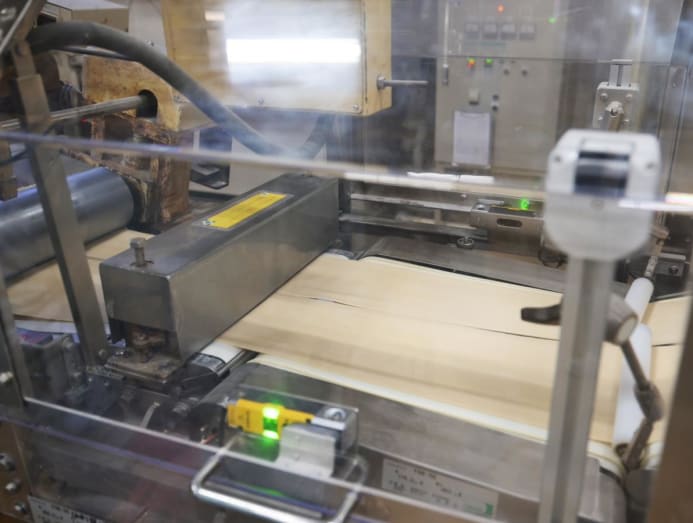
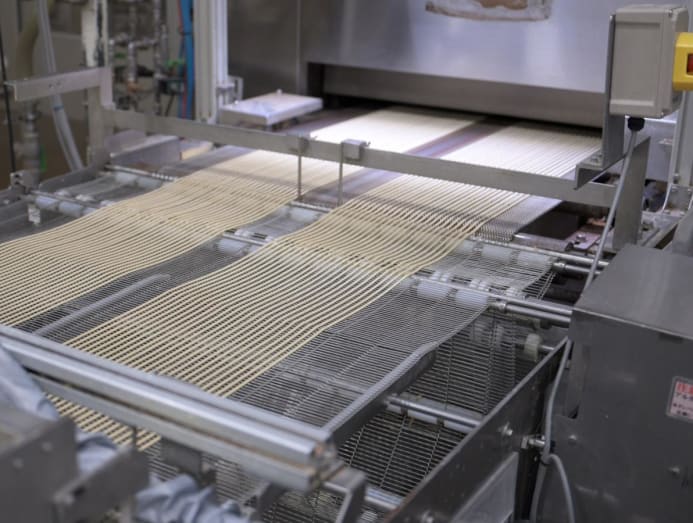
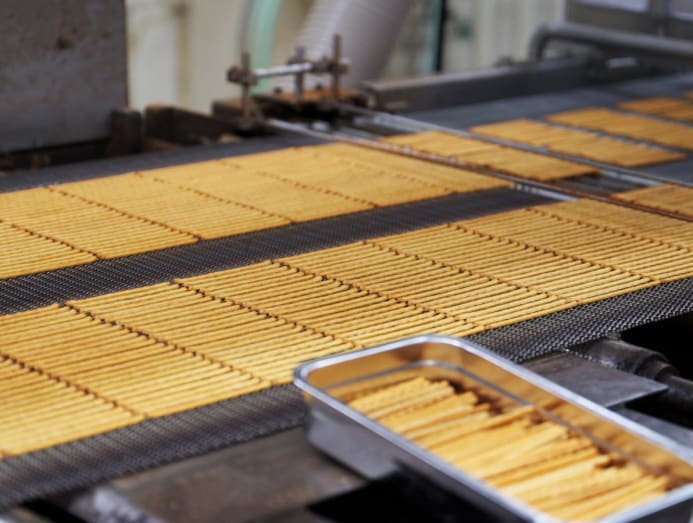
Things started to heat up as we moved towards the oven section, where it was time for baking. My guide directed me to peek into a small opening in one of the ovens, and I saw that the strings had already been cut evenly, forming endless rows of stick shaped biscuits.
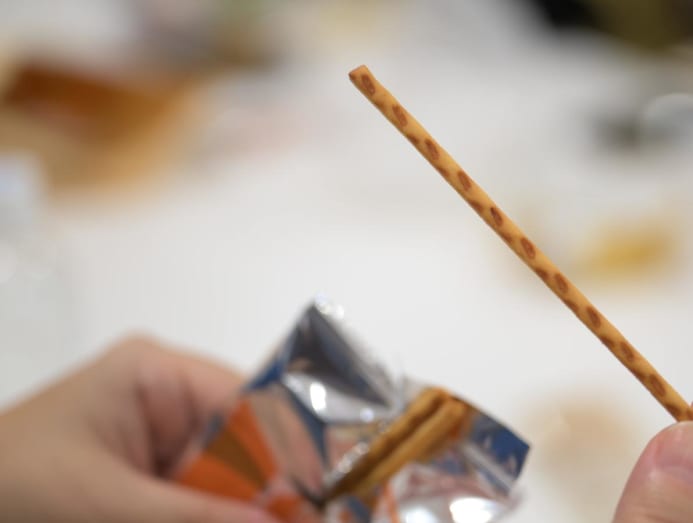
The sticks came out perfectly lined up in a golden brown colour, emitting a rich, oaty aroma. They continued moving along the belts to another machine where we were told they were being seasoned. Pretz comes in a wide array of flavours and on this day, they were making butter-flavoured biscuits.

To end off the journey, the biscuit sticks were packaged in a vibrant yellow boxes, ready to hit the stores.

THE GLICO MUSEUM AND THE ICONIC RUNNING MAN
A glimpse into how Glico’s snacks were made was all well and good but to get a bigger understanding of the company it was off to Osaka.
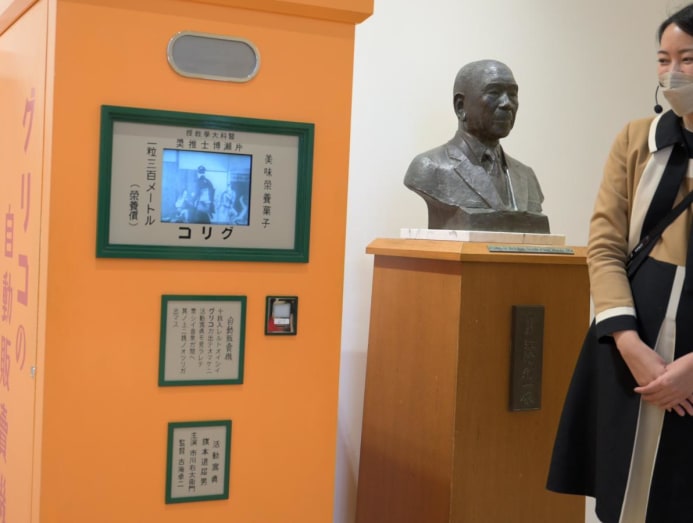
Nestled in the heart of the Japanese city, next to their headquarters, was a small, unassuming building that had a plain but welcoming exterior – the Glico museum, where they showcased their rich history to visitors.

Founded in 1922, decades before Pretz and Pocky, the company actually had its roots in another snack. Founder Riichi Ezaki had come up with a caramel candy called Glico in 1919. It contained a type of glucose that was extracted from, of all things, oysters.
The ingredient was called “glycogen”, from which the candy's name came from and, eventually, the company’s name, officially Ezaki Glico.
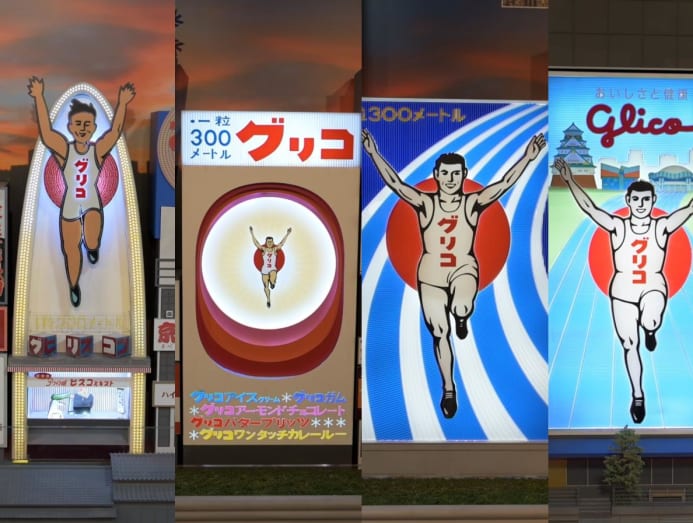
It was marketed as a kind of healthy energy snack, complete with the catchphrase “300 Meters In A Single Piece”. The distinctive red packaging featured also contained an image that’s now become synonymous not just with Glico but with Osaka itself – the iconic “running man” crossing a finish line with arms outstretched.



FROM POCKY AND PRETZ TO ALMOND MILK
With its rich history spanning over a century, nostalgia has quite an important factor in Glico’s success.
“If we provide a good occasion for our consumer, that would become a good memory,” said Nagahisa. “And a good memory would encourage people to buy Pocky.”
But as they’ve shown through the years, the company isn’t one to rest on its laurels. Pocky, for example, first started with just chocolate. Now you’ve got a wide range of flavours, from strawberry, green tea, banana, and even sakura, to name a few.
Mr Nagahisa mentioned that he even had requests from his friends when he was younger: “Some of my friends would request for different flavours like peach or pineapple.”
They’ve also been known to adapt to their different markets outside of Japan. “Recently, we had a Singapore-exclusive item - the Ya Kun kaya toast,” he said of the seasonal item that people have been requesting they bring back.
It hasn’t just been a matter of flavours. “The younger generation… care about sustainability. They also want healthier products and real authentic ingredients,” he added.
This was one of the reasons why they changed their Pocky formula three years ago. “Now, inside the stick, there is whole grain, and also fibre. Not only is it healthier, it is also more crispy,” said Nagahisa, who revealed their plans to launch more flavours in Singapore such as “Almond Crush” and “Crushed Fruit” Pocky, which will be coated with real nuts and fruit. But before that, they’ve also released a limited-edition baked cheesecake flavour.
For Pocky and Pretz lovers in Singapore, perhaps the most surprising thing about the company not many know of is the fact that they do so much more than just these snacks-on-sticks.
If you thought almond milk was a new thing think again. Glico has had its Almond Koka brand since 2014, although it’s only just being introduced to the region, starting with Thailand in 2022. It just launched in the Philippines in May and will be available in Singapore and Malaysia by the end of the year.
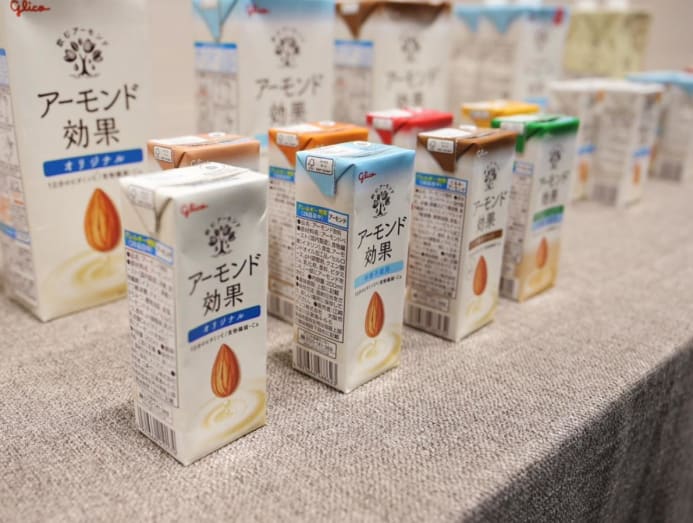
“We are actually the pioneers of almond milk in Japan. That is why we also want the same success story in this region,” said Nagahisa.
CNA Lifestyle was in Japan at the invitation of Glico.