What’s the fiery story behind devil’s curry? A Eurasian feast at Quentin's including sugee cake
In this instalment of Makan Kakis, Mediacorp Gold 905 DJ Denise Tan gets schooled on this unique Southeast Asian fusion cuisine – including sugee cake, prawn bostador, feng and yes, curry debal.
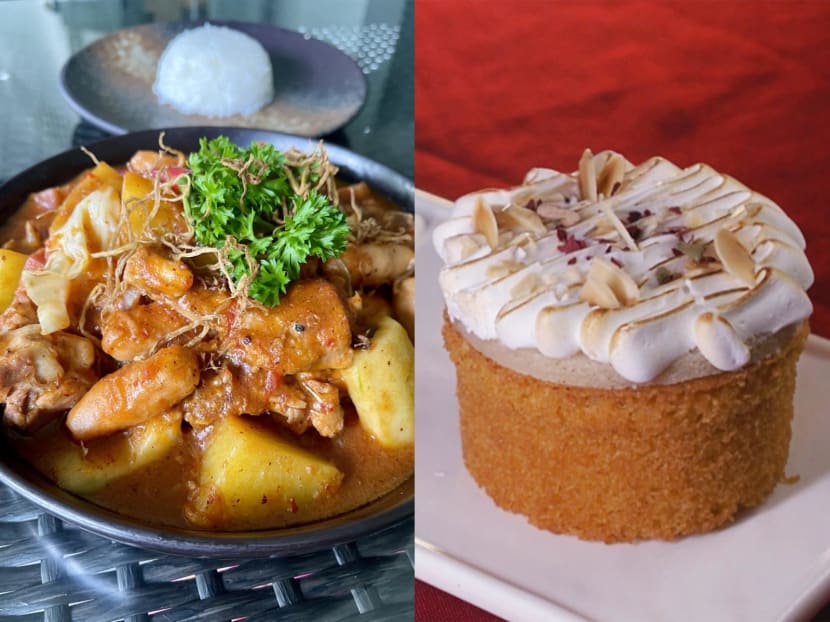
Curry debal and sugee cake at Quentin's. (Photo: Denise Tan, Mediacorp)

This audio is generated by an AI tool.


There was a lot I had to learn about Eurasian cuisine, but I didn’t know I was going to get my education overseas. More accurately, over the strip of water separating mainland Singapore from Sentosa, where my new Makan Kaki had arranged to meet me.
A familiar face from TV’s Kin and Sunny Side Up, actress Bridget Fernandez had graciously agreed to be my guide, but our first stop seemed a surprising choice until she mentioned Quentin’s – a name synonymous with Eurasian cuisine. I just hadn’t realised there was a second outlet on the island.
“This restaurant is precisely and perfectly placed in Sentosa because all the tourists coming through can experience the uniqueness of Eurasian culture through their stomachs,” Bridget said, before introducing me to the restaurant’s namesake, Chef Quentin Pereira.
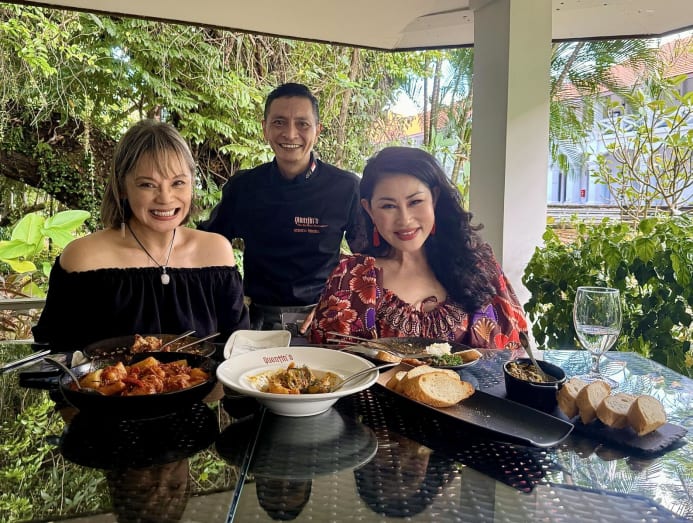
Most will know of Quentin’s at the Eurasian Association, but Quentin’s Bar & Restaurant is a newer, swankier incarnation. Opened on Sentosa in 2019, the same well-loved Eurasian dishes are served there, albeit in a more opulent setting.
For starters, Chef Quentin helped me with a simple definition. “Basically, Eurasian food is a traditional fusion. If it’s a European dish, it will have Asian influences. And if it’s an Asian dish, it will have European influences. Usually for Eurasian food, you can only eat it in a Eurasian house,” he said.
True enough, my experience of Eurasian food has been limited to homecooked dishes shared by friends. In that same homespun spirit, Chef Quentin still uses family recipes, passed down through several generations, at his restaurants. His grandmother taught his father to cook and when she had to work, it was his dad who made the family meals.
“Out of necessity during the war,” Chef Quentin shared. Necessity called again in 2000 when his father opened a kopitiam stall at Changi Business Park. Chef Quentin decided to help his father out, learning the recipes and the ropes of running a food business. Six years later, he and two friends opened a Eurasian restaurant along East Coast Road. After a valiant struggle to keep that outlet afloat, he was invited by the Eurasian Association to relocate, and business has since flourished.
The humble stall that began it all is no longer in operation, but the lessons learnt have been invaluable to Chef Quentin now that he’s running two restaurants and a catering business of his own.
“It’s my name on the line,” he said with a laugh. But Chef Quentin is serious when it comes to preserving Eurasian food for generations to come. His strategy? To share everything he knows through cookbooks. He has published two so far: Robin’s Eurasian Recipes and Eurasian Heritage. But his father (the aforementioned Robin) needed convincing to release the fiercely guarded family recipes.
“They used to believe that if you do not know how to cook and if you use their recipes, it will spoil the whole dish,” Chef Quentin explained. But sticking to his belief in changing with the times has benefitted both his business and the Eurasian community at large.
He said: “The best way to get people to know about the culture, the way we do things, is if they know more about the food that we eat, then they will be more inclined to try to do it and get a better idea of what Eurasian cooking is.”
I couldn’t think of a better segue for Bridget and me to invite ourselves into Chef Quentin’s kitchen. There, a colourful meal and my first lesson awaited.
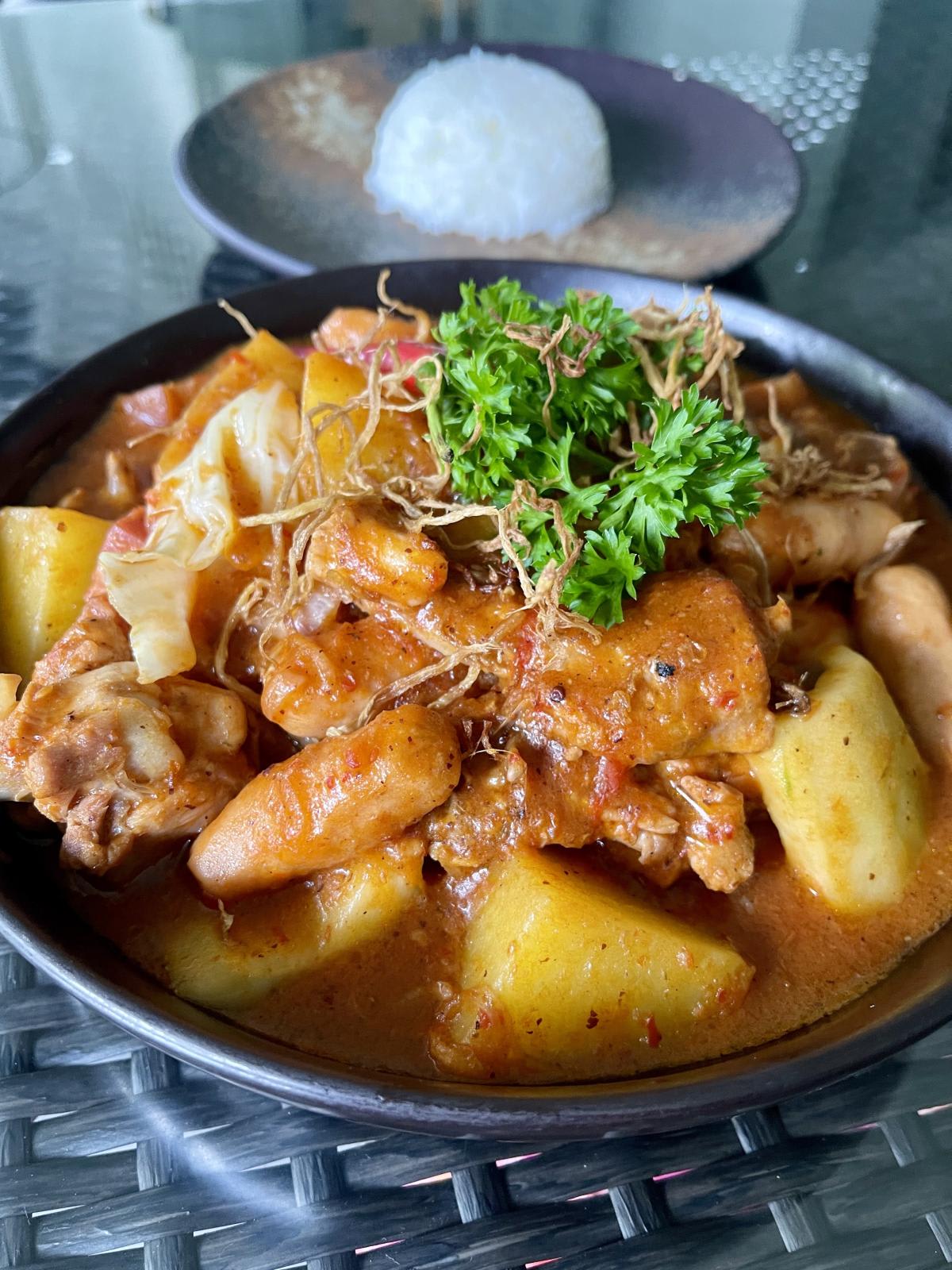
Keen for the signature Eurasian dish so spicy it calls to mind hellfire, I voiced my enthusiasm for devil’s curry but was immediately corrected.
“Everybody thinks it’s ‘devil’ because it’s hot. But ‘debal’ means leftovers,” Bridget said. “‘Debal’ is patois Portuguese. Because it was so fiery hot, it became more popularly known as ‘curry devil’,” Chef Quentin clarified.
Traditionally made from Christmas leftovers on Boxing Day, curry debal is an inventive dish to use up meat and veggies from the previous day’s meal.
“So sometimes they have babi panggang (grilled pork), turkey, whatever you have left,” Bridget explained.
For the restaurant though, Chef Quentin makes his curry debal to order using choice cuts of free-range chicken, smoked bacon and cocktail sausages.
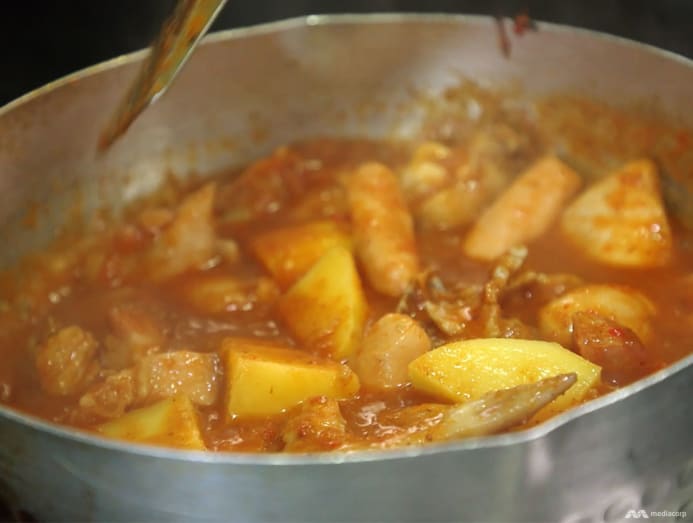

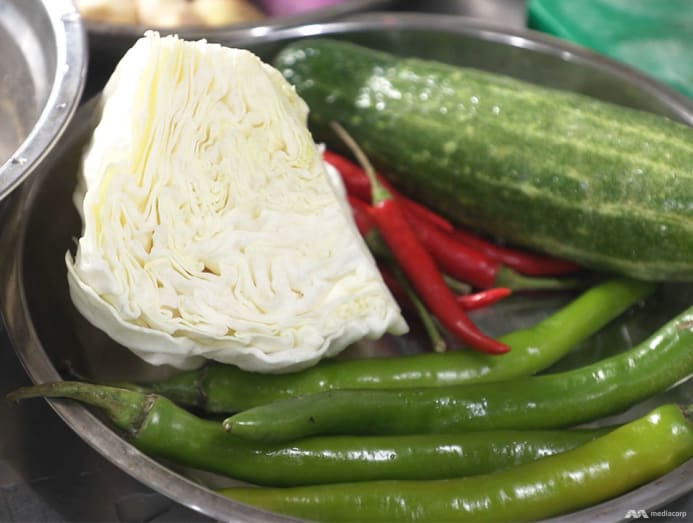
“Every family will have their own set of recipes, and this is my grandmother’s. Chillies play an important part because we use a lot of fresh chillies and dried chillies,” Chef Quentin said. Making sure the heat and flavour is balanced for guests is always a challenge, but at my request for the dish to be extra spicy, Chef Quentin threw in extra red chillis.
Grandma’s recipe called for a rempah (spice paste) fried with aromatics including red chillies, shallots and ginger. This was added to marinated chicken wings and drumsticks, along with the bacon, sausages, cabbage, cucumber and potato.
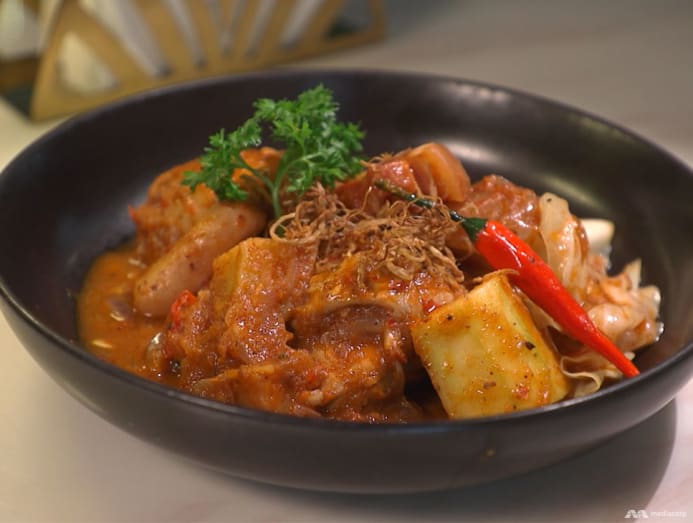
Lifted with lashings of white vinegar, the brilliant red curry debal (S$32.80) was garnished with crispy slivers of ginger and served smoking hot. White rice (S$2.80) and half a baguette (S$5) were a must for sopping up the fiery gravy.
Chef Quentin’s curry debal, with its zingy vinegar edge and triumvirate of smoky, fatty, salty protein was dynamite. To me, it was Eurasian culture lovingly presented on a serving platter. In which East and West converged, where Christmas meats and fragrant spices alchemized for a unique yet familiar flavour. Though different from the Nyonya and Chinese curries I grew up with, it still inspired feelings of comfort and homecoming.
Comparisons are inevitable, so I ventured to ask Bridget: How did Chef Quentin’s curry debal measure up to her family’s?
“It is different, but I enjoy the differences. Because every family makes ‘the best’ curry debal. Don’t ever argue with any family!” she replied with humour.
No arguments from me. It’s the nuances and little variations that make the eating more exciting. Take Chef Quentin’s use of vinegar for example. In Bridget’s family recipe, the acidic component sometimes comes from achar (pickled vegetables) instead.
“My late mother-in-law called it ‘white debal'. Made only when we want to finish up achar. I do white debal quite often as my own preference," she shared. Another resourceful way of incorporating the crunch of vegetables and the tang of vinegar.
The next dish from Chef Quentin also required that vital, sour element. Hearing I was a fan of offal, he surprised me with a heaping portion of the classic, but divisive feng (S$18.80). The stew is traditionally made with pig's innards, vinegar and a spice powder blend that includes coriander, turmeric, fennel, cumin and peppercorns. The acidity of vinegar serves two functions – as a preservative and to cut the pungent richness of the offal.

According to Chef Quentin, feng has a 500-year history that began with Portuguese ships carrying livestock for fresh pork to eat on long voyages. Those lowest in hierarchy were left with innards and other less desirable cuts, which they made more appetising by chopping into small pieces and stewing with vinegar. Southeast Asian spices were later added and the recipe evolved to what is now known as curry feng.
Thanks to Eurasian friends, I’ve had the pleasure of enjoying feng several times before, so I was thrilled to try Chef Quentin’s version. Bridget, however, confessed it’s a dish she has never acquired a taste for. Recipes vary, but many include intestines and head meat. Understandably, piggy off-cuts and innards aren’t the most palatable, but handled with care, they can be utterly transformed.
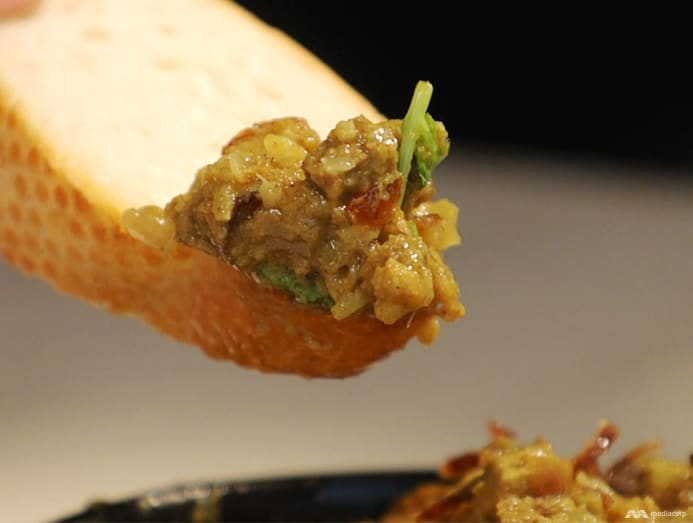

Chef Quentin was quick with assurances: “The one that we serve at the restaurant, we don’t use so much offal.” At Quentin’s, a larger proportion of pork shoulder and belly goes into the making of feng; along with some heart, liver and kidney, all finely chopped and stewed till tender.
The result was a green-tinted, ugly-delicious mess of meaty textures, giving off the tiniest porcine whiff. The vinegar, spices and sweetness of cooked onions worked well to temper the stronger offal flavours. The three helpings I slathered on toasted baguette slices and devoured were testament enough.
Even Bridget gamely took a bite, declaring: “I’m going to make my in-laws proud. And it’s (chopped) so nice and tiny, so I’m actually okay with it. Because the (curry) flavour overpowers whatever else is in there.”
True to his food philosophy, Chef Quentin has shared his feng recipe on the restaurant website, where his special feng spice mix is also available for purchase.
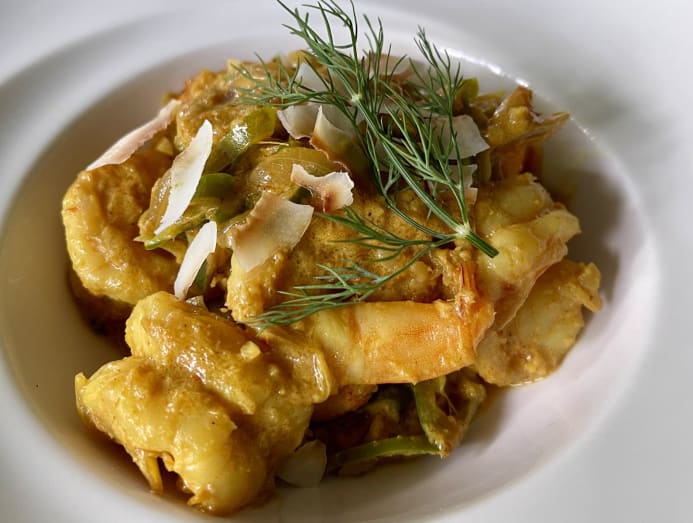
The third dish, prawn bostador, was entirely new to me. Thankfully, Bridget was there to translate. Bostador means “slap” in Kristang, which alludes to its spicy sting. The thick coconut gravy was flavoured with green chillis, onions, fresh herbs and spices like turmeric, which gave the dish its rich yellow hue.
The luscious sauce blanketed plump, deshelled prawns with a crystalline crunch I’ve never been able to achieve at home. Earthy and dangerously addictive with rice, the creamy prawn bostador was my new favourite Eurasian dish. However, its spiciness was nowhere as violent as its name suggests.

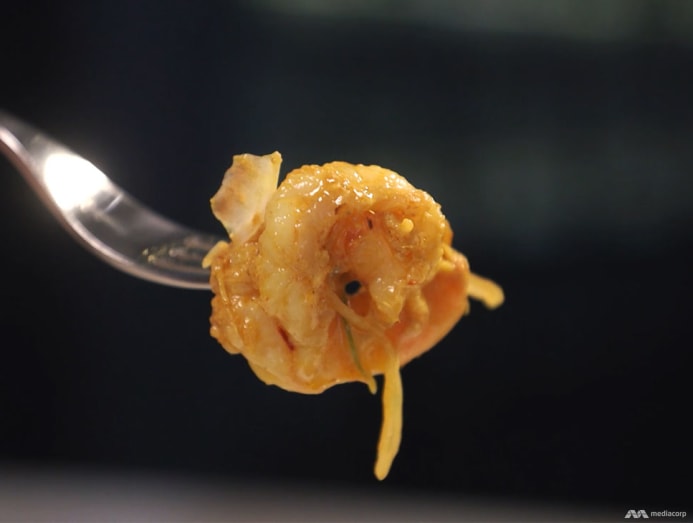
“It's milder so, half a slap,” Bridget quipped. “The green chillies these days are not as spicy as they used to be,” Chef Quentin concurred. He also revealed that prawn bostador has origins as a sandwich filling made with lots of green chillies. In Bridget's family, they call it "green chilli sambal", much like a Eurasian riff on hae bee hiam (spicy dried shrimp sambal) sandwiches. This observation from Bridget was another reminder of how beautifully blurred culinary and cultural lines can be.
For dessert, we left Sentosa and headed to Chef Quentin’s other restaurant at Ceylon Road. Nestled in the Eurasian Community House, this outlet has a more casual, laidback vibe. Seated alfresco on the patio with live music for entertainment, we awaited another quintessentially Eurasian delicacy. Named for its main ingredient of semolina flour (milled durum wheat), or the North Indian variant of sooji, sugee cake is a must-have at Eurasian celebrations like weddings and baptisms.
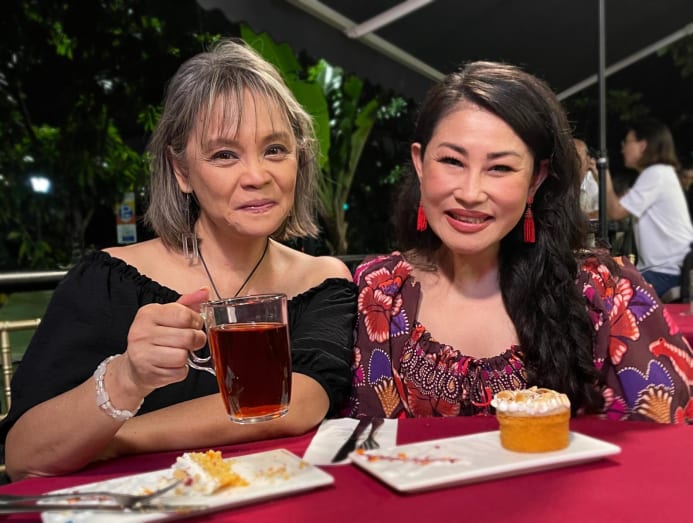
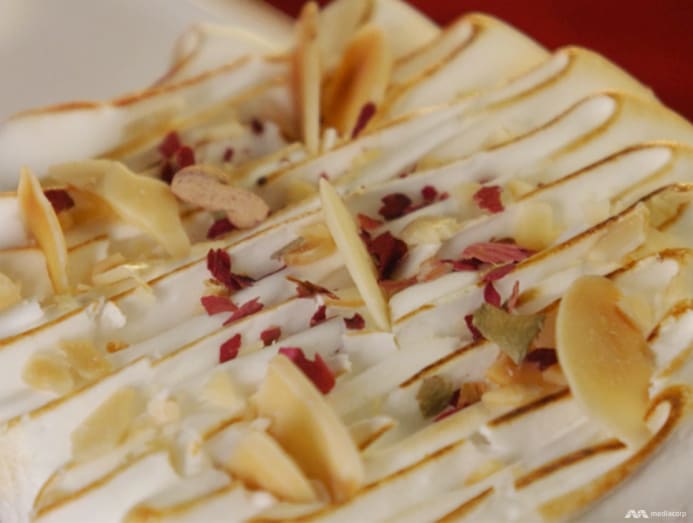
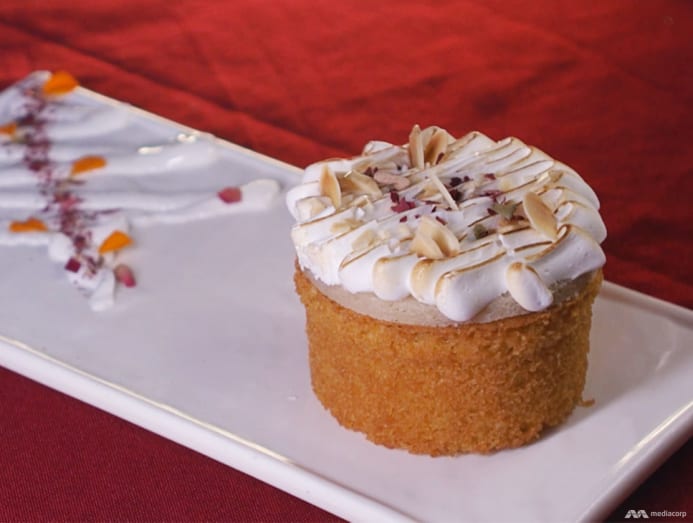
Chef Quentin serves his in individual rounds, with a marzipan cap and crisp royal icing. This traditional way of decorating the sugee cake (S$14.80) met with Bridget’s seal of approval. Slivers of almond garnish hinted at the abundance of nuts within, kissed by golden shades of semolina soaked overnight in butter.
“I think that one of the most important things about sugee cake is the texture,” Chef Quentin said. Indeed, coarsely ground, buttery semolina flour and three different types of almonds give his cake a crunchy, yet incredibly moist and fragrant quality. Once again, he was happy to share the recipe with us. Call it giving back and a desire for continuity.

“I’ve always been blessed with people having faith in me and wanting to keep the heritage and culture alive through the food,” he explained. Looking ahead to the future, Chef Quentin has hopes of passing his treasured culinary knowledge on to the fourth generation, just as his father did with him.
“I will definitely teach my boys how to cook Eurasian cuisine for their own families and to carry on the tradition, so that they can appreciate it and understand where we came from. You understand a culture better when you understand the food.”
I had only just begun to scratch the surface but certainly, the feast combined with Bridget and Chef Quentin’s hospitality, had given me a tasty glimpse into the kaleidoscope of Eurasian culture.
Quentin’s Bar & Restaurant is located on Sentosa at 2 Gunner Lane, Block 14 Mess Hall, #01-08, Singapore 099567. It’s open Tuesdays to Sundays, 11.30am to 3pm for lunch and 5.30pm to 10pm for dinner. Closed on Mondays.
Quentin’s The Eurasian Restaurant is located at The Eurasian Association Community House,139 Ceylon Road, Singapore 429744. It’s open Tuesdays to Sundays 11.30am to 2.30pm for lunch and 5.30pm to10pm for dinner. Closed on Mondays.
Catch Makan Kakis with Denise Tan every Thursday from 11am on Mediacorp GOLD 905.