4 luxurious New Zealand lodges where the scenery is the star
Spread out along the road between Christchurch and Queenstown, lodge hotels, many in remote spots, offer luxury with a sense of place.
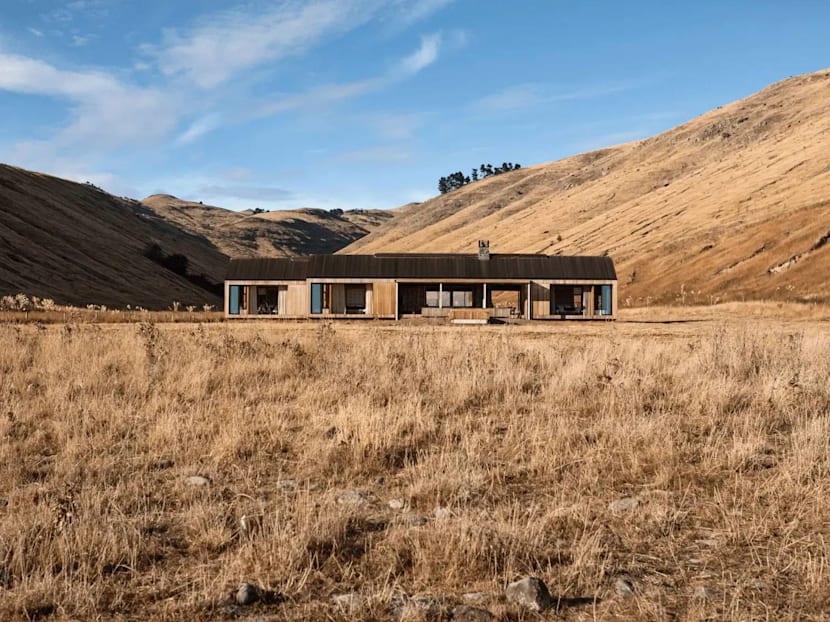
The Scrubby Bay lodge is barely visible from above. It’s a long, cedar-clad building tucked against a hillside. (Photo: Annandale)
Arriving in Christchurch, New Zealand, feels low-key: a short walk from the gate to a rental car counter, a city centre that’s more gardens than skyline, cafes that know the difference between a flat white and a long black. I picked up a black four-wheel-drive vehicle and a paper map, a reminder that out on the South Island, cell service might just fade and that roads could narrow to one-lane bridges. The plan was simple: drive south to Queenstown and let the lodges set the cadence.
New Zealand is known for its lodges, many of them originally modelled on colonial estates built for hunting and fishing. But in recent years, they have evolved. Many are now contemporary retreats rooted less in formality than in a sense of place. Some are starkly remote. Others embrace wellness, food or quiet luxury. Each draws its identity from the surrounding land, which often feels like the main character.
Many require a two-night minimum stay and offer inclusive packages covering guided hikes, gourmet meals and occasionally wine tastings. With almost 10 days to spend, I booked two nights at four distinct lodges, each one a counterpoint to the last, leaving gaps for coffee, short walks and the kinds of roadside views worth stopping for.
Each stop offered a different story: a private bay, a culinary outpost, a stargazer’s retreat, a lakeside sanctuary. The road between them — with its wild herbs, late lunches and detours with no name — told a story too. If there’s a single luxury in this part of the world, it’s time. The trick is to take it.
SCRUBBY BAY: A SECLUDED START
Christchurch to Queenstown is only about 300 miles, but those miles stretch through sheep country, limestone valleys, glacial lakes and alpine ridges. The roads meander past rolling farmland, rugged mountains and glacial-fed rivers so turquoise they almost seem unreal. On a map the distances look modest, yet the terrain tucks and looms; two hours turn into three with a detour or perhaps a sheep crossing. That geography all but encourages lodge-hopping.
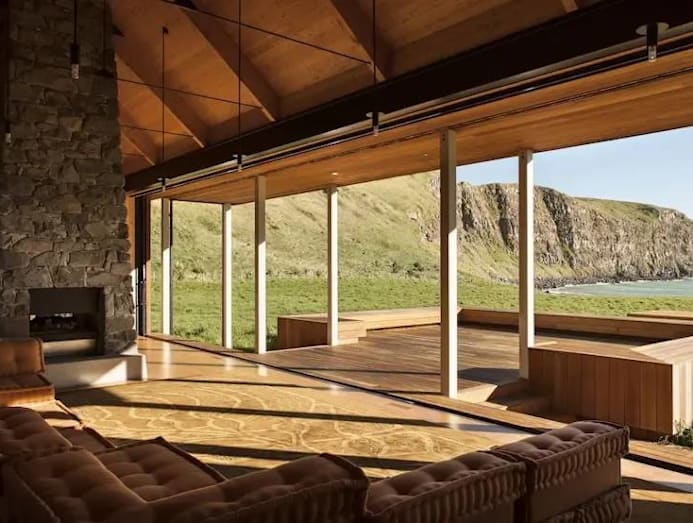
About 90 minutes southeast of Christchurch, the road to Scrubby Bay slices inland through farmland, then scales the ridgelines of the Banks Peninsula. The lodge, part of the larger Annandale estate, sits in a private bay accessible only by four-wheel drive (or helicopter). From above, it’s barely visible: a long cedar‑clad building tucked against a hillside, facing the Pacific Ocean. This is a self‑catered lodge, though meals can be prearranged. The first night, we grilled veggies on the patio, to the sound of waves. By morning, the only movement was sheep on a distant hill.
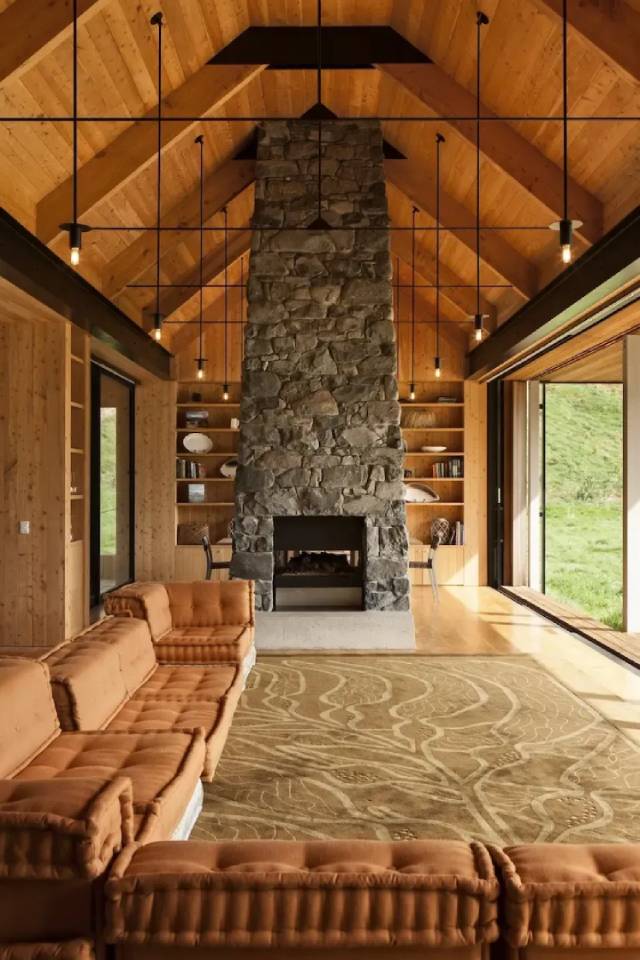
We spent our time doing quiet coastal walks along the bay, followed by long soaks in the heated pool. You can also bike on the property or book spa treatments. No reception desk. No room service. Just uninterrupted space — the kind that quietly resets your sense of time (about NZ$18,000, about US$10,165, or S$13,257, for two guests for two nights in the Scrubby Bay Villa).
After two days, we slipped back on the road and the scenery shifted quickly as the car climbed toward Arthur’s Pass, which serves as a gateway between the Canterbury and West Coast regions. When we reached Castle Hill, with its dramatic limestone formations, I decided to pull over and wander among the piles of giant boulders. This is where the first two movies in The Chronicles of Narnia”series were filmed. New Zealand is full of short, wondrous detours. This was one of them.
FLOCKHILL: HIGH‑COUNTRY HOSPITALITY
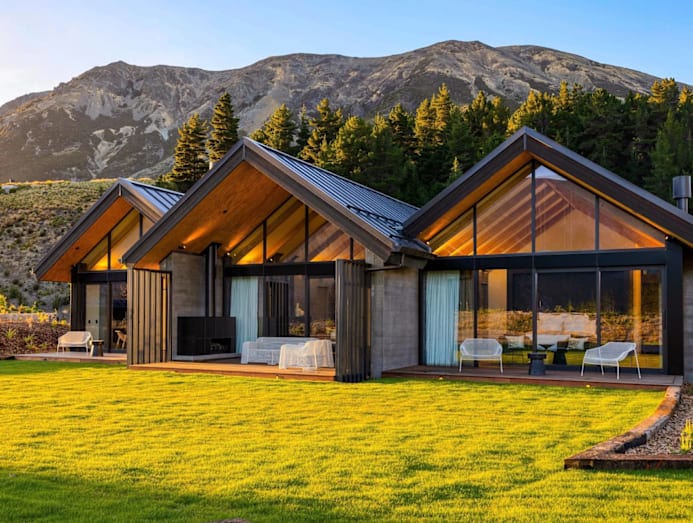
About three hours from Scrubby Bay, tucked into the Craigieburn Range, Flockhill sits on a 36,000-acre working sheep station where thousands of Merino-Romney roam. The lodge itself — just seven guest villas plus the four-bedroom Homestead villa — is all understated and deeply considered.
The focal point for a stay here are the meals, which are served at Sugarloaf, the restaurant in the simple stone and glass main lodge. Guests gather around a single table for multicourse dinners shaped by foraging and fermentation: alpine herbs, wild honey, dry‑aged meats from the surrounding land. A spa is slated to open later this year, but for now, it’s the most intimate, immersive experience. Time here is simple — one morning I joined the Kiwi-born chef, Taylor Cullen, to pick greens from their garden and that same evening, I watched sheepdogs at work across the wild valley (rates range from NZ$5,000 a night for a junior suite to NZ$25,875 dollars a night for a buyout of the four-bedroom lodge).
COFFEE AND CHEESE ON THE ROAD
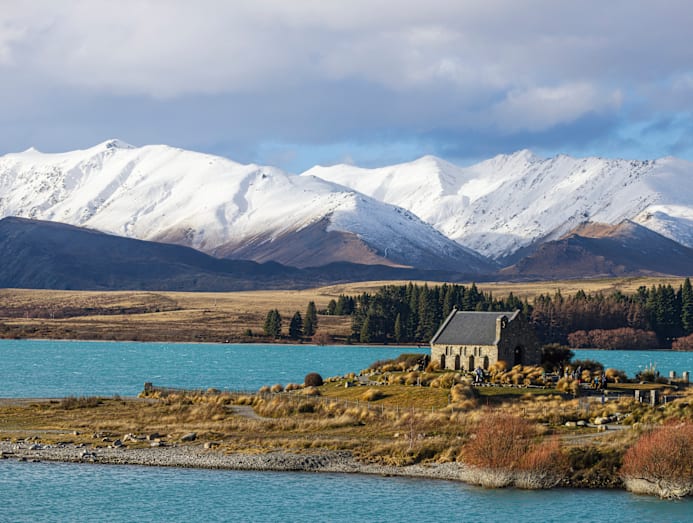
Leaving Flockhill and heading south, the road flattened into farmland. I took the advice of a sheep herder about stopping in Geraldine, a small inland town with an unexpectedly strong food culture. At Verde Cafe, locals lined up for flat whites and house‑baked scones, while a side market sold pickles, preserves and foraged ingredients. Nearby, Talbot Forest Cheese offered tastings of aged Cheddar and sheep’s milk pecorino — worth stashing in the car for impromptu picnics ahead.
The drive south led me through the Mackenzie Basin, where ochre fields give way to bright glacial lakes. In Lake Tekapo, I stopped for coffee at the Greedy Cow, a relaxed cafe known for its eggs, granola and pastries. I sat outside on a bench just watching a slow mill of locals coming by for provisions.
THE LINDIS: STILLNESS IN THE VALLEY
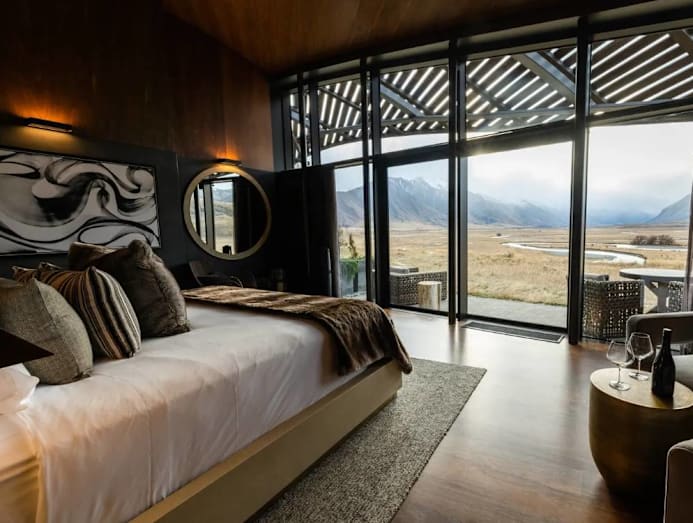
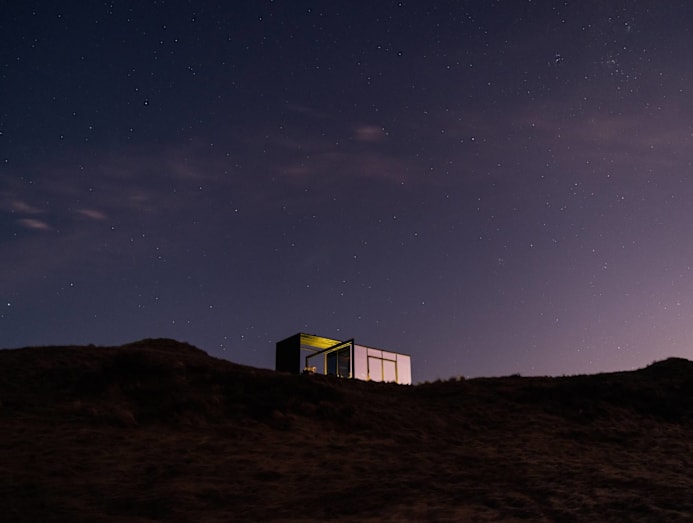
By the time I arrived in the Ahuriri Valley, it felt like the world had quieted down. The Lindis blends into the hillside, its undulating roofline designed to mimic the contours of the valley. The main lodge has just five rooms, but the real draw may be the mirrored pods a short walk away — stand-alone suites with panoramic views of the river and sky. Even inside, you feel like you’re outdoors.
Guests can get taken by helicopter to remote streams to fish for trout, ride horses through the high country, or simply sit still and watch the sky change. I chose the last option. In the evenings, I sat alone outside with a wool blanket and watched stars appear slowly, then all at once (rates for 2026 start from NZ$3,015 per night for a pod, for two adults).
WINE AND WIDE OPEN ROADS
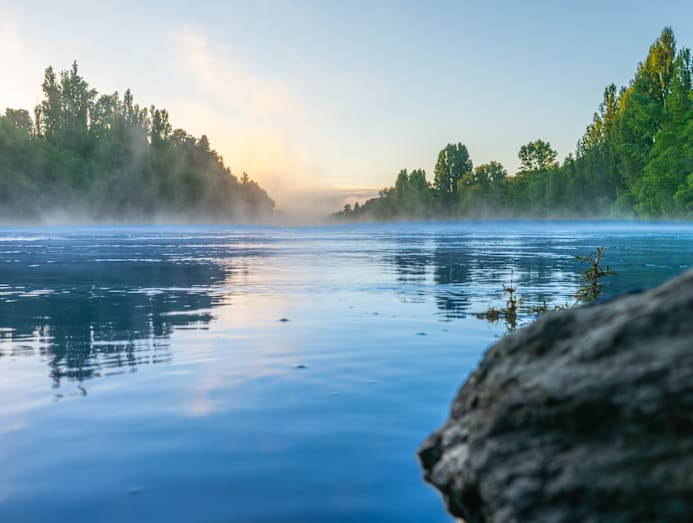
After Lindis, I detoured into the Central Otago district to visit the tasting room at the South Island outpost of Cloudy Bay, New Zealand’s well-known winemakers, in Cromwell (their restaurant is called The Shed). It offered a quiet counterpoint to the label’s busier Marlborough estate where their first vineyards were planted.
I sat on their terrace and tasted their dark and intense Te Wahi Pinot Noir, grown in nearby glacial soils, with notes of dusky brambles, wild strawberries and hints of violet. Lunch here is simple but thoughtful — local cheeses, smoked fish, heirloom tomatoes with olive oil and sea salt. From the winery, the road winds past Lake Dunstan and along the Clutha River. I pulled over one last time — no plan, just a roadside lookout — and stayed longer than I meant to.
ROKI: A GENTLE RETURN
My final stop was ROKI Collection Queenstown, a new wellness‑focused lodge set across from Lake Wakatipu, right in Queenstown. It was the perfect contrast to the others — less remote, more restorative. Here, the focus is on stillness, tranquillity and wellness: hydrotherapy circuits, individualized spa treatments, and minimalist suites designed to calm rather than impress. Everything faces the lake, even the yoga studio. After a week of silence and sweeping views, ROKI felt like a soft landing — a place to gather yourself before re-entering the world (bed and breakfast rates range from NZ$1,800 to NZ$32,000 depending on accommodation).
By Daniel Scheffler @ The New York Times.
This article originally appeared in The New York Times.