Rosewood’s opening in Munich heralds a new age of luxury for the German city
With the arrival of Rosewood Munich, the affluent city finally gets a landmark luxury hotel.
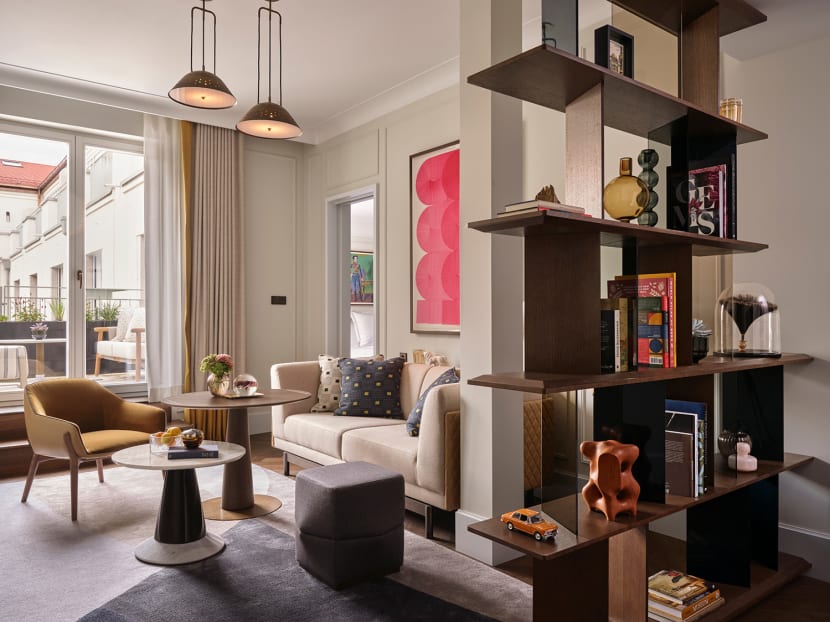
Inside the premier suite at Rosewood Munich. (Photo: Davide Lovatti)

This audio is generated by an AI tool.

BMW, Bosch, Volkswagen and Adidas. Those four massive global brands are as different from each other as night and day but they all have one thing in common — all four are headquartered in Munich.
The presence of these companies’ headquarters is just one example of how the Bavarian capital is one of the European economy’s growth engines. Munich has in fact, nurtured a quietly affluent population that enjoys a high disposable income to be splurged on luxury acquisitions and experiences. Think threads, fast cars and enough plush furnishings to tastefully deck out a three-storey townhouse.
Munich has everything to offer — except a landmark luxury hotel.
Enter Rosewood Munich, Germany’s first Rosewood hotel that opened in September 2023. It comes with all the bells and whistles of the renowned Hong Kong-based luxury hotel name. Despite its affluence, Munich did not have a grand landmark property to call its own — an oddity for a city that’s popular with domestic and international tourists ready to drop some serious cash.
“Munich is known for having a strong luxury scene, characterised by a mix of high-end businesses and a relatively strong spending power among its residents and visitors,” said Roland Duerr, managing director of Rosewood Munich. “The city is home to upscale boutiques, renowned fashion houses, luxury hotels, and fine dining establishments.”
HOTELS AS LIVING SPACES
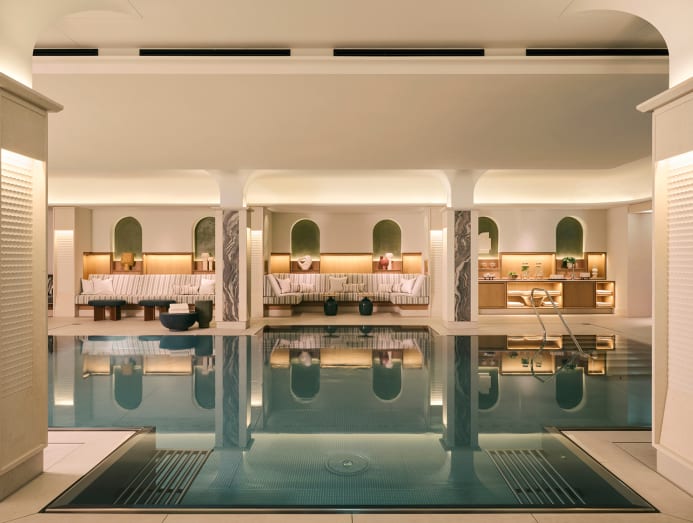
It’s a peculiarity as besides being a space of accommodation, hotels play an important role — almost as a living room for society. It’s a spot where languorous lunches can be had, spa treatments can be indulged in and where business meetings are held.
To that end, Rosewood Munich would tick many boxes. It’s smack in the middle of the Old Town, on Kardinal-Faulhaber-Strasse to be precise where Marienplatz, home to the famous glockenspiel, is just a three minute trot away. The famed luxury shopping districts of Maximilianstrasse and Theatinerstrasse are also within a 10 minute walk where most fashion labels can be found.
One can in fact, have a two-night stay here without having to hop into an Uber ride.
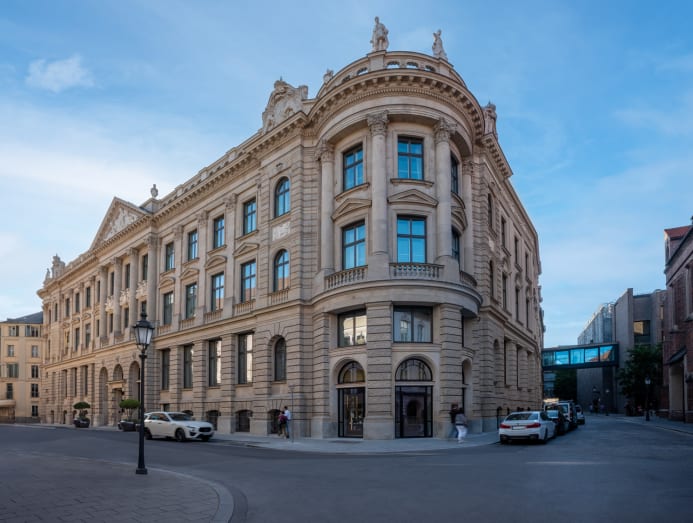
Such proximity is only possible as Rosewood Munich took over two historical buildings: The Bavarian State Bank and the Palais Neuhaus-Preysing — the former residence of an aristocratic family. These over 200-year0old buildings have been carefully restored, preened and polished to be comfortable enough to host some pretty well-heeled guests.
“We took special care in the design and renovation to preserve historic and protected elements and carefully integrate them into the design to preserve the charm and history of the building,” said Duerr. “Every stone, every corner of the house tells a story from a bygone era, echoing the footsteps of those who came before.”
That naturally means the facade of the building is kept intact, camouflaging into the city scape. But step inside and the walls speak of layered history, character, and lots of charm, accentuated with contemporary furnishings.
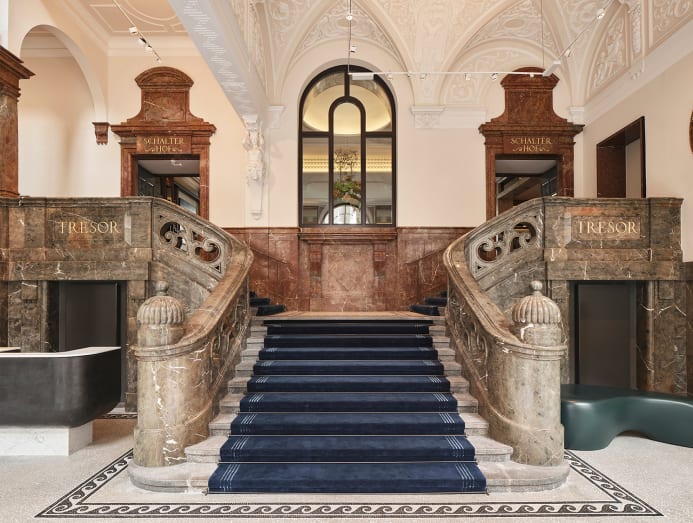
The staircase which splits into half is fashioned out of marble, and above, a fresco ceiling sets the stage. The look may be Baroque, but the vibe is decidedly contemporary. The creative brains behind the effort is Hilmer Sattler Architekten Ahlers Albrecht, which collaborated with the renowned London-based interior design firm Tara Bernerd & Partners. Together, they’ve masterfully orchestrated the restoration and preservation process without losing any of its soul.
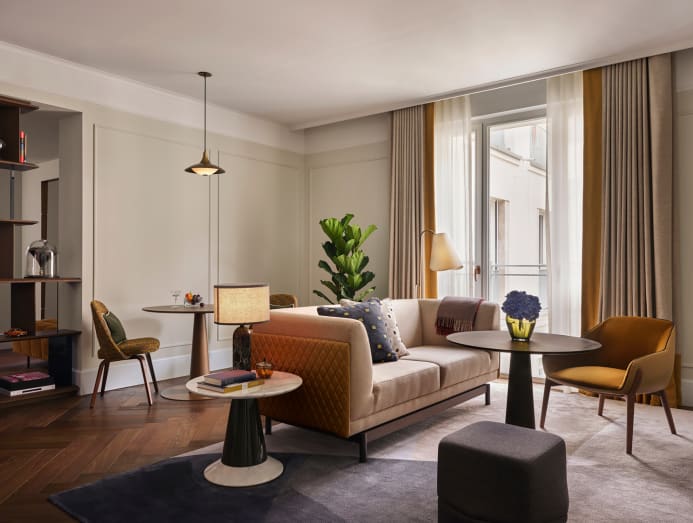
The rooms and suites are kitted out with natural textures where soft woolly carpets protect your delicate feet from coming into too much contact with the herringbone parquet flooring. The 60-sq-m deluxe suite on the lower floors where we stayed featured soaring ceilings and doors that open up from the living space, to the bedroom, the walk-in closet and the master bathroom that makes the entire tier of rooms feel massive.
Bathrooms are equipped with overhead speakers and massive windows while the shower room itself — yes a room — is easily the size of a 7-11 store in a MRT station.

REPRESENTING CULTURE
Beyond just well-appointed chambers, a landmark hotel has a certain weight on its shoulders that other run-of-the-mill hotels do not: It needs to represent the cultural locality.
Rosewood’s brand philosophy, “A Sense of Place” might sound like the product of a boardroom meeting but in truth, it’s the compass around which each property is anchored upon. Where possible, each hotel incorporates the work of local artists and artisans in a subtle way that’s easily missed if one does not pay attention.
This approach is equally seen in its Munich property. The work of renowned German illustrator Olaf Hajek, whose creations explore a fantastical blend of imagination and reality are home here, as is Rosanna Merklin's intricate wood carvings. Along many walls, celebrated fashion and architecture photographer Michael Mann's unique photographic interpretations of Munich add depth to the artistic landscape.
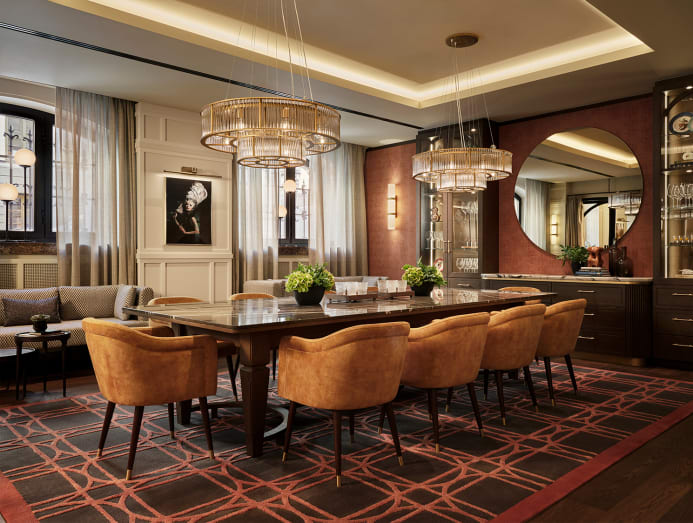
While art can indeed beautify and localise a space, the act of displaying these artists' work immediately provides an international platform for these names, many of which would hardly be known outside of their home countries.
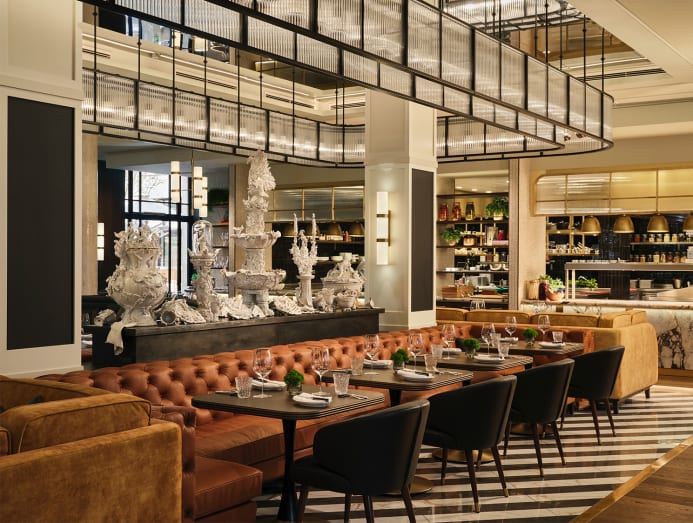
The piece de resistance however sits in the middle of Brasserie Cuvillies, the hotel’s showpiece restaurant. There, a three-metre-long white porcelain art piece by Munich’s very own ceramicist Angelika Maria Stiegle holds court. The detailed work artistically represents the aftermath of a feast with themes of intoxication, temptation, decadence, and transience and draws inspiration from baroque imagery and the Rococo movement's southern German variation.
CULINARY EXPRESSIONS OF BAVARIA
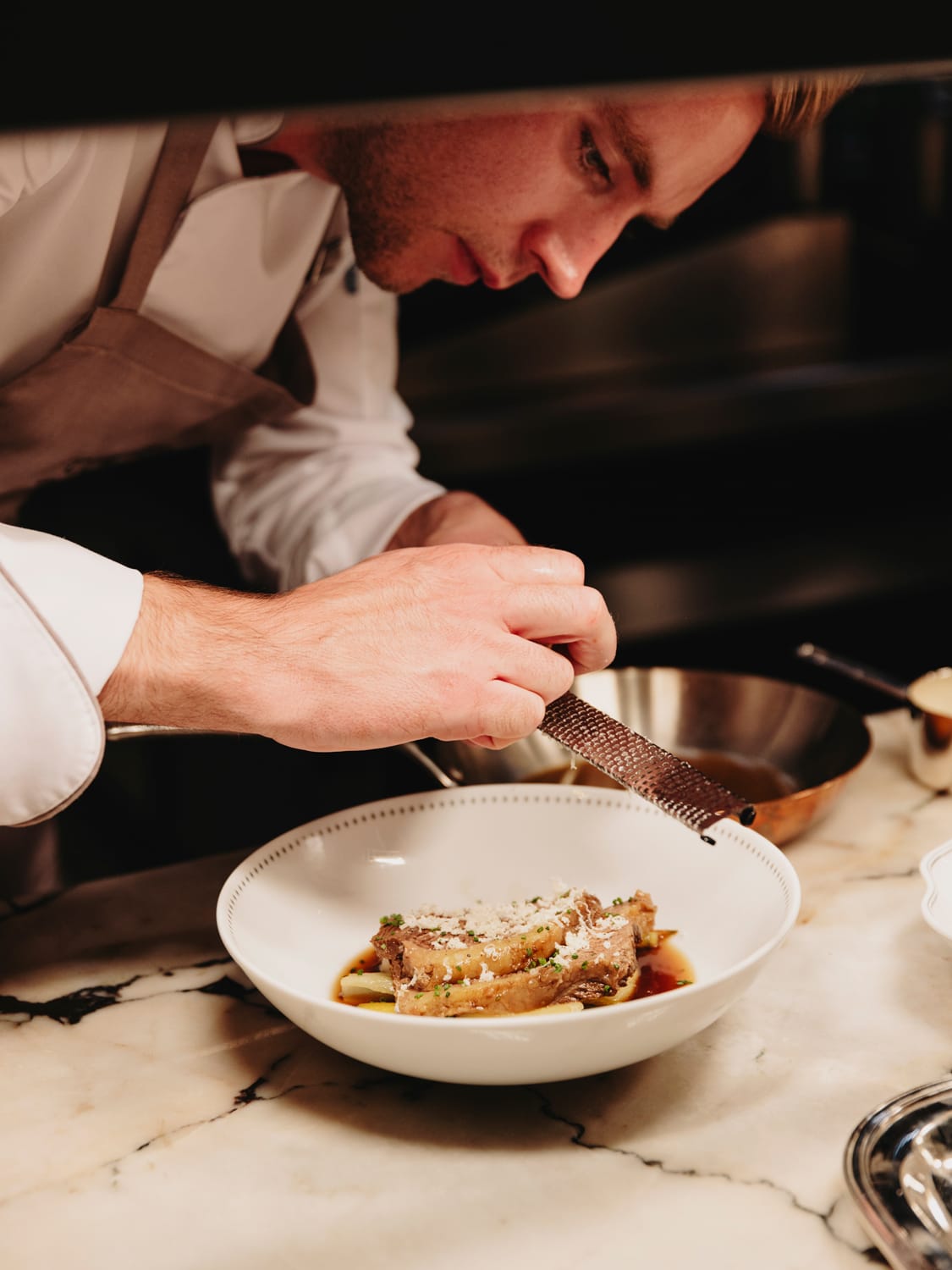
The expression of Munich’s locality is also further seen on the plate. Brasserie Cuvillies takes the form of a contemporary bistro where Bavarian specialties take centre stage. A classic Bavarian menu is available at breakfast but it is at dinner with its modern Alpine cuisine where the kitchens truly shine.
“We prioritise regionalism, and sustainability plays a crucial role for us,” explained Duerr. “We place great emphasis on sourcing products from the region, within a radius of under 300km. We are currently working on halving that radius. Our F&B team is building a close network with local suppliers.”
The kitchen collaborates with local farms and places a strong emphasis on using seasonal and ultra-fresh produce. Ingredients such as fish are sourced from Bavarian producer Aumuhle, while meats are procured from Tagyu and Tremmel. Organic vegetables meanwhile are obtained from Munich's Kinara farm. In concert, the kitchens put out banging dishes that would undoubtedly place the restaurant on the German dining map.
A NEW AGE FOR LUXURY IN MUNICH
It’s little wonder that the people of Munich have been flocking to check out the hotel.
“We have seamlessly become an integral part of Munich,” said Duerr. “It brings us immense joy to reflect on the tremendous success we experienced last fall."
A quick glance around Brasserie Cuvillies at meal times shows that the majority of diners were local, domestic or regional guests (many of whom are from neighbouring German-speaking countries).
Over drinks at Bar Montez, the hotel’s jazz bar that has a street facing entrance, it’s easy to be the only non-locals.
These raw observations surely stand as testament that Rosewood has managed to earn its place as part of a city. Besides welcoming international guests, hotels function as society’s living rooms too. Munich can now rightfully be proud of having a beautiful space to welcome all.
Related:
5 fine dining restaurants in Munich to check out
JAN
Jan is Munich’s only three-Michelin-starred restaurant and chef Jan Hartwig who helms the kitchens is a walking beacon of German cuisine. The menus here are seasonal and produce is sourced regionally as much as possible. Expect plates that are polished and plated up to the nth degree of refinement. Come for lunch if you’re pressed for time as it offers a shorter menu, or enjoy a seven-course dinner where the restaurant pulls out all its stops.
Luisenstrasse 27, 80333 Munich, Germany. www.jan-hartwig.com
Falke23
What’s the point of being in the capital of Bavaria if you don’t get to dig in to the region’s specialties? Falke23 will fix that, and offers you the experience of a rustic Bavarian inn. While it might seem like it’s permanently Oktoberfest, don’t be fooled — this spot offers some truly top notch nosh. Classics such as veal cream goulash are a crowd favourite here, as is the Kasespatzle, Germany’s answer to mac and cheese.
Falkenstrasse 23, 81541 Munich, Germany. www.falke23.de
Mural Farmhouse
Nothing quite lets you taste the terroir more than a farm-to-table style restaurant and if that’s your cup of tea, Mural Farmhouse will be your calling. The space is run by chef Maximilian Huber and executive chef Timo Fritsche, with a menu that respects and highlights the intrinsic quality of locally sourced ingredients. That means the menu changes not just with the seasons but with the available produce of the day. Where possible, the kitchen team uses ingredients grown in raised beds on their roof garden and goes to great lengths to brew their own kombucha, vinegars as well as miso and soy sauce.
Gmunder Str. 27, 81379 Munich, Germany. muralfarmhouse.de
Alois - Dallmayr Fine Dining
Restaurant Alois is the big name contender in Munich’s fine dining scene and here, executive chef Rosina Ostler helms the kitchen. The degustation menus showcase a distinctive, elegant vision of regional plates with influences from Asia and the Mediterranean. Think regionally sourced deer paired with umeboshi and wild forest mushrooms. The wine list is not to be missed and if it’s German wines you’re after, restaurant Alois offers 10 pages of options to choose from.
Dienerstrasse 14–15, 80331 München, Germany. www.dallmayr.com/deen/delicatessen/restaurant
Tantris
If you’re looking to dine on some of the most cutting edge plates in the environs of a functioning design statement then Tantris would tick your boxes. The brutalist space was founded in 1971 and it has held on to two Michelin stars for a whopping 40 years. These days, chef Hans Haas commands a kitchen that draws on his French, Austrian and Swiss heritage and word on the street is that this is still Munich’s place to see and be seen.
Johann-Fichte-Strasse 7, 80805 Munich, Germany. tantris.de