Cycling along Japan’s scenic Shimanami Kaido: A 70km route across 6 islands in 3 days
Walk, cycle or drive along the Shimanami Kaido, the beautiful, panoramic route that traverses the chain of islands across the Seto Inland Sea.
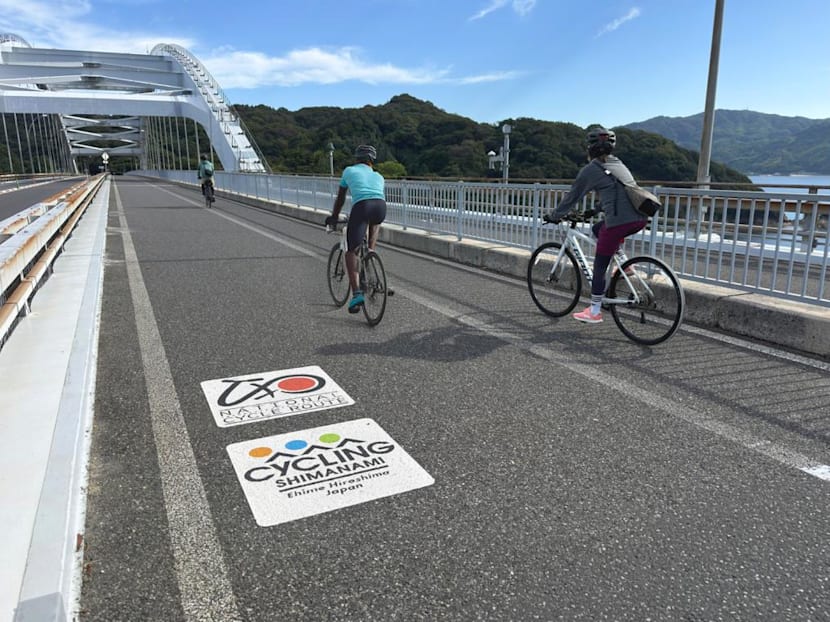
The Shimanami Kaido cycling route offers impressive infrastructure and breathtaking views of the Seto Island Sea. (Photo: Tay Suan Chiang)

This audio is generated by an AI tool.


On your next trip to Japan, skip the country’s overly crowded Golden Route of Tokyo, Kyoto and Osaka. Instead, go on the Shimanami Kaido, roughly translated as the "Island Wave Sea Route" or "Island Viewing Sea Road."
At 70km long, the Honshu-Shikoku Bridge Expressway – or more affectionately known as the Shimanami Kaido – connects Japan's main island of Honshu, starting in Onomichi City in Hiroshima Prefecture, to the island of Shikoku, ending in Imabari City, Ehime Prefecture.
The route crosses the Seto Inland Sea, linking six islands, namely Mukaishima, Innoshima, Ikuchijima, Omishima, Hakatajima, and Oshima, offering panoramic views of the sea and the islands.
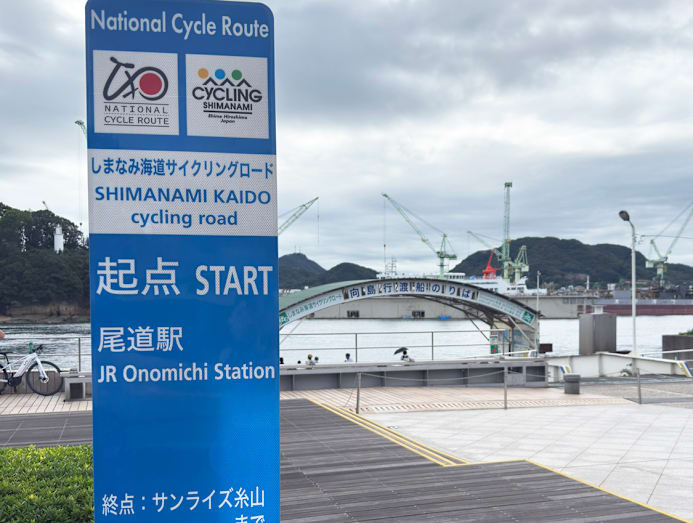
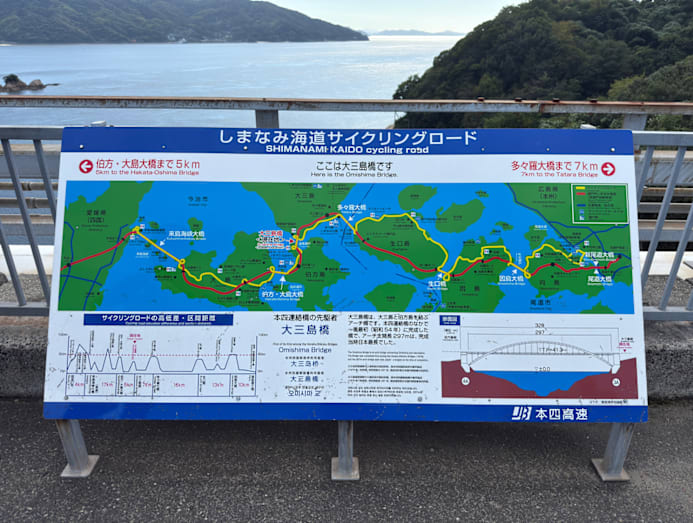
It is not just the panoramic views of the sea and the islands that I saw. I also had the opportunity to cross six majestic bridges, including the impressive Kurushima Kaikyo Bridge, the world's first triple suspension bridge.
FOLLOW THE BLUE LINE
While primarily a long expressway that connects six islands, the Shimanami Kaido is also famed for being cyclist-friendly. Experienced cyclists can complete a one-way trip in about four hours, but a more leisurely journey, including stops at local attractions, can be done over three days, which was what I did.
If you have driven in Japan, you would know how safe the roads are, and the pleasant experience is also extended to cyclists. The Shimanami Kaido cycling route is well-maintained, easy to follow with a continuous blue line painted on the roads to guide cyclists, and distance markers on the route. Cycling is mostly on flat roads, except on the ramps up to the bridges, where there is usually a gentle incline, but still designed to be easily manageable.
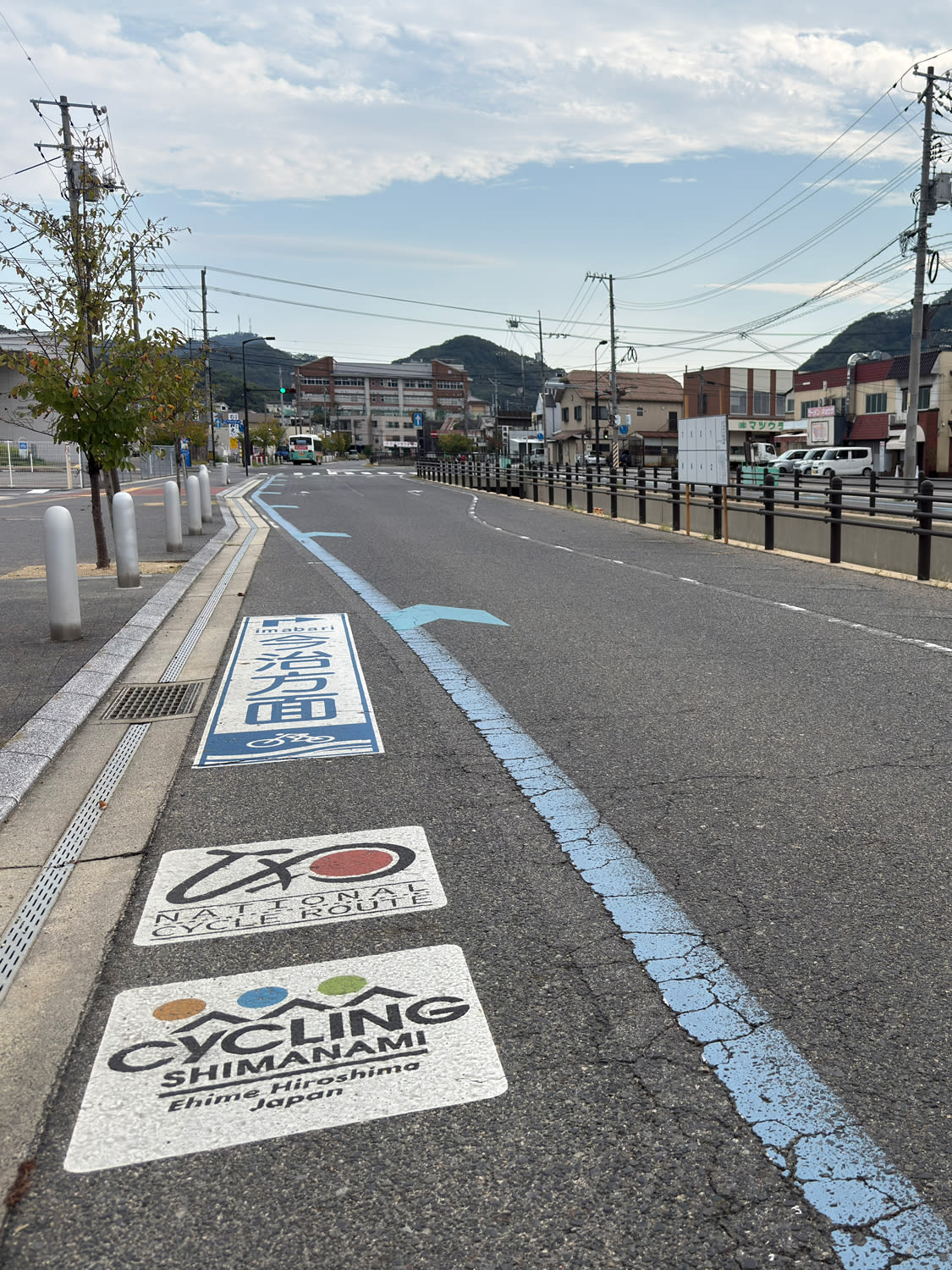
For my journey across the six islands, I rented a car for two days and cycled 25km on the last. The combination of the two modes of transport allowed me to see sights that are quicker and easier to get to by car, and still be able to visit attractions that would only be accessible by bike.
GETTING A RENTAL BIKE IN ONOMICHI
I arrived in Onomichi after a two-hour journey from Osaka. Onomichi is squeezed into a narrow strip of land between the Seto Inland Sea and a steep hillside, creating a dramatic, sloping landscape where houses and temples cling to the rocky ledges. The hills are home to the Onomichi Temple Walk, a route that connects 25 historic Buddhist temples via a labyrinth of winding, narrow stone steps and alleyways, offering fantastic panoramic views of the sea and islands below.
Thanks to its location, Onomichi has been an important and prosperous commercial port on the Seto Inland Sea since the medieval period, fostering a nostalgic, old-world "port town" atmosphere, with small ferries still operating between the mainland and nearby islands.
If you are starting your ride at Onomichi, you will pick up your bike at the Onomichi Station Rental Cycle Terminal. Take your pick from a variety of bikes, including the cross bike, the city bike with a front basket (the ones that are popular with Japanese housewives), or a battery-assisted bike, which allows you to peddle up steep slopes with ease. True cyclists may scoff at using a battery-assisted bike, but you won’t have to suffer achy thighs afterwards.
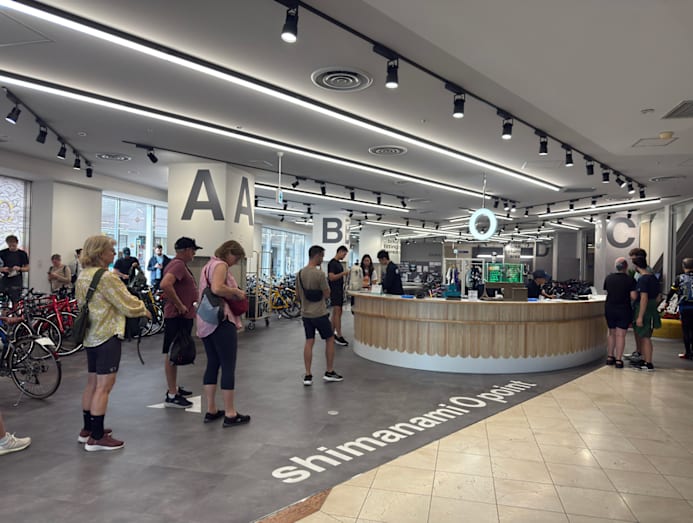
Bike rentals start from 3,000 yen (US$18.93; S$24.35) for a day. There are 10 bike rental stations along the Shimanami Kaido, and most bikes can be picked up and returned along the way, but there are some exceptions. While bike reservations are not mandatory, they are highly recommended.
It pays to travel light if you are cycling the route. But if you have luggage, most hotels along the route offer a luggage forwarding service for a fee.
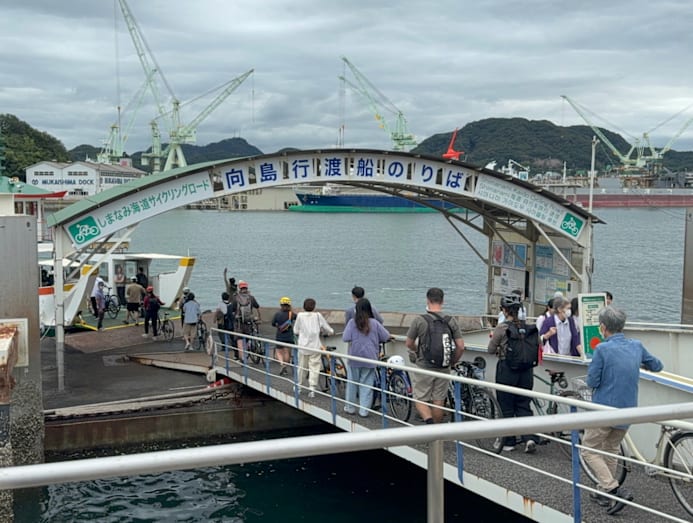
Onomichi is generally quiet, but comes to life each morning, especially at two locations. The first is the bike rental terminal, and secondly at the Onomichi Port, where cyclists hop onto a ferry to take them to Mukaishima, the next island, a 10-minute ride away, and where the cycling route starts.
CROSSING BRIDGES
While the cyclists hopped onto the ferry to Mukaishima, my boyfriend and I collected our rental car in Onomichi. We drove across Mukaishima and stopped at a rest stop just before Innoshima Bridge, the first of the six bridges along the Shimanami Kaido, and made our way across the bridge on foot before returning to our car.
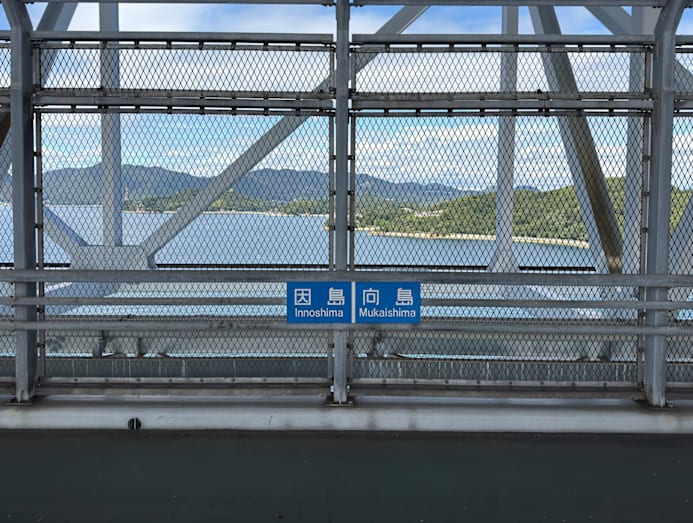
At the time of its completion in 1983, the bridge’s main span of 770m was the longest in Japan. Unlike many bridges where cyclists share a lane with cars, the bicycle and pedestrian path on Innoshima Bridge is located below the main roadway, giving cyclists and pedestrians a sense of being suspended under the bridge structure.
The best spot to view the bridge, which connects Mukaishima and Innoshima, is at the Innoshima Ohashi Memorial Park, which has a small beach and campgrounds, and is accessible by car and bike.
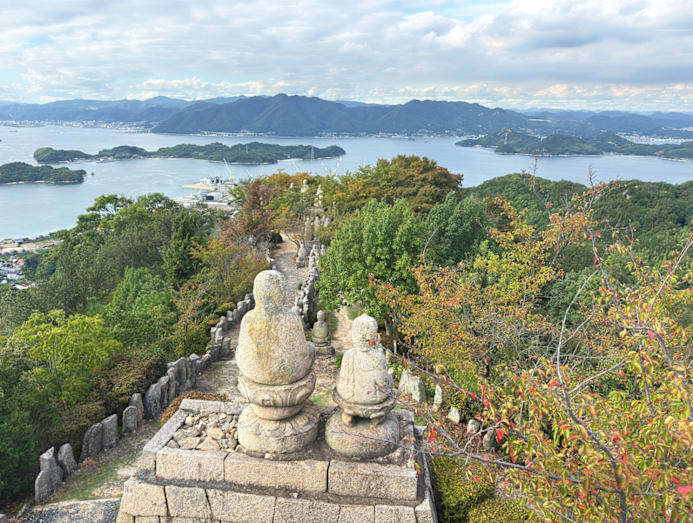
Mount Shirataki on Innoshima is a popular detour off the main cycling route. The mountain is famed for its collection of 500 Buddhist stone figures, established by a former abbot of a local temple around the mid-19th century. The summit also offers one of the best 360-degree views of the entire Seto Inland Sea National Park area.
VENTURING INTO IKUCHIJIMA, FAMED FOR ITS LEMONS
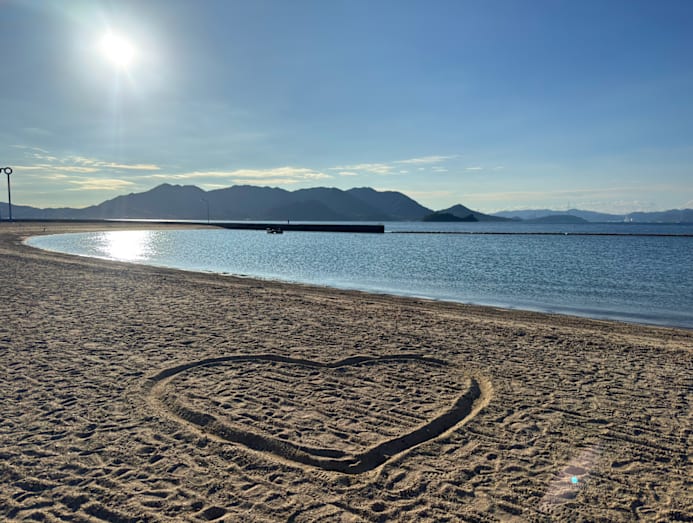
The next bridge we crossed is the Ikuchijima Bridge, headed into Ikuchijima with a stop at Setoda Sunset Beach, chosen by the Japanese as one of the top beaches in the country for its 800m of white sand and clear blue waters.
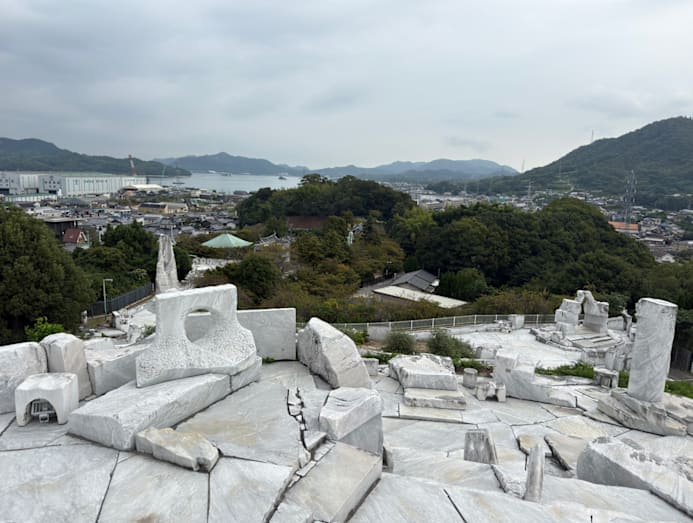
A stop worth venturing off the cycling route is to the Hill of Hope located within the grounds of the Kosanji Temple. Designed by Hiroshima-born sculptor, Kazuto Kuetani, the Hill of Hope comprises a 5,000 sq m garden and sculptural landscape made entirely of Carrara marble. The dazzling white stone creates a Mediterranean atmosphere, often compared to the Greek island of Santorini, which is quite unexpected to find in rural Japan.
The centrepiece is the Tower of Hope, a soaring, triangular monument at the peak that makes for an Instagrammable photo.
Ikuchijima is the top producer of lemons in Japan, known for its large size. The local store Fuji Honpo is a great place to pick up lemon snacks and fresh lemons. Nearby is a shop that serves lemon gelato. There are also rest stops along the Shimanami Kaido, selling not just cute souvenirs, but citrus fruits that vary according to the season.
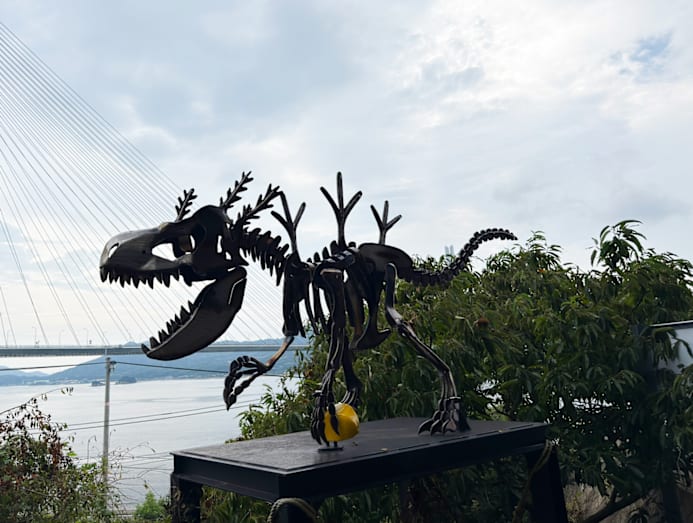
Google “Kaiju Lemon” and you’ll find a popular photo spot that is only accessible by bike or on foot, on the cycling path towards Tatara Bridge. The sculpture of a monster holding a lemon is an artistic representation of a local, successful brand known as "Kaiju Lemon".
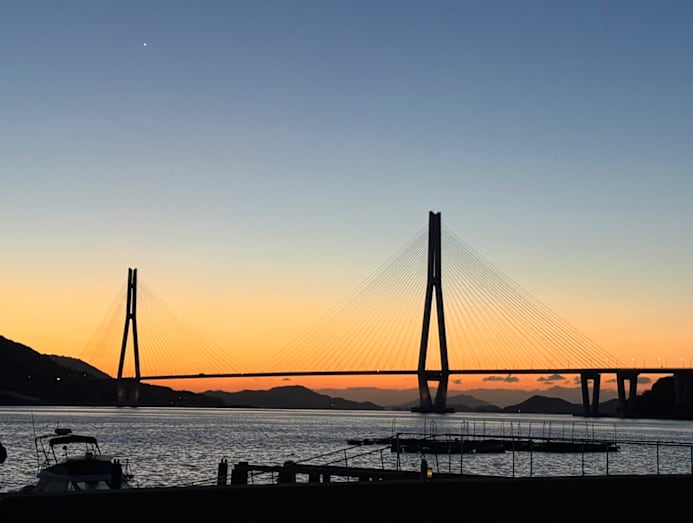
While the other bridges offer breathtaking views, Tatara Bridge stands out for its elegant design with its twin towers and the arrangement of its support cables. Due to the unique geometry of the space under the towers, loud sounds made under the towers create loud reverberating echoes. The sound effect is intense, giving the impression that the massive bridge structure itself is roaring or humming, making it a favourite and highly recommended interactive stop for cyclists.
WILD BOAR RAMEN ON OMISHIMA
We crossed the Tatara Bridge into Omishima, the largest island on the Shimanami Kaido. Despite being the largest, the main cycling route takes a relatively short 5m path. But it is worth going off the route and discovering the island. While the attractions are accessible by bike, it is more handy to drive around Omishima.
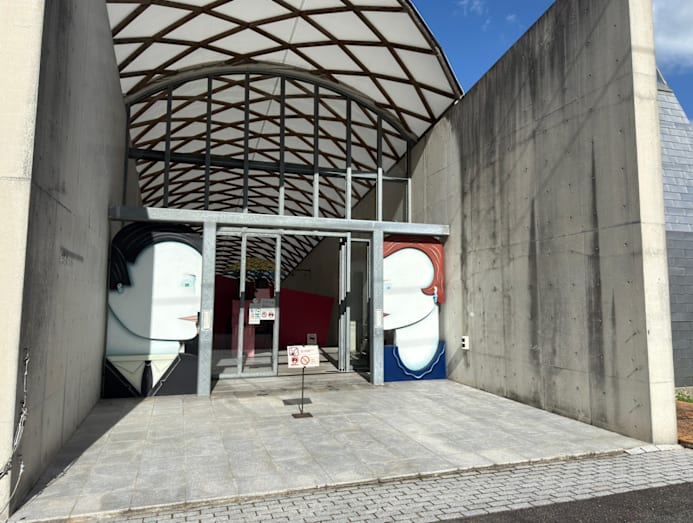
I wanted to visit the Toyo Ito Museum of Architecture, but it was temporarily closed for renovations. Instead, we visited the Tokoro Museum Omishima, particularly known for its unique location and architecture, which perfectly integrates art with the stunning natural landscape of the Seto Inland Sea.
I didn't see any wild boars on Omishima, but these animals destroy crops and are hunted for their meat and hide to make leather accessories.
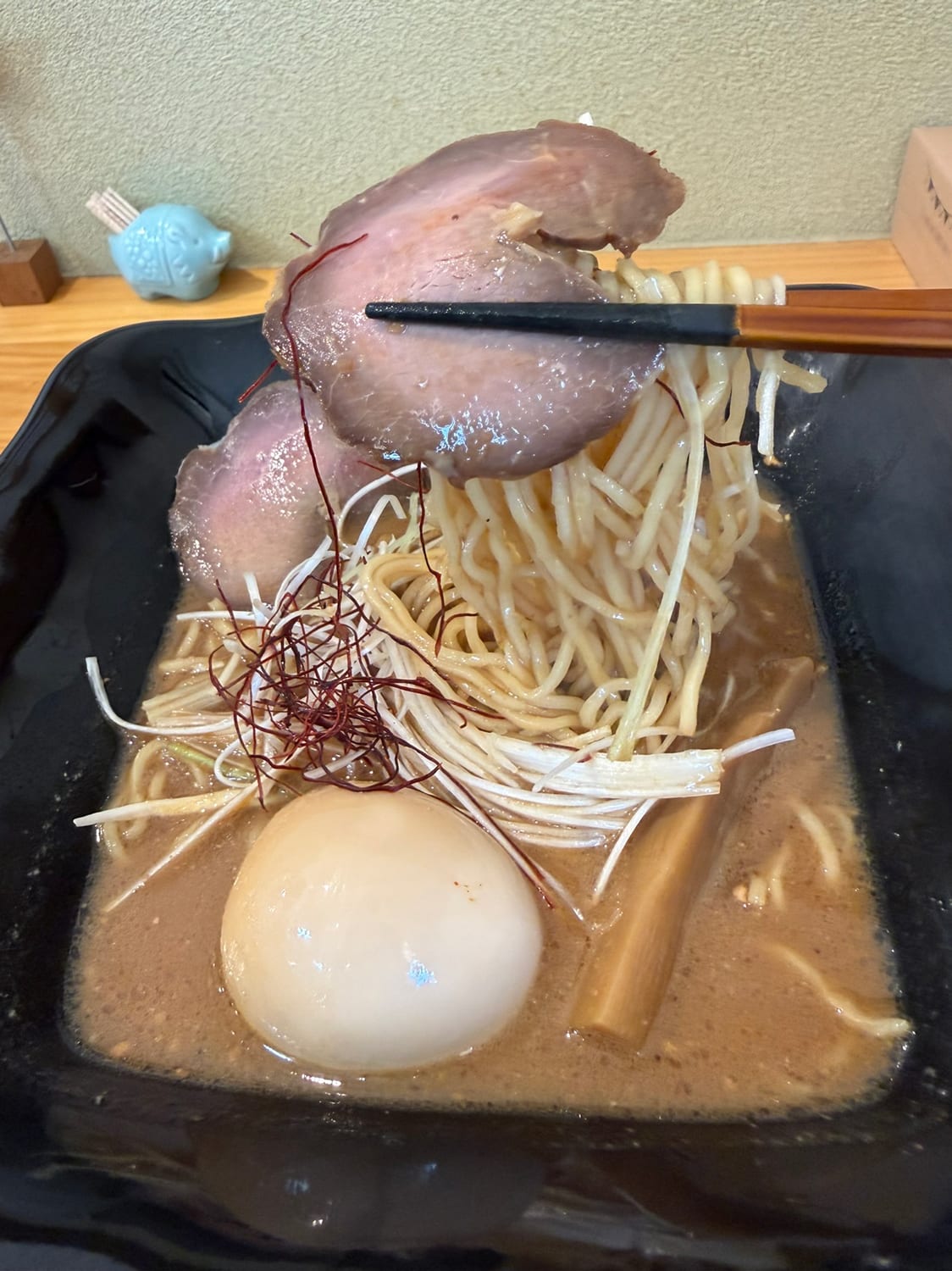
We made a stop at Shishikotsu Ramen, a cosy eatery that serves wild boar ramen in shio, miso or shoyu broth and a wild boar char siu don. The meat is braised and has a texture similar to ham and tastes sweet, as the wild boars feed on a diet of citrus and acorns.
MY CYCLING JOURNEY
On day three, I picked up my battery-assisted bike on Hakatajima, and cycled across the Hakata/Oshima Bridge into Oshima, passing by quiet towns. Often, I’m the only cyclist on the road, and the occasional car whizzed by. There was no fear of getting lost as I faithfully followed the blue line, and there were many markers along the way.
I decided to cycle up to Kirosan Observatory Deck designed by famed architect Kengo Kuma, and it has panoramic views of the Shimanami Kaido. The cycle with its uphill climbs was no easy feat for me, but having the right bike and a reward of lemon gelato with locally harvested salt helped sweeten the experience.
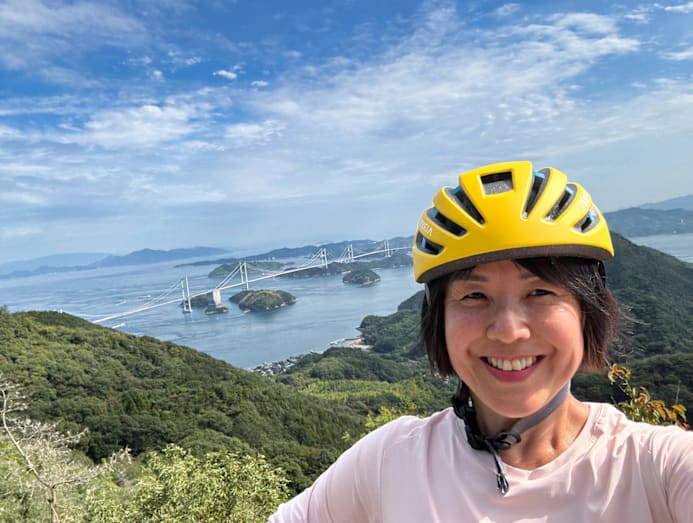
Then it was onto the spectacular Kurushima Kaikyo Bridge, a continuous structure made up of three successive suspension bridges with a total length of 4.1km. When it opened in 1999, it was the world’s longest series of suspension bridges. An engineering marvel, it uses shared anchorages between the sections and was designed to withstand the fast tidal currents and heavy maritime traffic of the Kurushima Strait.
It got a little busier on the bridge, with cyclists coming in the opposite way or overtaking me, which stressed me out a little, especially since it had been a long time since I was on a bike. It also didn’t help that I tended to veer left too much and hit against the railings on the bridge several times.
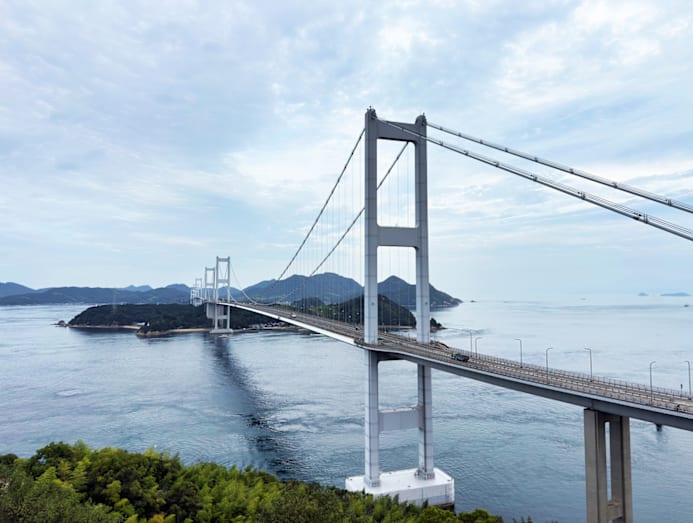
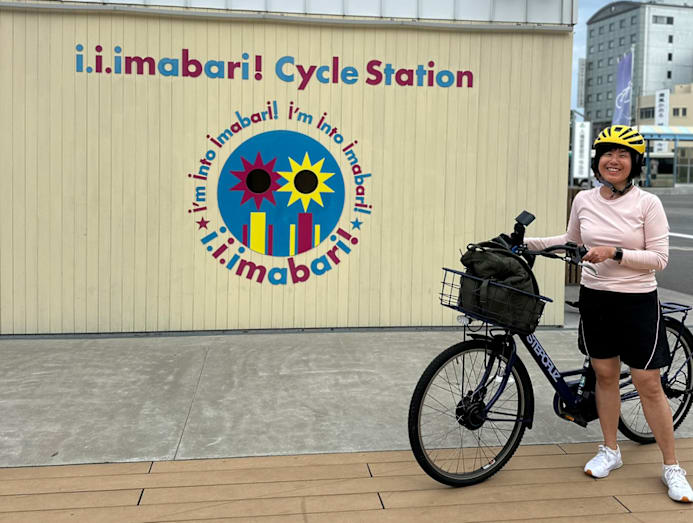
Despite a grazed knuckle, I managed to cross the bridge and made my way into Imabari, riding the final 5km ride to the i.i.imabari Cycle Station to return my bike. As I rode leisurely, it took me six hours to complete 25km. By mid-afternoon, I was sweaty, but all it took was a lemon sour, made with locally grown lemons to revive me.
WHERE TO STAY
There are plenty of accommodation choices along the route, from hotels to ryokans. Here are my three recommendations.
Hotel Cycle
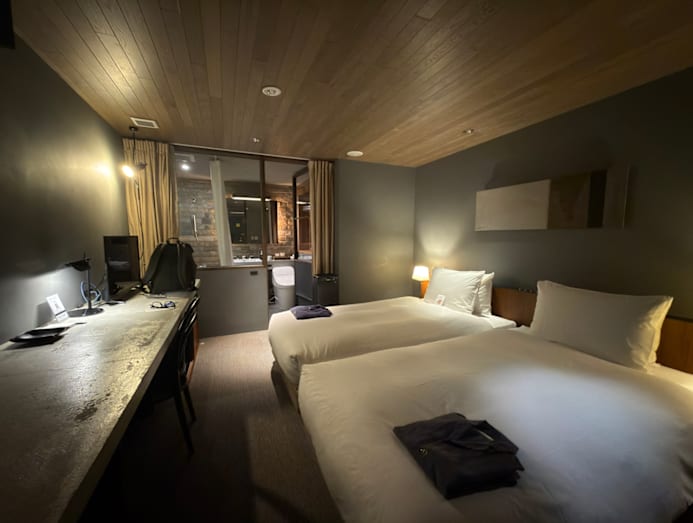
Located in Onomichi, Hotel Cycle is located in a converted warehouse along the waterfront, and is said to be the first of its kind where guests can check-in while still on their bikes. The hotel is within walking distance to the train station, bike rental terminal and port. The industrial-themed rooms come with bike hangers.
Ryokan Suminoe
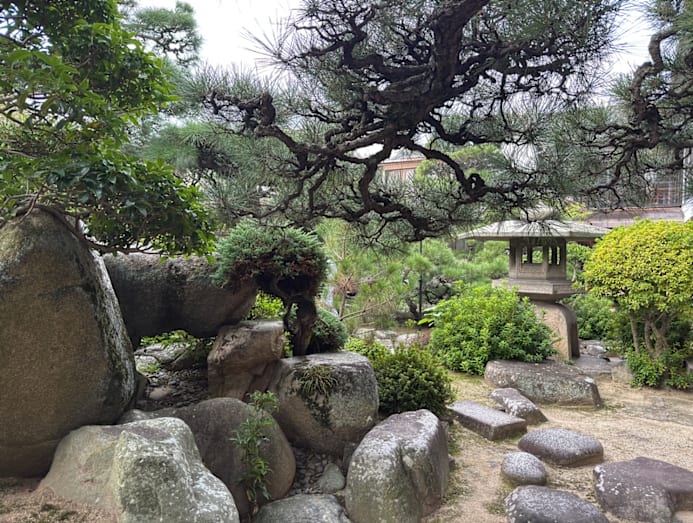
Situated on Ikuchijima and originally a merchant’s villa, Ryokan Suminoe was converted into a ryokan 50 years ago. The ryokan looks its age, but wins over with its warm hospitality, comfortable tatamis, large onsen and its landscaped gardens. Freshly caught seabream features largely on the kaiseki dinner menu, best paired with locally-brewed sake.
Wakka
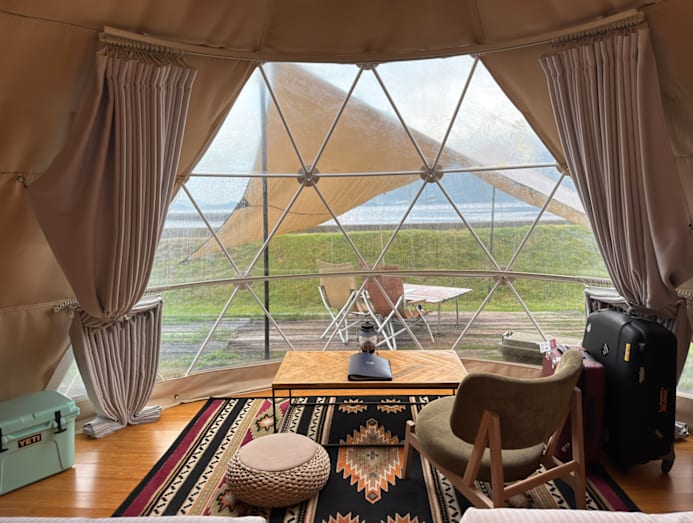
Wakka, on the island of Omishima, is a hotel, cafe, pit stop and rest space, all rolled into one. We stayed a night here in their dome tent, which offers a seaside glamping experience, complete with a barbecue dinner, and a breathtaking view of the Tatara Bridge at sunrise. Other accommodation options include bunk rooms and cottages.
For non-staying guests, Wakka offers a Refresh package. For a fee, cyclists can have a shower and do their laundry before resuming their cyling journey.