This Audemars Piguet watch box uses AI to set the time and calendar in minutes
The brand’s first “intelligent watch box” handles all the fiddly adjustments you’d rather avoid with a perpetual calendar.
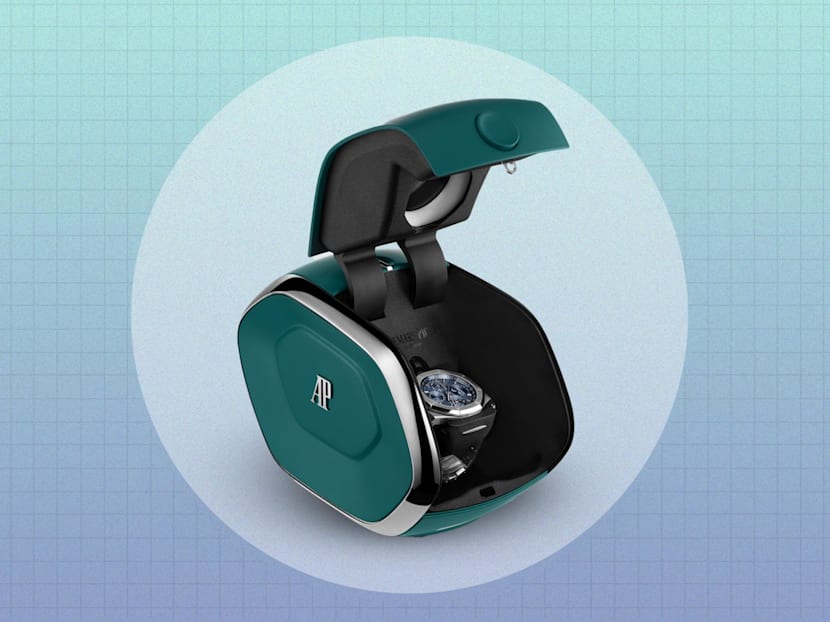
Audemars Piguet’s prototype “intelligent watch box” uses AI and a camera to read the dial, then sets the time and perpetual calendar automatically in about five minutes. (Photo: Audemars Piguet; Art: CNA/Jasper Loh)

This audio is generated by an AI tool.


Ah, the perpetual calendar. A complication so arduous that its difficulty to assemble translates frustratingly into difficulty of use. Advance the date too far forward and there’s no turning back without a fair bit of hassle — or a visit to the service centre. Attempt an adjustment while the calendar works are mid-engagement and you risk damaging the movement (hello, service centre). Add in multiple correctors — many requiring their own tiny styluses — and suddenly water resistance is compromised, user confidence is shaken, any excessive force becomes a liability, and… well, you see where this is going.
So user-friendly perpetual calendars are real gems in the watchmaking world, and only a handful have cracked the code, among them H Moser, IWC, Ulysse Nardin, and FP Journe. In 2025, Audemars Piguet joined that very short list with the new Calibre 7138, whose calendar functions can all be adjusted via a single crown. In fact, it’s so straightforward to use that the brand went ahead and built a box that does it for you.
Two years after joining forces with the Dubai Future Foundation, Audemars Piguet has unveiled the first prototype of its “intelligent watch box.” Built for the newest 41mm Royal Oak Perpetual Calendars, operates on a blissfully simple principle: watch goes in, lid goes down, and five minutes later the box has analysed the calendar, decided what needs fixing, and executed the adjustments like a polite robot butler.
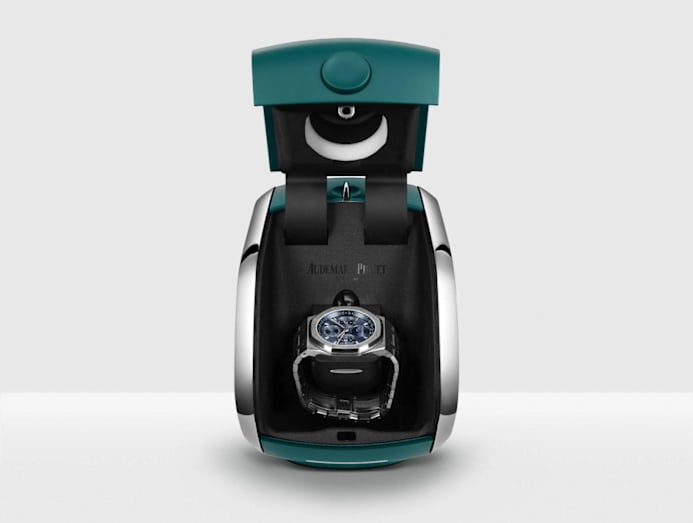
Here’s how it works: a computer-vision system, aided by a small camera inside the lid, captures the dial’s configuration and analyses it in real time using a trained AI model. An electronic module then relays the data to a mechanical nodule capable of replicating human hand movements, allowing it to operate the all-in-one crown. Bluetooth connectivity links to a companion app that keeps track of which watch is being adjusted — useful for collectors with a tax bracket’s worth of 41mm Royal Oak Perpetual Calendars.
Audemars Piguet handed the design brief to Red Dot Award–winning Max Terio of global design firm Eight Inc, and the resulting prototype comes in at 20cm by 12cm by 15cm, weighing roughly 2kg.
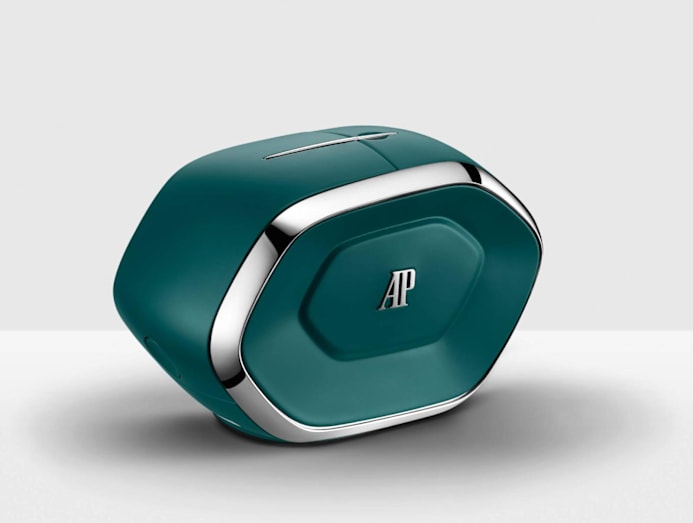
It’s still early days, of course. Should it reach production, the device could re-emerge with a sleeker profile, a shorter runtime, and maybe even a proper name. Still, it’s a compelling marker of how technology is nudging its way into a field that traditionally celebrates its technological absence. Winding one’s watch has long been considered a ritual of intimacy, a tactile bridge to the craft, and a reminder of why we adore objects untouched by circuits. But Audemars Piguet has always been comfortable poking at the boundaries, and this latest experiment is exactly the kind of mischief the industry needs to stay awake.
Until the box graduates from prototype to product, here are smart winders that solve the everyday problem of keeping watches running:
BUBEN & ZORWEG
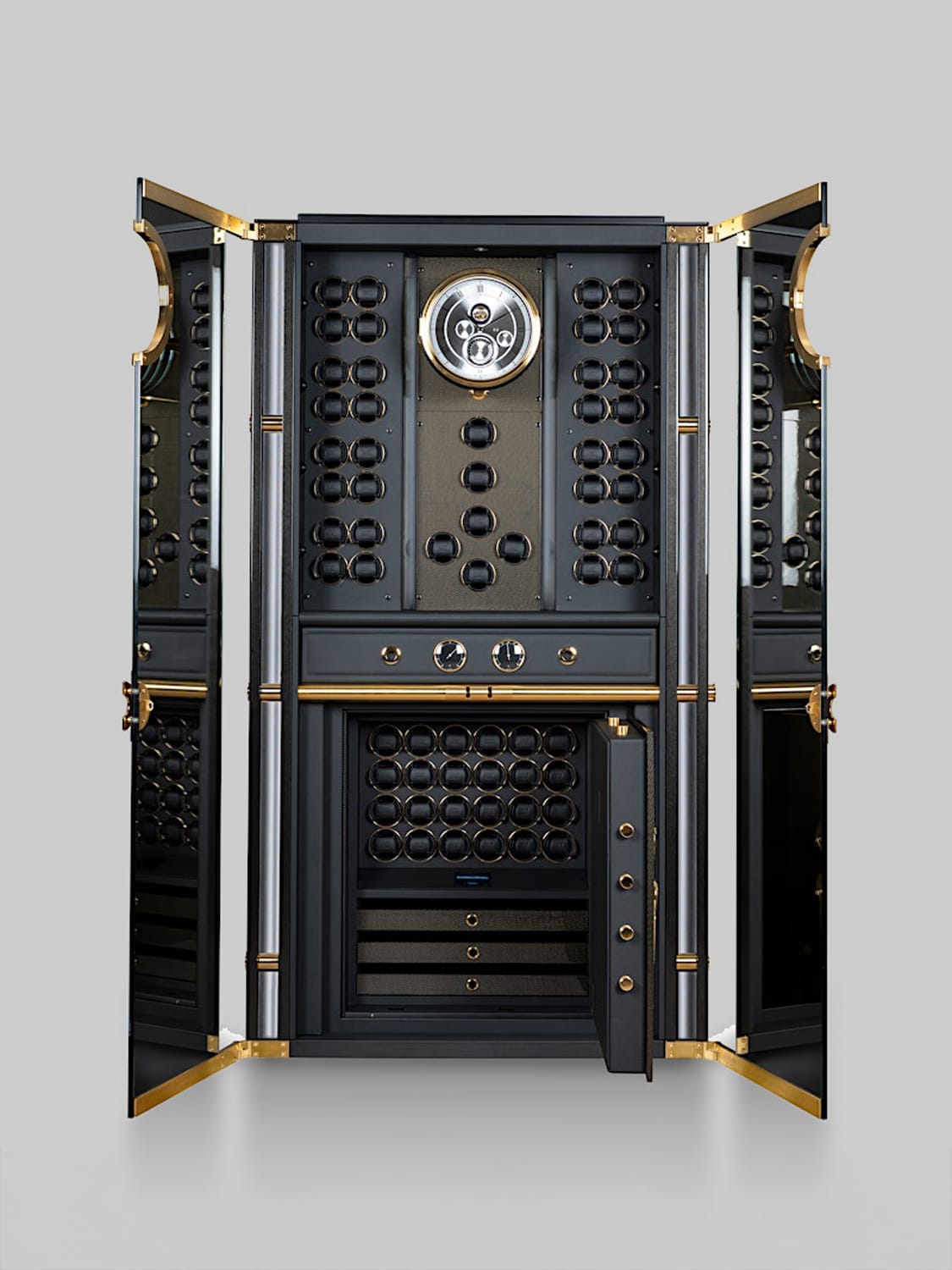
Three decades in, this German house remains the go-to for those who have more watches than their entire household has wrists. The catalogue spans everything from single modules to full-scale cabinetry outfitted with electronic controls, precious materials, and even pendulum clocks.
Its patented Time Mover system, launched in 1998, brought programmable rotation cycles, low-noise operation, and long-life motors to the market. The third generation, unveiled in 2024, added an upgraded display and a deep-sleep mode to preserve both energy and bearings.
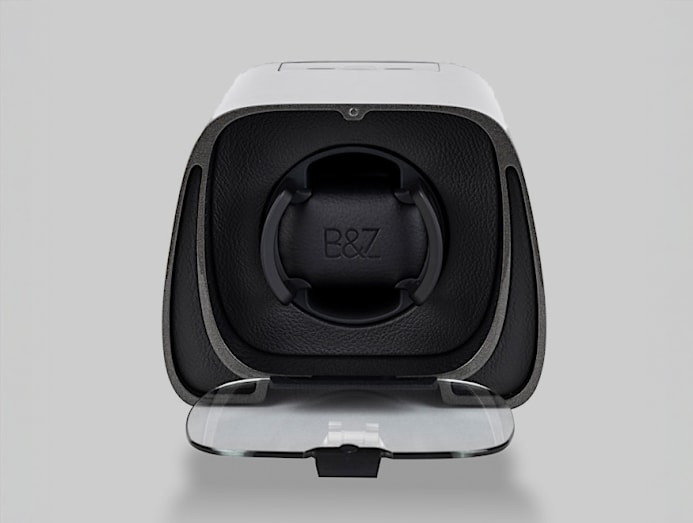
Each module can be individually programmed, allowing you to select 900, 1,200 or 1,500 rotations per day, plus the direction of rotation. The 2025 novelties include the sleek and simple single-winder Sphero, or if you’re aiming for full extravagance, there’s the Solitaire Golden Carbon: mirror-glass doors, 62 Time Mover units (24 of them housed within an integrated safe), LED lighting, and a world-time tourbillon clock for good measure.
SWISSKUBIK
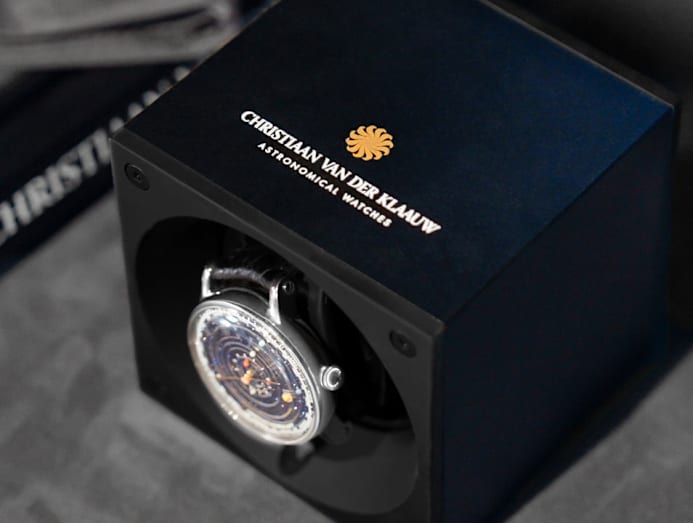
Where some brands build mini panic rooms for your watches, SwissKubik keeps things compact and minimal. Established in Geneva in 2007, it specialises in cube-shaped single winders in a buffet of colours; stack them if you wish, or scale up to configurations that house as many as 12 watches.
Many models are programmable via USB or Bluetooth, enabling precise control over turns per day. They run in short cycles punctuated by rest periods, mirroring the behaviour of a watch on the wrist.
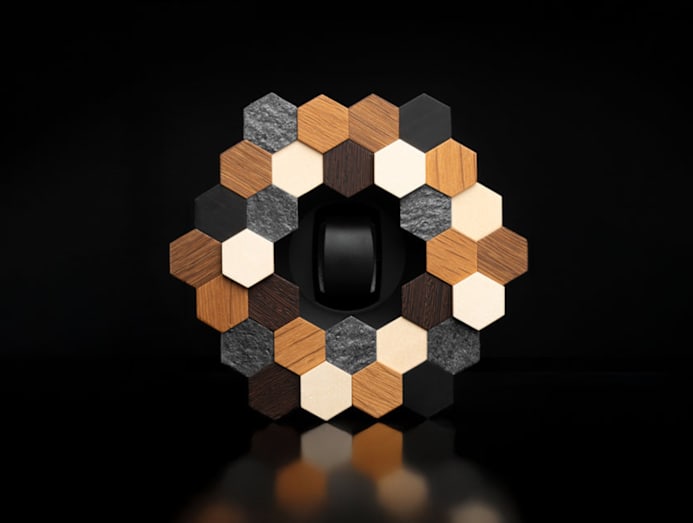
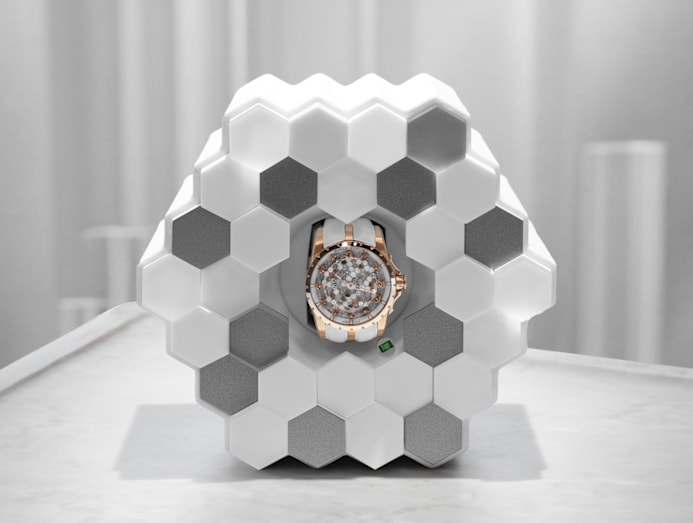
True to Swiss tradition, provenance matters. Every unit is hand-assembled in Givisiez, and all suppliers sit within a 50km radius to keep the carbon footprint trim. And it’s not just collectors who approve — Christiaan van der Klaauw bundles its watches with a SwissKubik Masterbox, while Roger Dubuis recently created customised versions for its 2025 Knights of the Round Table duo, The Omniscient Merlin and The Enchanter Merlin.
WOLF
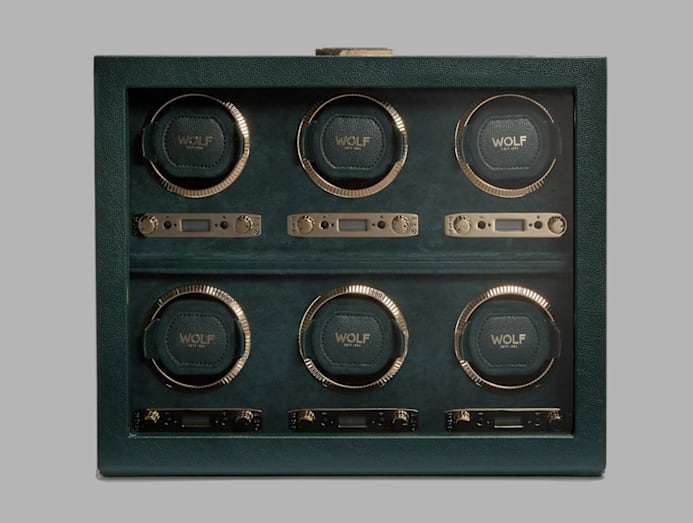
For British brand Wolf, the magic lies in the details most collectors forget to think about. Its winders offer variable rotations like many others, but the patented Turns Per Day technology goes further: it tracks exactly how many rotations your watch receives, ensuring it’s wound according to manufacturer specifications (helpful if you skipped the manual, which — let’s be honest — you probably did). Once a cycle is complete — winding, pausing, and a sleep phase — the winder automatically returns the watch to its upright position, so it always greets you looking its best.
Wolf’s patented cuff system also deserves applause. Designed to fit three wrist sizes securely, it keeps the watches stable during winding and accommodates diameters up to 52mm.
The brand’s larger models hold up to 16 watches, and the aesthetic leans decidedly dapper: polished, formal, and stylish without drifting into peacocking territory.