Inside the Avatr 11, the EV blending European refinement with Chinese innovation
It may look like a grand tourer of the future, but the Avatr 11 is designed with one intention in mind – to create an effortless daily experience.
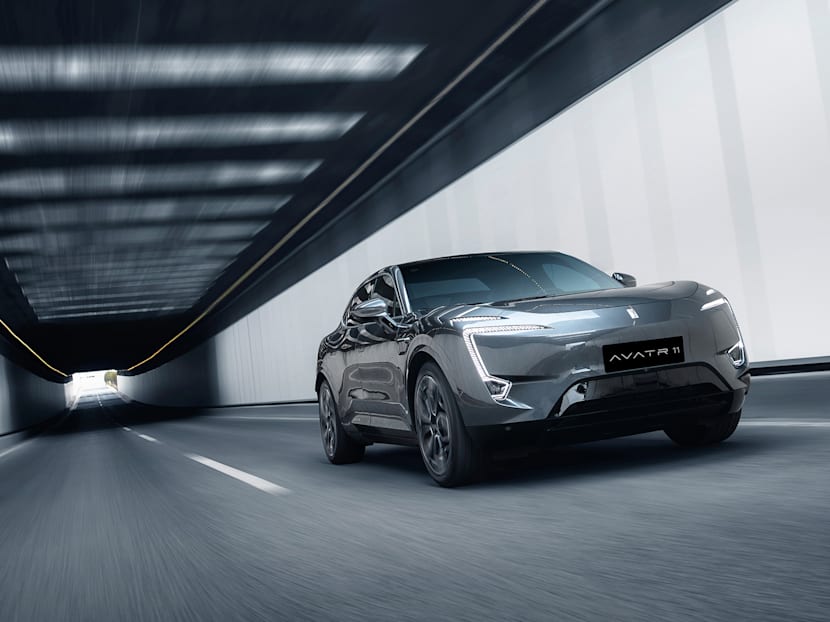
The Avatr 11. (Photo: Avatr)

This audio is generated by an AI tool.


Mention Nader Faghihzadeh to a casual motorist, and the name may draw a blank. But for those who follow the evolution of automotive aesthetics, Faghihzadeh is renowned for his precise, restrained elegance in premium car design. He played a significant role in shaping both the interior and exterior designs of the flagship BMW 7 Series and created the flowing silhouette of the 6 Series Gran Coupe. Under his influence, Munich’s elite saloons acquired their distinct look and feel.
Faghihzadeh’s move in 2019 to join Avatr as chief design officer and executive vice president of design marked a pivotal moment. It signalled the Chinese EV market’s ambition to go beyond imitation or price competition, aiming instead to acquire pedigree and craft its own luxurious identity. Avatr is far from a fleeting startup – it is a joint venture backed by major Chinese corporations: Changan for automotive engineering, Huawei for intelligent technology, and CATL for its global battery manufacturing.
The Avatr 11 (pronounced ‘one-one’) is not simply another entry in the EV market. It is a bold, thought-provoking vehicle that combines the strengths of its founding partners, establishing itself as a new benchmark in luxury electric vehicles. The design directive from Faghihzadeh was to embody “New Emotive Luxury” – an approach that favours intimacy and intelligence over spectacle, aiming to evoke genuine feeling. This vision has produced a grand tourer that unites Munich’s design DNA, Shenzhen’s intelligent hardware, and advanced battery cells, positioning Avatr for success on a global stage.
BLENDED IDENTITY

The Avatr 11 features an exterior that goes beyond conventional styling to present a deliberate study in tension. It defies easy categorisation, blending the imposing stature of an SUV with the graceful lines of a coupe. You might mistake it for a Porsche Cayenne doppelganger, but only momentarily.
The muscular haunches, complemented by 22-inch multispoke alloys on the Long Range model, impart a commanding road presence. A high waistline and deeply sculpted surfaces suggest power and containment, yet the overall look remains remarkably clean – a quality that earned it the Red Dot Design Award in 2024.
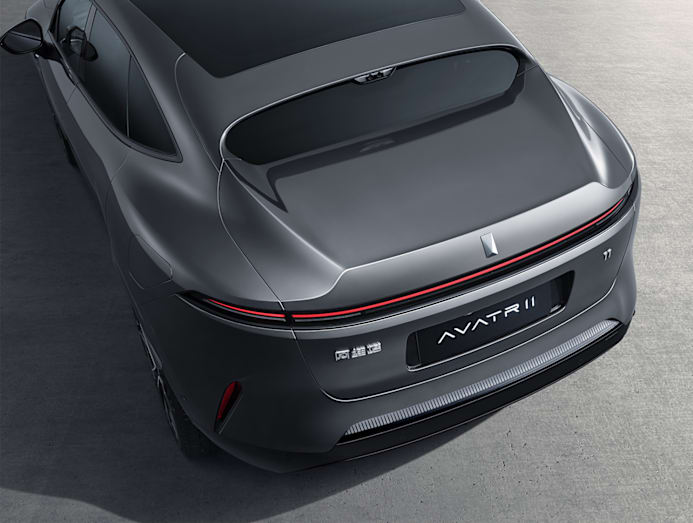
The front fascia is distinctively futuristic, eschewing the clutter of vents and faux-grilles for sharp, signature F-shaped LED lights. The most striking design element, however, is at the rear, where Faghihzadeh has incorporated flying buttresses that sweep dramatically from the sloping roofline to a high bustle. This nod to classic coupes such as the Jaguar XJS frames a near-vertical rear window, creating a visually impressive but functionally challenging aspect.
Technology is subtly integrated, with cameras, radar, and sensors hidden within the bodywork – particularly the black plastic panels on the front fenders – feeding data to Huawei’s advanced driver-assistance system. The electrically operated rear spoiler, which deploys at speed, adds a dynamic functional element, ensuring aerodynamic efficiency at higher velocities.
A SOOTHING DRIVE
The Avatr 11 is characterised by serenity, prioritising a smooth and gentle driving experience over aggressive acceleration. This tuning decision supports the luxury ethos, ensuring passengers experience calm and minimal distraction. This has apparently worked its magic on current Avatr 11 owners who have been pampered in their BMW and Mercedes rides.
The EV’s architecture provides immediate response, allowing quick acceleration when needed for overtaking or merging, while maintaining a refined, smooth feel. Steering is impressively nimble, granting the car agility at low speeds and precise handling.
Performance figures for the two variants are solid: the Standard Range (475 km) accelerates to 100 km/h in 6.6 seconds, Long Range (600 km) in 6.9 seconds, powered by 370 Nm of torque. The composed ride of the rear-wheel drive models reflects a deliberate choice, focusing on range and refinement rather than raw speed.
The suspension combines front double wishbones and a rear five-link setup, working with pliant Continental rubbers to provide a well-damped ride that absorbs road imperfections without resorting to air springs. Standard yellow Brembo callipers offer confident braking for a vehicle of this size and capability, ensuring it excels in long-distance comfort and minimises driver fatigue.
AN ACOUSTIC COCOON AND DIGITAL PLAYGROUND
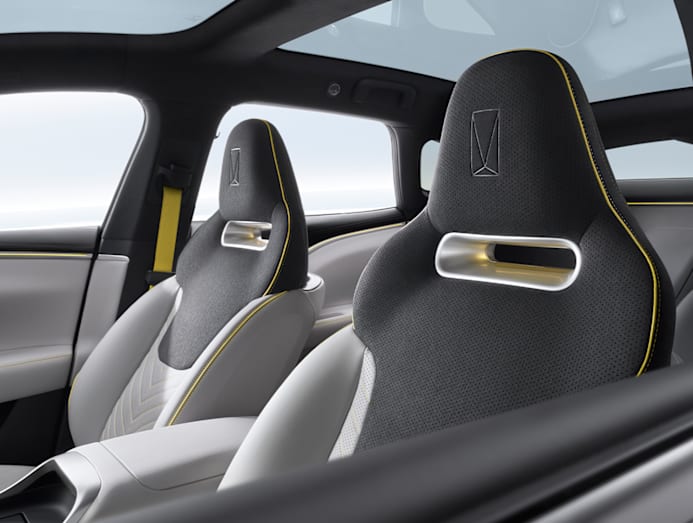
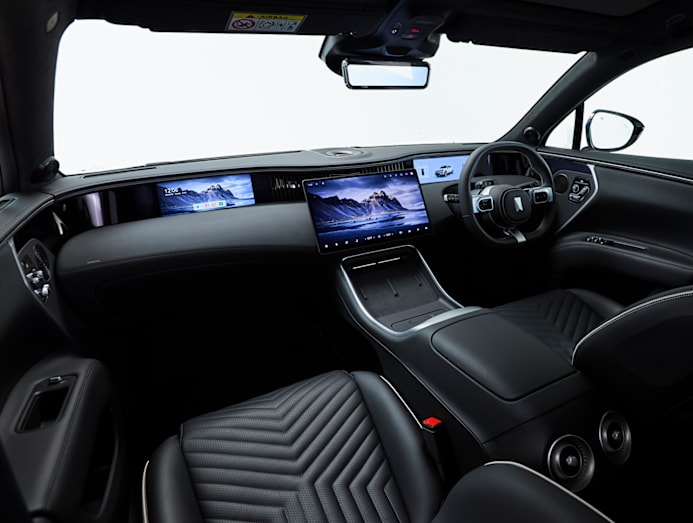
Napping in a car would not be one’s natural instinct, but inside the Avatr 11, this felt calmingly normal. Its interior offers a plush, cocoon-like environment that rivals vehicles from much higher price brackets. Full-grain Nappa leather envelops the seats and dashboard, contrasted with brushed aluminium accents. Attention to detail is evident in every touchpoint, from the weighty indicator stalks to precision stitching on its interior facade, reflecting Avatr’s commitment to premium sourcing.
The seats stand out with ventilation cooling, five massage modes, and a renowned zero-gravity recline for front occupants – a feature designed for comfort during autonomous drives or charging stops. Interior trim choices vary, with Nappa Grey complemented by yellow seatbelts (yes, yellow!), and more understated black/black or Nappa red/brown combinations.
A custom 25-speaker Meridian sound system delivers rich, immersive audio, enhanced by the cabin’s acoustic refinement. Avatr claims Noise, Vibration, and Harshness (NVH) levels just 0.1 dB higher than a Maybach at 120 km/h, placing it among the elite in luxury isolation.
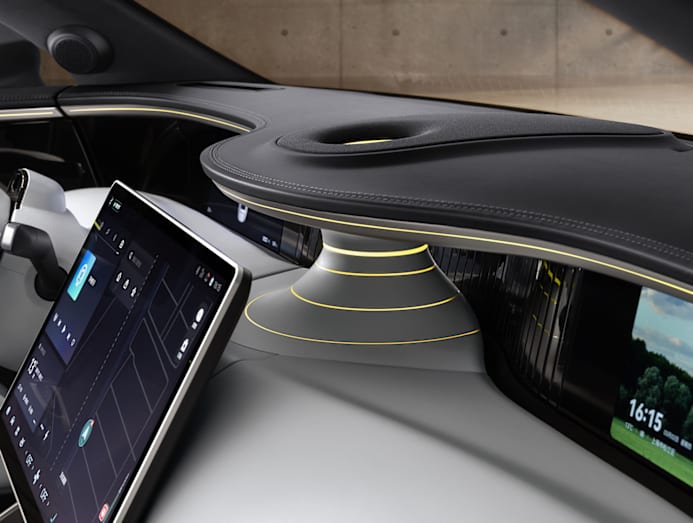
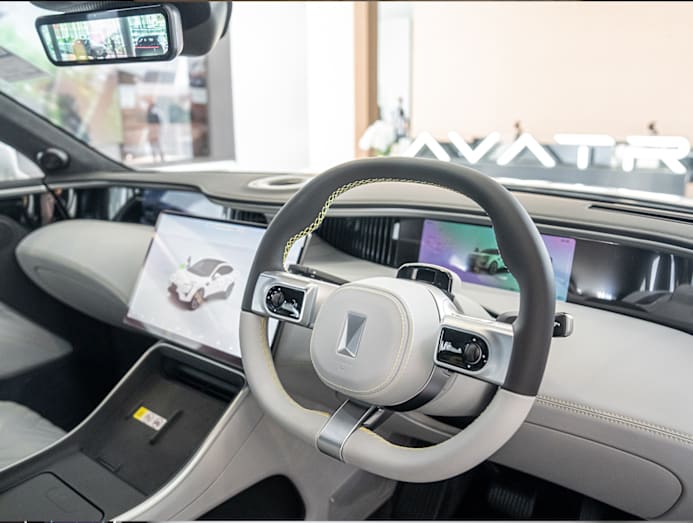
The cabin is also a digital ecosystem, dominated by a triple-screen dashboard and a large 15.6-inch Huawei HarmonyOS touchscreen. Most secondary functions, including climate control and even the glove compartment, are managed digitally, leaving few physical buttons. While this minimalist approach streamlines aesthetics, it places heavy reliance on the user interface, which is both a strength and a usability consideration.
Intuitive three-finger gestures allow content to move seamlessly across screens, but using the touchscreen for essential controls may challenge drivers accustomed to traditional layouts. The dashboard’s “emotional vortex,” a decorative centrepiece doubling as a mid-range audio source, adds sculptural flair to the digital interior.
PRACTICALITY AND THE COMPROMISE OF STYLE
Technological integration into daily routines is seamless. Drivers can pre-cool the cabin using the Avatr app, unlock the car with a digital key, and enjoy frameless doors that open smoothly. Adaptive cruise control and self-parking functions, powered by Huawei sensors, reduce stress in traffic and highlight the vehicle’s robust technological foundation.
Despite its dramatic styling, the Avatr 11’s elevated position on 22-inch alloys (21-inch on the Standard model) enhances practicality by providing superior visibility, allowing drivers to anticipate traffic flows and navigate commutes more comfortably.

However, style-driven compromises do exist. Rearward visibility is notably diminished by the sloped roofline and narrow rear glass – a key design feature. Avatr addresses this with a streaming digital rearview mirror, which offers a wider, clearer view, especially at night. Yet, its reliance on cameras means that visibility can be compromised if the lens is obstructed by weather or debris, representing a necessary trade-off for the coupe-inspired silhouette.
The cabin, while lavish, has some usability quirks. The dual-zone climate control is basic, and rear USB-C ports are limited, which are surprising omissions in luxury vehicle. It also lacks a heads-up display, which is a shame given its premium price point.
The panoramic glass roof, though visually striking, is missing a sunshade – an issue in sunny Singapore. Nevertheless, practicality is maintained with 490 litres of boot space and a 95-litre frunk, rivalling a BMW X5 and confirming its credentials as a luxury daily driver. Those seeking a full hatchback trunk may prefer to look elsewhere.
THE NEW DEFINITION OF PREMIUM MOBILITY?
The Avatr 11 is not without its flaws. The near-total removal of physical controls, subdued driving dynamics, and style-over-substance rear visibility require drivers to adapt to a new automotive experience. These are intentional choices that reflect a reimagined definition of premium mobility, though the market’s acceptance remains to be seen.
Ultimately, the Avatr 11 is a genuine disruptor: quiet, luxurious, and technologically advanced. It merges the emotional appeal of European design with the technological prowess of Chinese industry, adapting traditional luxury for the electric era and redefining expectations in the process. For buyers seeking to move beyond brand prestige and embrace bold design and cutting-edge technology, the Avatr 11 is more than a vehicle – it is a definitive statement that the future of luxury has arrived, bearing a Chinese passport.