Cartier owner Richemont’s sales boosted by high-end jewellery demand
Group also supported by improving China conditions as it sees 11 per cent quarterly sales increase.
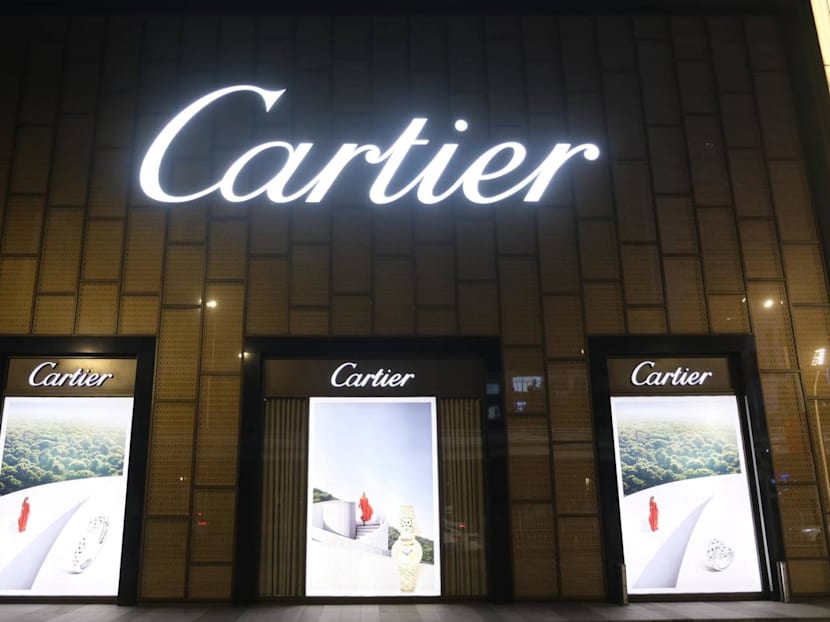
Cartier store in China. (Photo: iStock/Robert Way)
Shoppers’ appetite for high-end jewellery and improving conditions in greater China carried Swiss luxury group Richemont to another quarter of double-digit sales growth, offering a spark of optimism for investors hoping for a sector recovery this year.
Richemont’s sales rose 11 per cent year on year at constant exchange rates in its third quarter ending on December 31 to €6.4 billion (US$7.43 billion; S$9.57 billion), setting the tone for luxury’s upcoming annual reporting season.
Jewellery sales at the owner of Cartier and Van Cleef & Arpels rose 14 per cent in the period, well ahead of expectations, for a total of €4.78 billion following strong holiday sales, the company said.
Jean-Philippe Bertschy, analyst at Vontobel, said Richemont’s continued growth had “reinforced its leadership in the luxury sector”.
Richemont’s sales in Asia, excluding Japan — a region dominated by former luxury growth engine China — rose 6 per cent organically, slightly ahead of expectations. Sales in China, Macau and Hong Kong rose 2 per cent in the period, the company said, extending early indications that the market there was stabilising after two years of sharp declines in demand across the industry as consumer confidence hit historic lows.
Sales in the Americas, Middle East and Africa and Japan all grew by double digits at constant exchange rates in the quarter.
“Confirmation of expansion in watches and greater China signals the trough has passed,” said Bertschy. “Margins and free cash flow face ongoing pressure, yet the brand portfolio, pricing power and balance sheet strength stand out.”
Its specialist watchmaking division grew sales by 7 per cent, a positive sign in a segment that had previously been the group’s laggard, while sales in the division that houses its fashion and accessories businesses, including brands Chloe and Alaia, were flat compared with the same period a year ago.
Richemont’s report comes ahead of the industry’s annual results reporting season, with luxury leader LVMH reporting at the end of January followed by others including Hermes and Kering.
Luxury groups have been under pressure for the past two years as a Chinese market downturn, lofty price increases and a lack of creative momentum dimmed customer enthusiasm after a pandemic-era boom. However, shares have ticked back up as investors bet the worst of the downturn had passed for luxury’s big names.
Ongoing geopolitical upheaval and the bankruptcy of US luxury retailer Saks Global this week could still undermine improving sentiment in an industry driven by shoppers’ confidence.
Bertschy said volume growth, adverse currency effects and much higher gold prices had acted as a curb on the group’s sales gains, reflected in lower cash inflow of €1.1 billion in the quarter, compared with €1.8 billion a year ago.
Shares fell 1.9 per cent on Thursday (Jan 15) morning, giving the company a market capitalisation of SFr92.4 billion (US$115 billion; S$148.26 billion).
Adrienne Klasa© 2026 The Financial Times.
This article originally appeared in The Financial Times.