Standing apart in Geneva: How Hermes is carving its own path in watchmaking
In this interview at Watches & Wonders Geneva 2025, Philippe Delhotal explains how Hermes treats emotion as its most valuable complication – setting the maison apart from Swiss watchmaking’s centuries-old tradition.
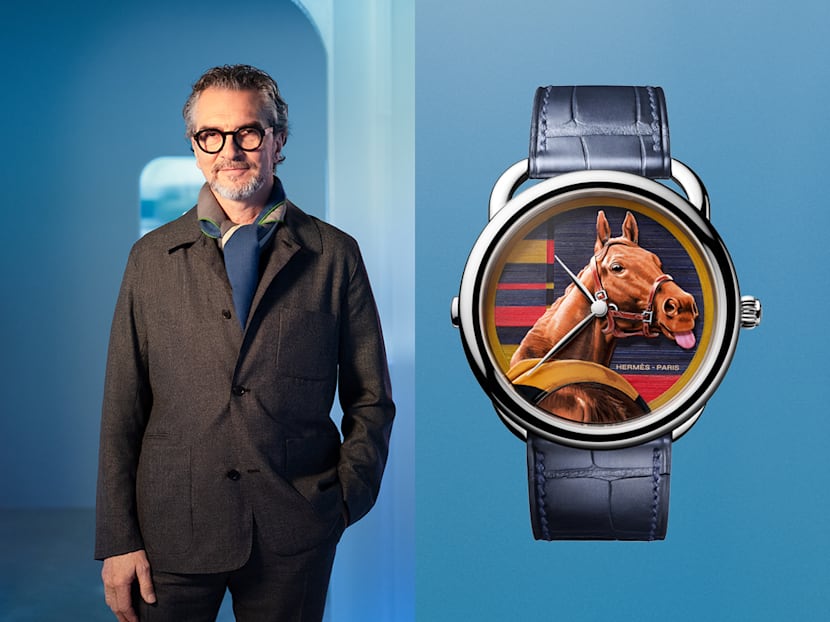
Philippe Delhotal, creative director of Hermes Horloger. (Photos: Hermes)

This audio is generated by an AI tool.
Luxury watchmaking is often judged by microns, innovations and complications. Hermes, however, prefers to measure its achievement through moments – in the story it tells and the emotions its creations stirs. At Watches & Wonders Geneva 2025, the French maison unveiled novelties that reflect this philosophy. Less like a showcase of mechanical conquests and more a dialogue with the human spirit, this sensibility has guided the vision of Philippe Delhotal, creative director of Hermes Horloger for the last 16 years. He sat down with CNA Luxury for this interview at the watch fair in April.
“We don’t take ourselves too seriously,” Delhotal revealed. The approach is deliberate. Surrounded by long-established Swiss houses, Hermes needs to stand apart. “Because if you aren’t different, then you don’t exist; you’re not visible,” he explained.
THE ART OF SUSPENDING TIME
This spirit of differentiation has guided Hermes since 2008, when it ventured seriously into mechanical watchmaking. “You must bring something radically different to the broader watchmaking landscape if you want to succeed. It wouldn’t have worked if we did what the other brands were doing,” said Delhotal.
Beyond technical prowess, Hermes sought a distinct voice to stand apart from centuries of Swiss watchmaking tradition. The answer wasn’t to rival established manufactures, but to reinterpret a theme central to the maison’s identity: Time. “Not time in the traditional watchmaking sense,” Delhotal explained. “But the time devoted to creating at Hermes – the time of design, of craftsmanship, of doing things well.
The breakthrough came with what Delhotal calls “a completely crazy idea” – to stop time itself. “Nobody in watchmaking stops time, right? So, we decided to create a watch that did exactly that.”
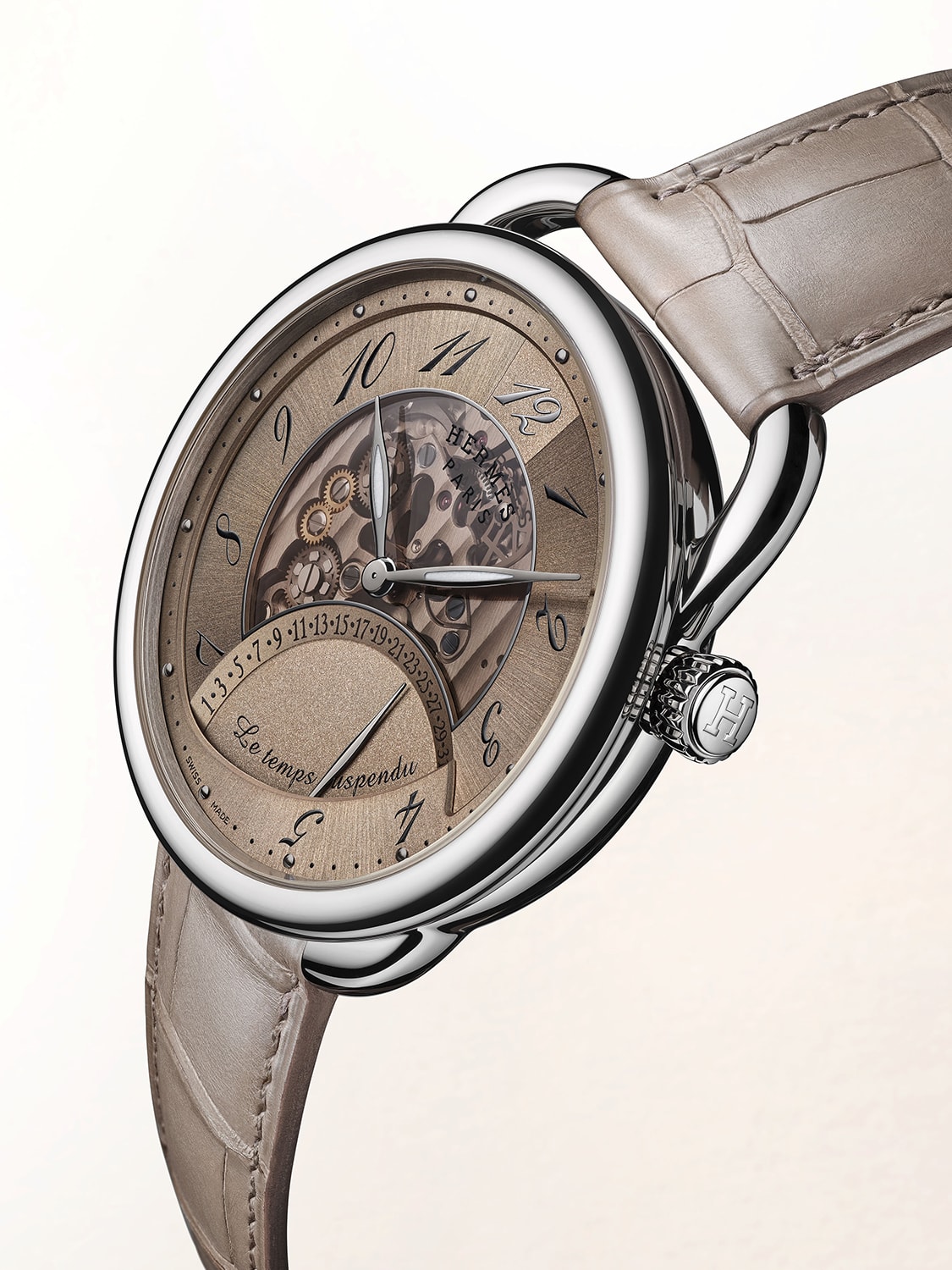
The result was the Arceau Le Temps Suspendu (Time Suspended in French). Unveiled in 2011, it even won the Men’s Watch Prize at the Grand Prix d’Horlogerie de Geneve (GPHG), the watchmaking world’s equivalent of the Oscars. The watch introduced what Delhotal described as “non-conventional complications”, inaugurating a new chapter for Hermes.

Fourteen years later, the timepiece returns as the star of Hermes’ 2025 collection. “We’re back with the original concept,” Delhotal added. “Of course, there are changes in the expression, such as the case diameter, thickness, dial and movement, but the essence remains the same. We still pause the time.”
When activated on demand via a pusher at 9 o’clock, the hands move to frame the numeral 12 and stop moving. Pressing the pusher again sees the hands whip back to the current time. “If the hands indicate 12 o’clock, it’s noon or midnight. But when both hands frame it without indicating the hour, you’re outside of time. It’s these small details that differentiates us,” Delhotal explained.
At Hermes, watchmaking transcends timekeeping to explore deeper questions about our relationship with temporality. “It’s another way of looking at time – not by simply measuring it but living it. Nobody can stop the passing of time, so the most precious thing we can do is to make the most of the present moment,” Delhotal reflected. Beyond a technical achievement, the watch makes a philosophical statement – one that’s not an ostentatious display or technical one-upmanship, but an invitation to find joy and play within the relentless forward march of time.
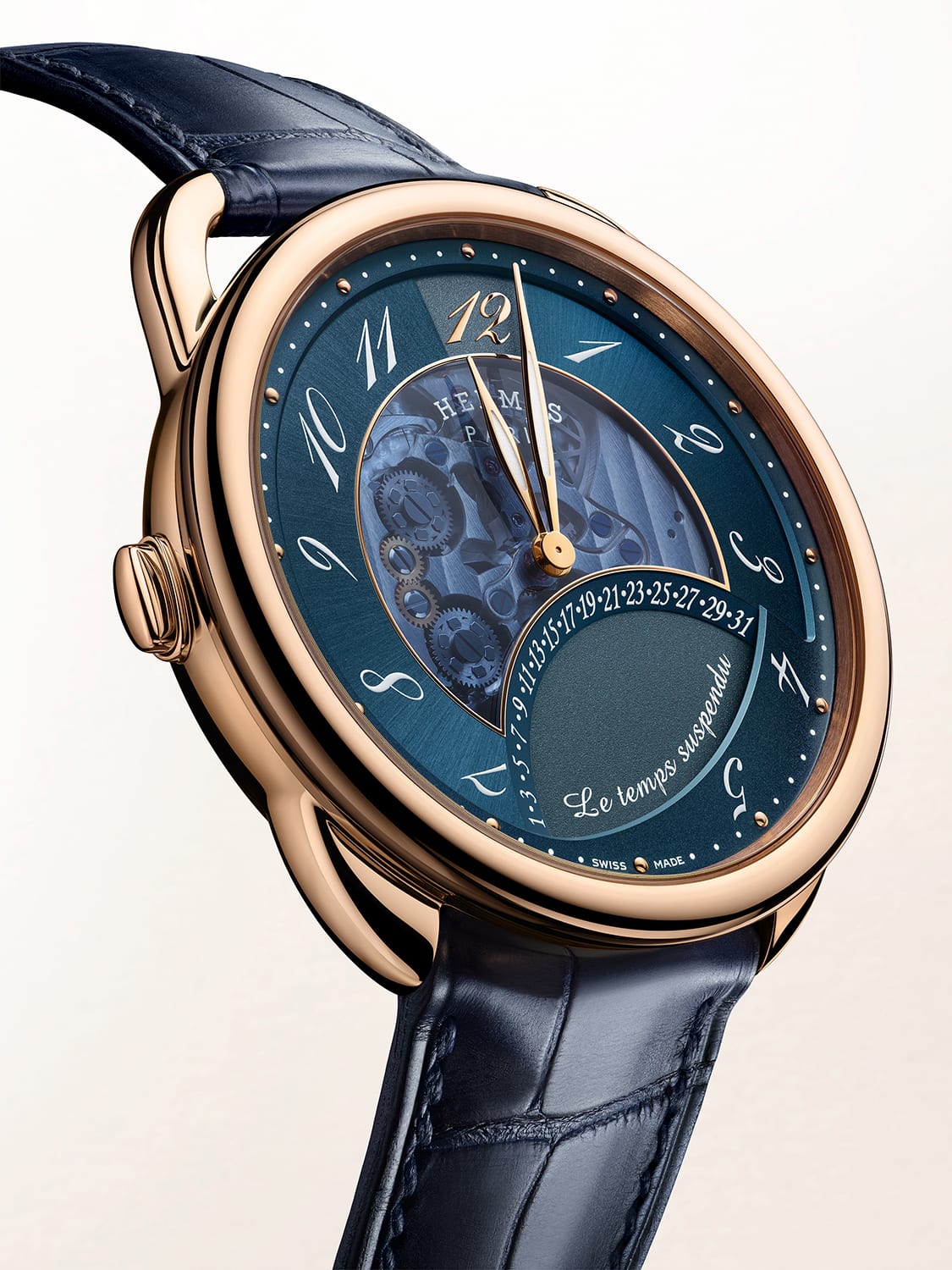
The 2025 edition of the Arceau Le Temps Suspendu comes in three dial variations, with Delhotal especially drawn to the blue-dial model. “I think blue and gold go really well together. It’s very chic,” he said.
The Le Temps Suspendu complication also debuts in the Hermes Cut line for women, extending the maison’s philosophy across another of its contemporary platforms. Rather than endlessly chase new technical feats, Hermes’ strategy is to refine, reinterpret and evolve its own poetic signatures.
PLAYFUL INNOVATION
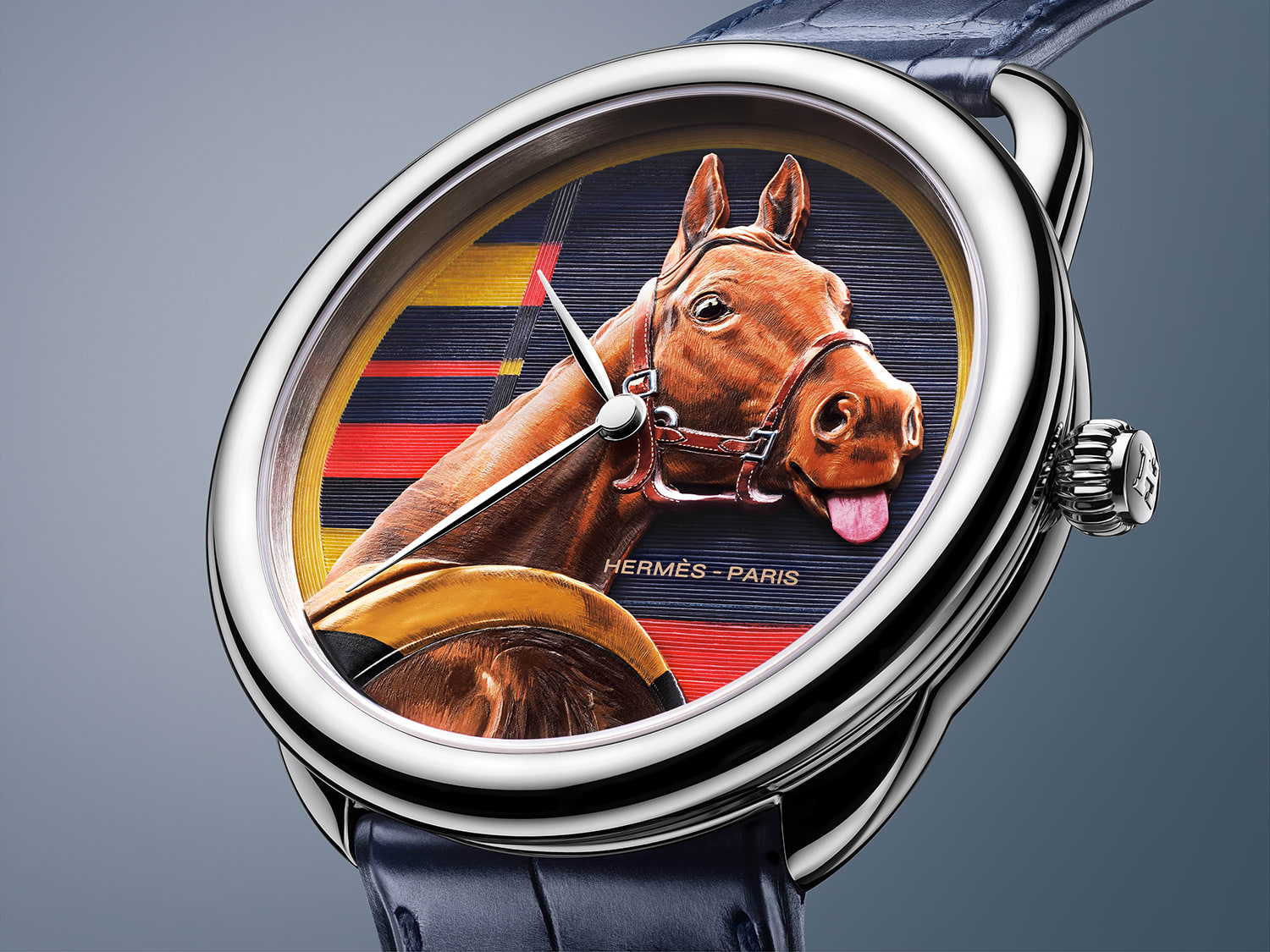
The element of surprise has always been a hallmark of Hermes watchmaking and creations, like how the Arceau Rocabar de Rire showcases the brand’s sense of humour and whimsical spirit perfectly. Its dial reinterprets Dimitri Rybaltchenko’s mischievous horse from the Rocabar de Rire silk scarf, appearing dignified at first glance until you press the pusher at 9 o’clock. Then, with a spring-driven flourish, the horse cheekily sticks out its tongue. “It’s funny, light-hearted and a little naughty,” said Delhotal with a grin. “At a fair where everything seems so serious, it’s delightful to have a watch that makes people smile or laugh.”
Delhotal revealed that the watchmaking team draws heavily from Hermes' extensive and vibrant archives, particularly its iconic scarf designs. “These motifs, classic or contemporary, serve as inspirations that invite technical and artistic interpretation. Often, the artwork itself suggests the technical method to best express its beauty, making our creative process highly intuitive and organic. In the case of the cheeky horse on the Rocabar de Rire scarf, we knew we had to animate it, complete with a tongue that playfully moves in and out.”
SIGNATURE AESTHETICS
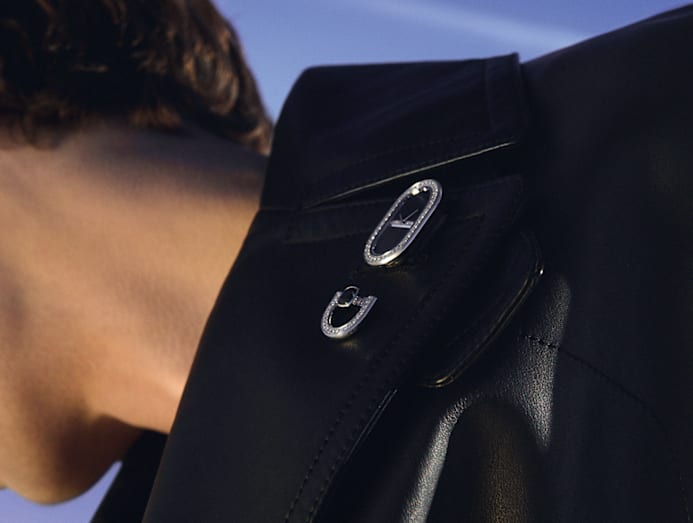
The dazzling Maillon Libre line of wristwatches and brooch watches also holds special significance for Delhotal. He describes it as a stylistic expression featuring the distinctive chaine d’ancre link, a design element that appears throughout Hermes’ diverse product categories.
The chain link motif exemplifies Hermes’ integrated design approach, where elements flow seamlessly between leather goods, timepieces and other luxury objects. It’s a philosophy that distinguishes the maison from watch manufacturers, creating visual and conceptual connections across the entire Hermes universe.

Innovation at Hermes extends beyond complications to fundamental questions of how timepieces are worn. The brooch watch showcases this thinking, offering versatility that recalls horology’s diverse past, while serving contemporary needs.
Delhotal explained the historical context: “In the 1930s, there were many ways of wearing watches. People would wear a pocket watch, pendant, ring watch or belt watch. The team decided to revive this versatility, creating a brooch that transforms from a clothing accessory to pendant.” Each configuration suggests different occasions and moods. “When you wear it as a pendant, it’s more casual. When you pin it on clothes, it’s feels more formal," Delhotal pointed out. “It dresses up an outfit and it’s a jewel.”

BALANCING CREATIVITY AND TECHNIQUE
While other Swiss watchmakers may chase thinner cases, higher complications or greater precision, Hermes sets its sights on something more elusive: Emotional resonance. But how does it meld artistic creativity, even humour, with technical watchmaking innovation without coming across as too gimmicky?
“It’s a question of balance,” Delhotal replied. “Instead of adding, we take away the superfluous to keep the essential.” This philosophy of restraint and clarity runs through all Hermes creations. “The object’s simplicity is very important. When you buy an Hermes item, it’s simple yet luxurious. The shapes and forms remain pure,” he stressed.
This simplicity is not minimalism for its own sake, but rather a pursuit of proportion and purpose: Finding the precise point where nothing more should be added or taken away. “A little too much or too little is not good,” Delhotal noted. “The perfect proportion and balance with the right mix of materials and colours... that’s what creates singularity. And I think it’s this very singularity of Hermes that has created another sphere of luxury.”
A DISTINCT MANUFACTURING PHILOSOPHY
Delhotal’s career at prestigious watchmakers, such as Patek Philippe, Vacheron Constantin and Jaeger-LeCoultre, gives him a unique vantage point on what sets Hermes apart. His grounding in technical and mechanical precision from traditional watchmaking blends naturally with Hermes’ vibrant creativity, artistic expression and emotional storytelling. In Delhotal’s 16-year tenure at Hermes, the synthesis of these two worlds has shaped his own approach to watchmaking, guiding the way he interprets and contributes to the maison’s distinctive ethos.
Unlike brands racing to achieve ever-thinner cases or record-breaking complications, Hermes takes a different path. “We’re not in the race to achieve the finest, thinnest or the most precise watches. That’s not in Hermes’ DNA,” Delhotal explained. “We’re here to surprise, like a painting – to make people smile and evoke an emotion. Our path is entirely different, and we must remain different. That’s what sets us apart and teases people.”
THE ROAD AHEAD
For Delhotal, Hermes’ horological journey is one of cultivation rather than conquest. “I feel like we’ve planted a seed. Now it’s up to us to cultivate it, keep it alive and let it grow.” Progress is incremental, but purposeful: “We go up the stairs step by step. We have to remain modest, step back and not think we’ve succeeded in everything. Although we’ve made enormous progress and are recognised by many collectors, we must maintain momentum and continue to create original mechanical watches, unique metiers d’art pieces and, above all, to surprise.”
Despite the pressures of innovation, Delhotal remains optimistic. “Every year I attend watch fairs and events, and every year I’m amazed by the industry’s capacity for renewal. You might think everything has already been done, but there’s always something new. That is the strength of the watchmaking profession: Its ability to astonish.”
For more watch stories, click here.