Steering against headwinds: Luxury automotive trends to expect in 2026
Top executives of Audi, Mercedes-Benz, JLR and Lamborghini discuss COE prices, EVs, emerging trends, and new models arriving this year.
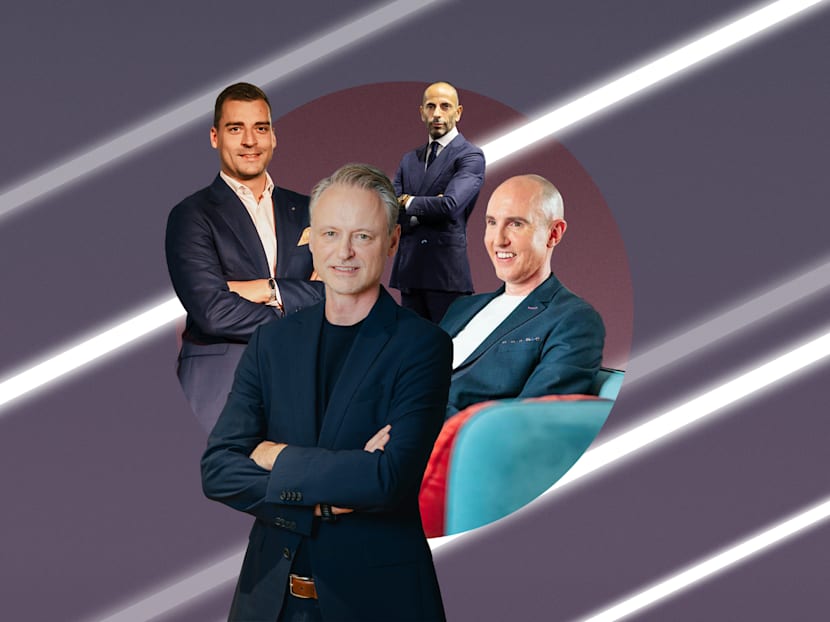
Top executives share how their brands are adapting and evolving their strategies to distinguish themselves in an increasingly competitive landscape. (Art: CNA/Jasper Loh)

This audio is generated by an AI tool.


As Chinese electric carmakers top the leaderboard with the highest number of new cars sold in Singapore in 2025, electric vehicles (EVs) are likely to remain the talk of the town this year. How will this impact the business strategies of legacy carmakers of the west, and what does this mean for the broader industry going forward?
We spoke to several business leaders to find out how their brands are adapting and evolving their strategies to distinguish themselves from the competition in an increasingly competitive landscape marked by unprecedented complexities.
Are they still going full throttle on electrification, or are they putting the brakes on EV investments? Read on to find out.
GARTH TURNBULL, MANAGING DIRECTOR, JLR ASIA PACIFIC
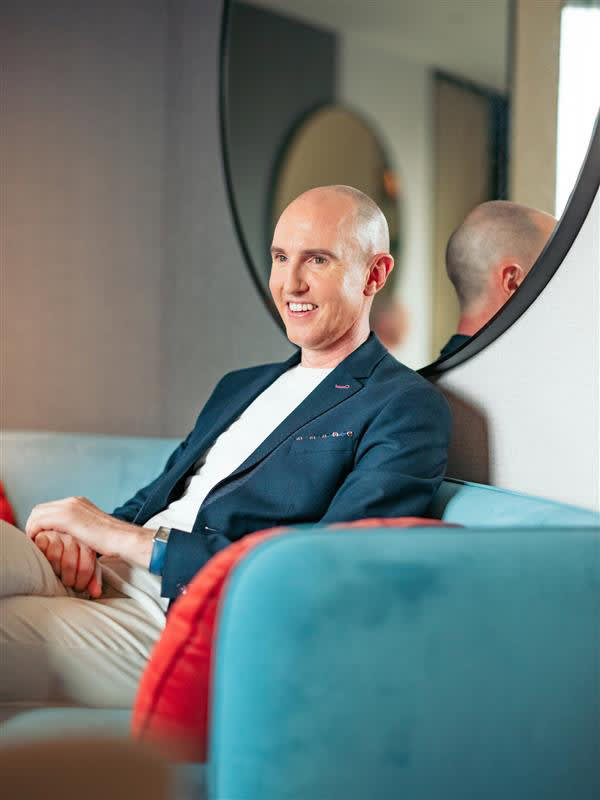
On the 2026 economic outlook
“2026 is likely to remain a year of both challenge and opportunity. While global headwinds will continue to influence sentiment, broader economic fundamentals remain resilient, underpinned by stability and sustained interest from global capital, particularly in markets such as Singapore.
Our focus remains on what matters most over the long term: Client relationships, brand integrity, and enduring value. We are pursuing client-led growth, ensuring our brands – Range Rover, Defender, Discovery and Jaguar – continue to deliver compelling propositions and ownership experiences that resonate deeply with discerning clients.
This means strengthening our physical and digital presence, staying closely attuned to evolving luxury demands, and continuing to invest in the client experience. In an environment defined by uncertainty, consistency, trust and relevance are what truly differentiate luxury brands.”
On emerging APAC trends
“Two broad trends stand out in Singapore and across the Asia Pacific. The first is sustainability with substance. Clients are increasingly focused not only on powertrains, but also on material provenance and environmental impact, aligning closely with our own sustainability commitments.
The second is personalisation and emotional connection. Demand for bespoke specifications and curated finishes continues to grow, particularly through our Range Rover SV and Defender OCTA programmes, underscoring the desire for highly individual expressions of modern luxury.
Across these trends, our vision remains consistent, to create vehicles that are purposeful, refined and enduring.”
On the factors influencing COE prices in 2026
“COE dynamics are influenced by regulation, economic conditions and buyer sentiment, which makes precise prediction difficult. While some fluctuation is inevitable in 2026, our priority is to support clients with confidence regardless of how COE conditions evolve.
An ageing vehicle population suggests increased COE supply into 2026 and 2027, while demand is expected to remain resilient, supported by replacement cycles and continued interest in premium vehicles. Together, these factors are likely to offset one another.
For luxury clients, COE is rarely the primary driver of decision-making. Their focus is on confidence, clarity and an ownership experience that endures beyond short-term market cycles.”
On JLR’s electrification strategy
“Electrification remains a core pillar of our ‘Reimagine’ strategy, and our commitment to it remains unchanged. What is evolving is the pace and shape of adoption, which continues to differ across markets and client profiles.
Our approach is deliberately balanced, spanning BEV (Battery Electric Vehicle), PHEV (Plug-in Hybrid Electric Vehicle) and ICE (Internal Combustion Engine), reflecting how our clients live and travel, particularly in markets like Singapore. We are preparing for our next-generation BEVs, including the all-electric Range Rover and the reimagined all-electric Jaguar, which will define a new chapter of modern luxury through design purity, capability and emotional appeal.”
On hedging against the rise of Chinese EV makers
“Competition naturally accelerates innovation, particularly in the EV space. Our strength lies in the clarity and distinctiveness of our brands.
Clients choose our vehicles not simply for performance or technology, but for the depth of character, design philosophy and sense of identity they embody. Range Rover represents peerless design and exceptional refinement; Defender stands for purpose, adventure and authenticity; Discovery is born of British ingenuity and made for travel; and the reimagined Jaguar is designed to inspire like no other. These are qualities shaped over decades and are not easily replicated.
Equally important is the ownership journey. Through personalised services and curated touchpoints, we continue to build lasting relationships with our clients, grounded in authenticity and craftsmanship.
The growing presence of Chinese EV manufacturers signals a maturing EV landscape. For us, this reinforces the importance of delivering electric vehicles that remain unmistakably true to our brand DNA.”
FRANCESCO SCARDONI, REGION DIRECTOR, AUTOMOBIL LAMBORGHINI APAC
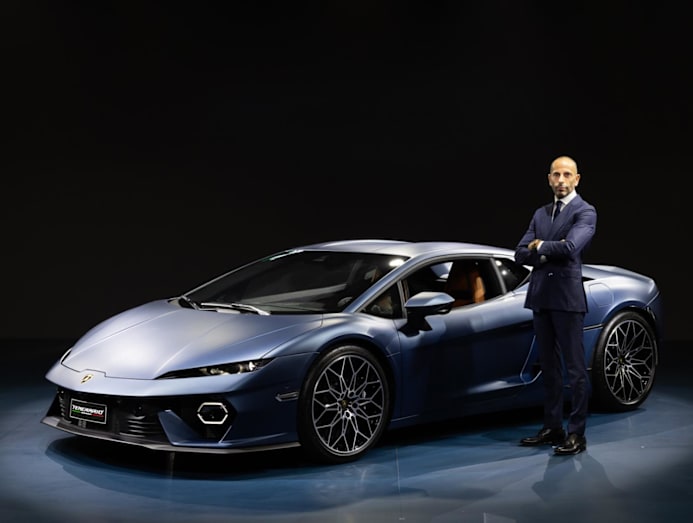
On the 2026 economic outlook
“We are observing that while the broader economic environment is becoming more complex – with rising cost pressures, shifting trade dynamics, and more cautious consumer sentiment – the top tier of the luxury segment remains relatively stable. Customers are more discerning in their decisions, but their desire for authentic, emotional, high-performance experiences continues to hold, and this is reflected in the continued interest and engagement from our customers.
Beyond electrification, one trend we are seeing across the APAC region is a steady and growing acceptance of hybrid technology. Customers recognise that hybridisation allows us to enhance performance while preserving the emotional character that defines a Lamborghini.
Another emerging trend is the growing appreciation for technology that elevates – rather than replaces – the visceral super sports car experience. For Lamborghini, electrification is not about compromise; it adds a new dimension – greater responsiveness and enhanced performance – while fully preserving the DNA that makes a Lamborghini unique.”
On Lamborghini’s three-prong strategy
“With a clear and consistent brand and product strategy, we believe that Lamborghini is prepared to navigate the evolving global landscape. We are confident that the demand for our highly emotive super sports cars remains high, and we will continue to focus on our unwavering commitment to exclusivity, product customisation, and providing bespoke driving experiences going into 2026.
Our strategy is driven by three key pillars: Products, luxury marketing and dealer network. Strong demand for models like the Revuelto, Urus SE and Temerario continues to fuel sales growth while luxury marketing activities such as personalised, exclusive ownership experiences that deeply resonate with our clientele enhances the customer experience. Finally, strengthening partnerships with local dealers ensures we meet the evolving needs of the market.
Our strategy is not just about selling cars; we are building a community and strong brand presence through customised driving experiences, immersive lifestyle experiences, and deeper engagement with our customers.”
On fluctuating COE prices
“COE trends are inherently difficult to predict. Even with a potentially larger vehicle quota, premiums may still rise if overall market demand continues to strengthen.
Purchasing one of our cars is an emotive and aspirational decision. The demand for Lamborghini is driven by the powerful emotions our super sports cars evoke, and the immersive experiences we build around ownership.”
On electrification vs market demand
“Our long-term strategy remains guided by our ‘Direzione Cor Tauri’ [electrification strategy]. Our latest milestone was the full hybridisation of our entire model range, making Lamborghini the first super sports car manufacturer to achieve this.
As for the first fully-electric Lamborghini that is part of the ‘Direzione Cor Tauri’ roadmap, we are carefully evaluating the market dynamics. We are seeing a flattening of the interest in electric cars and this insight is crucial as we shape the future of our fourth model, the Lanzador, which is planned for launch at the end of the decade. We will decide in the coming months whether it will debut as a fully electric or hybrid model.
Our priority is ensuring that any future Lamborghini – whether hybrid or electric – delivers the emotional driving experience that defines our brand. We will continue to invest in technologies that uphold our DNA and meet the evolving expectations of our customers.”
On competing against high-end Chinese EV makers
“The rise of Chinese EVs have undeniably reshaped the global automotive landscape. However, the direct impact on Lamborghini remains limited. Chinese automakers focus primarily in the mass-market EV segment, while Lamborghini continues to lead in the luxury super sports car segment.
Lamborghini competes in a completely different arena – highly emotional, performance-driven super sports cars where craftsmanship, heritage and brand identity are irreplaceable. This remains our strongest area of differentiation, defining what sets Lamborghini apart.
At Lamborghini, we’re not just selling cars and mobility, we’re selling dreams. Our strength lies in preserving what cannot be replicated: The unmistakable emotional performance of a Lamborghini. Through our ‘Direzione Cor Tauri’ strategy, we continue investing in next-generation hybrid technologies to ensure we maintain that visceral, unmistakable character even as the industry trends toward electrification.”
MARTIN BAYER, MANAGING DIRECTOR, AUDI SINGAPORE
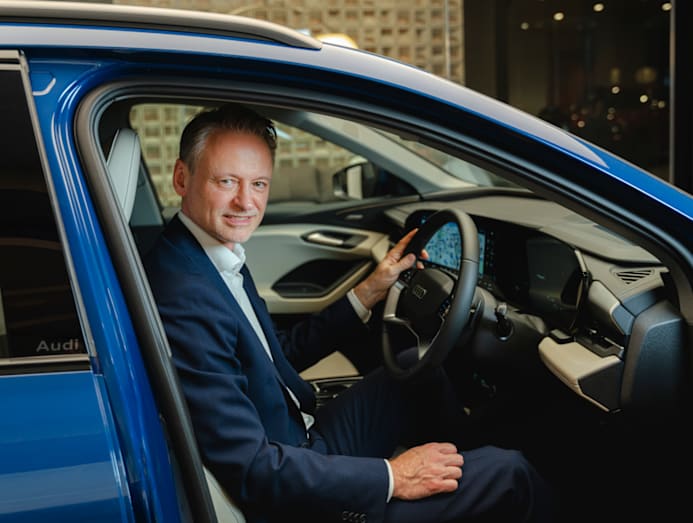
On Audi’s direct-to-consumer model debut in Singapore
“2026 is shaping up to be a year of opportunity. The premium segment in Singapore has historically shown strong resilience, and we expect this to continue as customers look for brands that deliver quality, consistency and long-term value.
Our focus remains on strengthening the Audi experience end-to-end. Singapore is the first market globally to adopt Audi’s direct-to-consumer (DTC) model, and this shift has given us far deeper visibility into customer expectations. It keeps us closer to our customers, enables us to act on their feedback directly, and allows us to react quickly. The DTC model also provides transparent pricing and full visibility of configuration options, giving customers more confidence and control whether they choose to purchase online or in person.
You can already see this transformation at the Audi House of Progress. It goes beyond being a retail space – it represents a more meaningful and holistic way for different audiences to engage with the brand, offering seamless omnichannel purchase, curated lifestyle experiences, new product introductions, and many opportunities for different bespoke event formats.
While the economic environment may shift, our strategy remains clear: Stay close to our customers, anticipate their needs, and deliver an Audi experience that is distinctive, relevant, and future-ready.”
On new models to expect in 2026
“Looking ahead to 2026, we will continue to expand our product portfolio, especially as we anticipate growing interest in electrification. The arrivals of the Audi Q6 e-tron and A6 e-tron [in 2025] were important milestones, as we now have a complete range of e-tron models in Singapore to meet evolving customer preferences. At the same time, we will strengthen the rest of our line-up to ensure customers have the right mix of choices. This includes the introduction of the new Audi Q3, which we debuted at the Singapore Motorshow in January.”
On the unpredictability of COE prices
“COE prices are influenced by a wide range of factors, and the reality is that no one can predict their movement with certainty. Adjustments to quotas, shifts in market demand, broader economic conditions, and even the arrival of new models or entrants can all affect how consumers bid. These elements interact in complex ways, which is why COE premiums can fluctuate from round to round.
That said, higher COE prices also signal something important: There is still strong underlying demand for car ownership in Singapore. Many people continue to aspire to own a vehicle, and that fundamental desire has remained consistent over the years.”
On expanding Audi’s electric portfolio
“The global EV landscape is evolving quickly, and competition is intensifying. This is a positive force for the industry – it pushes every brand to innovate faster and think differently.
Electrification remains a core pillar of Audi’s long-term product strategy. Our e-tron range continues to perform strongly worldwide, with more than 163,000 units delivered in the first three quarters of 2025. The Audi Q6 e-tron has been a standout contributor, recording close to 64,000 deliveries globally over the same period.
In Singapore, the Q6 e-tron made its debut in May 2025, and more recently we introduced our first electric sedan, the A6 e-tron, completing the e-tron range locally. These launches build on the strong foundation set by earlier models such as the Q4 e-tron and the e-tron GT.
With Singapore’s EV adoption accelerating rapidly and ranking among the most progressive markets in the region, offering a comprehensive electric line-up ensures we meet the evolving needs of prospective customers.
Looking ahead, our commitment to EV technology is unchanged. We are developing new platforms, expanding the e-tron line-up, and deepening our expertise through motorsport.”
On Audi’s Formula 1 debut
“Our 2026 entry into Formula 1 plays a significant role in [enhancing our EV capabilities]. The next-generation F1 power units will run on fully sustainable fuels and feature a far greater proportion of electric power. This pushes manufacturers to develop more efficient energy recovery systems, more powerful electric motors, and highly-advanced thermal management. The work we are doing for F1 strengthens our engineering capabilities, and the insights gained will directly influence the efficiency and performance of future Audi cars.”
MARCEL LUIS MUSTELIER PEREZ, PRESIDENT & CEO, MERCEDES-BENZ SINGAPORE
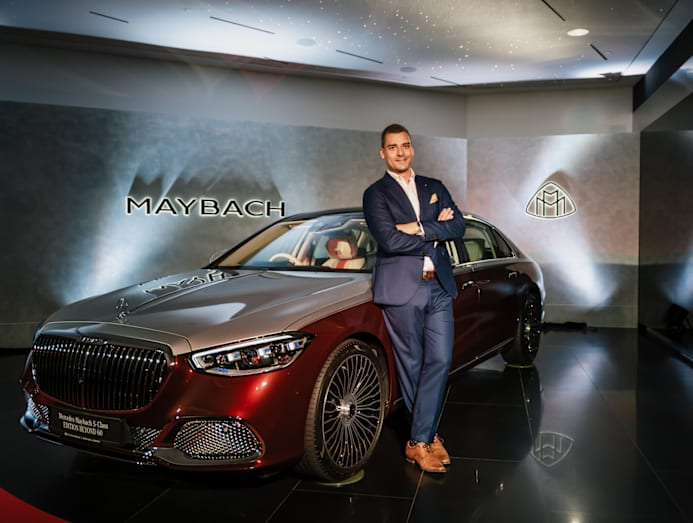
On developing a customer-centric strategy
“In an increasingly complex and fast-changing environment, our focus remains on keeping Mercedes-Benz strong, relevant and deeply trusted by our customers. In Singapore, we continue to build on what defines us as a brand: Heritage, innovation, exceptional quality and sustainability – always placing our customers at the centre of every decision.
This customer-first approach has enabled us to build long-standing relationships grounded not only in product excellence, but also on trust and a premium ownership experience that evolves with changing lifestyles. Even in a highly regulated market, this continues to resonate strongly.
In Singapore, sales of our top-end vehicles grew by 122 per cent year-on-year, while our Battery Electric Vehicle (BEV) portfolio expanded by 45 per cent, underscoring the strength and relevance of our portfolio and ownership proposition."
On new models to expect in 2026
“As we mark 140 years of innovation in 2026, we do so with strong momentum. Customers can look forward to the arrival of key models including the new CLA, GLB and GLC SUVs, as well as a facelifted S-Class. This marks the beginning of our most ambitious product offensive to date. Over the coming years, more than 20 new models will be introduced across segments, including Top-End Vehicles from Mercedes-AMG, Mercedes-Maybach, and the G-Class.”
On fluctuating COE prices
“We expect COE prices to continue fluctuating through 2026, which is consistent with the system’s design to keep our vehicle population sustainable. Prices are influenced by broader economic conditions, shifts in consumer confidence, and changes in overall vehicle demand, which are beyond any single stakeholder’s control.
Recent trends show that the demand for cars in Singapore remains resilient despite economic headwinds. In a tightening COE environment, customers are becoming more discerning, focusing on making the right long-term decision, and are drawn to brands they can trust, both emotionally and financially.
As COE prices remain elevated, we also observe a growing interest in leasing, which offers customers a flexible and accessible way to enjoy the Mercedes-Benz experience while managing the overall cost of mobility.”
On accelerating towards electrification
“Mercedes-Benz is not scaling back on electrification – in fact, we are accelerating it, while staying tactically flexible to meet the diverse needs of our customers.
Our commitment to ‘Ambition 2039’, our goal of achieving net carbon-neutral mobility across the full value chain, remains unchanged. We are pursuing an electric-first strategy, and are working towards offering an electric alternative across all our model lines. This significantly expands our already broad EV portfolio while giving customers the freedom to choose what best fits their needs and lifestyles.
In 2026, we will introduce the next-generation electric CLA based on our new ‘electric-first’ Mercedes Modular Architecture. This brings our groundbreaking VISION EQXX technology into the compact segment, setting new standards in efficiency and innovation. In parallel, battery innovation at our eCampus in Stuttgart is focused on reducing costs by over 30 per cent while preserving the performance, safety and durability that define the Mercedes-Benz DNA.
In Singapore, all new Mercedes-Benz vehicles sold locally are already produced on a carbon-neutral basis. We take a holistic view of EV ownership and a key part of this ecosystem is MB.CHARGE. Through a single app, customers have access to more than 5,000 public charging points in Singapore, with real-time station availability, transparent pricing and a single consolidated bill. This reduces friction in daily EV usage and gives customers confidence that charging is simple, seamless, and fully integrated into the Mercedes-Benz experience. The network will continue to expand in 2026, further supporting EV adoption.”
On the shift towards meaningful luxury
“Expectations within the luxury segment are evolving. While craftsmanship, design and engineering excellence remain fundamental, modern luxury must also be meaningful and sustainable, grounded in credible heritage and authentic stories. This is why icons such as the G-Class continue to resonate so strongly with customers. True luxury is built on substance, legacy and emotional relevance, not price alone.”