When a family home in Singapore feels more like a resort than a house
Behind its clean, rectilinear facade, Horizon House opens up to a secluded pool deck, attic gardens and treetop views, turning everyday living into a tropical escape.
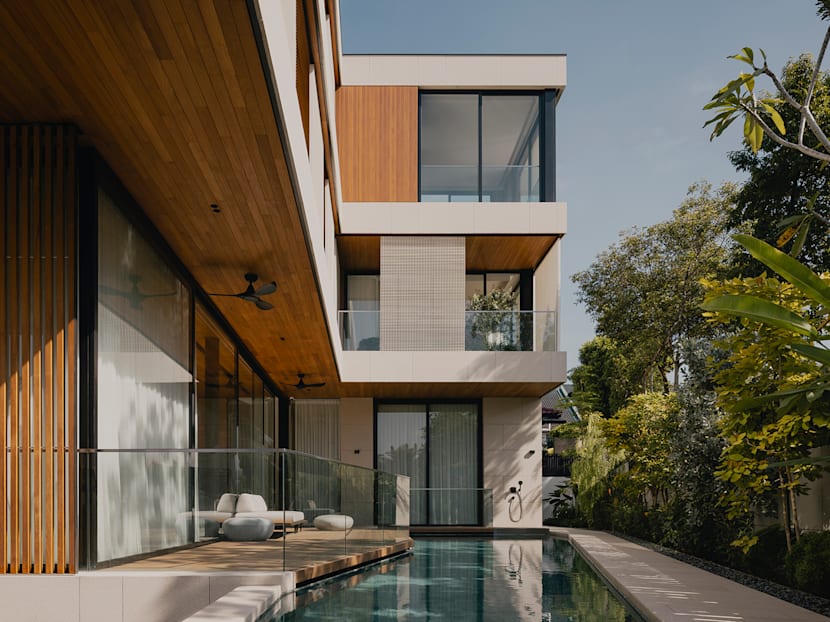
Working with a trapezoidal site, Horizon House opens up to forest views, breeze-filled balconies and a sculpted pool while staying remarkably private from the street. (Photo: Studio Periphery)

This audio is generated by an AI tool.


With its clean geometry and warm, natural-looking material palette, this semi-detached residence by Ming Architects is an elegant addition to its neighbourhood in Bukit Timah. To get there, you first navigate a maze of streets lined with an eclectic, sometimes traffic-stopping collection of houses. Arriving at this corner feels like a breath of fresh air.
It is fortuitous that the site bookends a row of houses. This position not only makes it easier to appreciate the architecture but also turns the house into a study in how to create privacy without resorting to a fortress-like form. For its residents, the added sense of space in an otherwise densely packed street must be priceless.
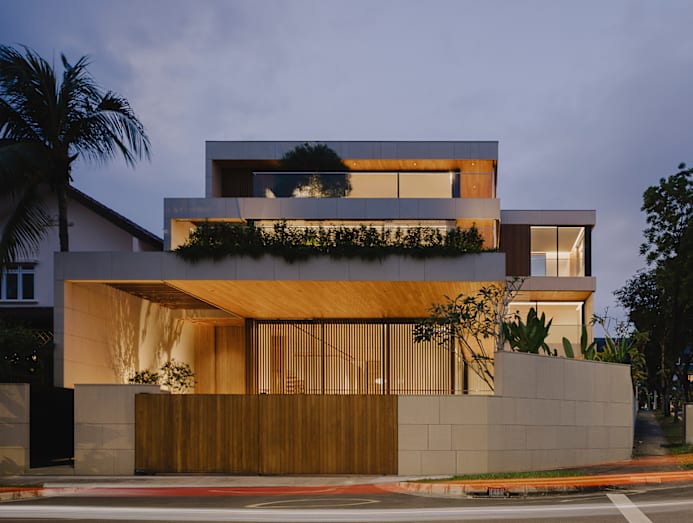
From the road, the massing is clearly visible as stacked rectilinear volumes, like a three-tiered cake, set within an L-shaped footprint. This inspired the principal architect of the eponymous firm, Tan Cher Ming, to name the project Horizon House. Working in his favour is the way the site slopes upwards from front to back. “The house is actually elevated, so it looks quite grand from the facade,” he said.
One of the key drivers that led Tan to this design solution was the view of Greenleaf Forest that the second and attic floors would be privy to. Separated only by a row of houses, the upper levels look towards a lush tropical canopy that stretches as far as the eye can see. “It was very obvious straight away that we had to do this,” he added.
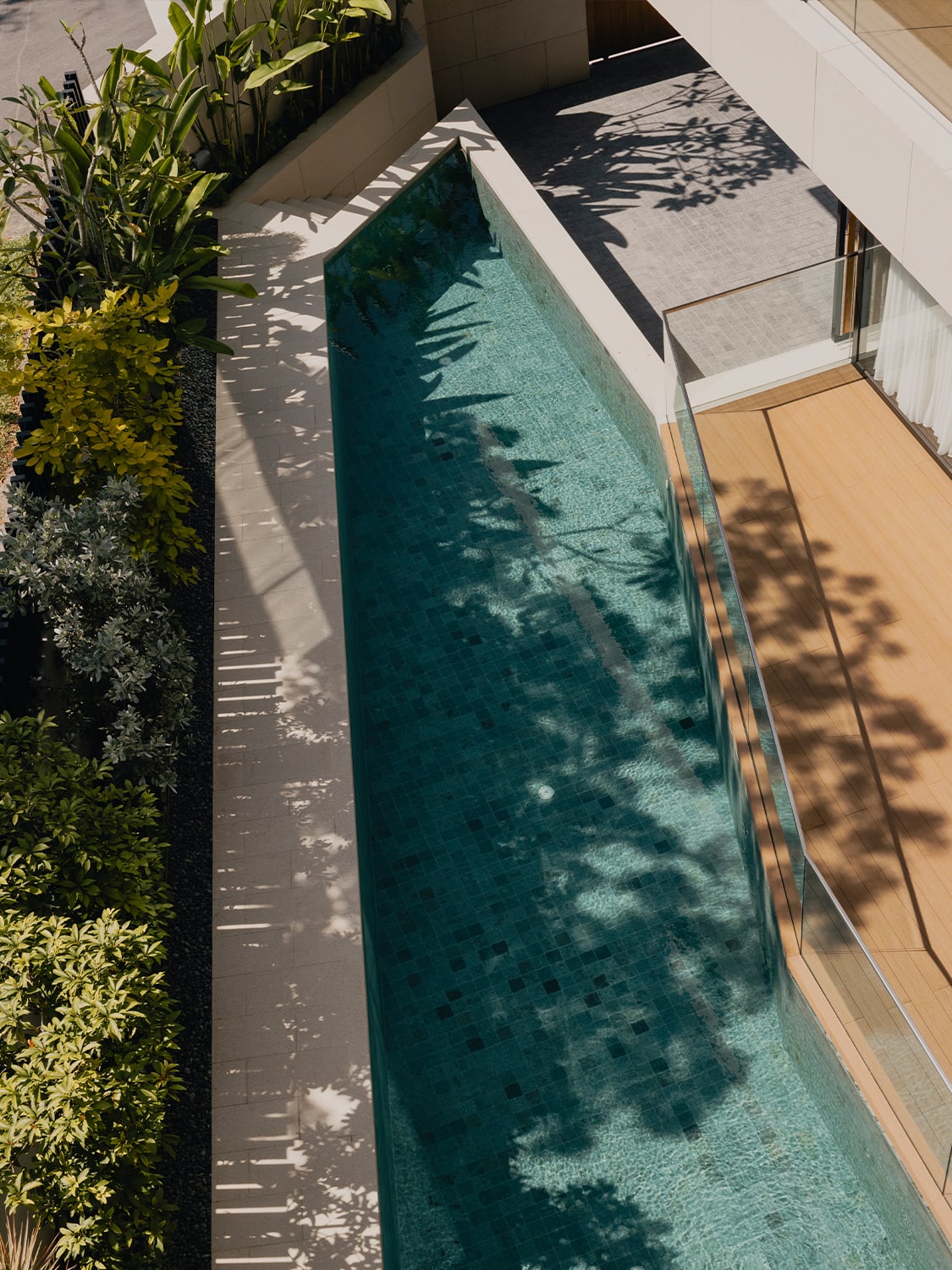
Another factor was the client’s request for regular interior spaces, despite the trapezoidal nature of the land, which tapers towards the front. In response, Tan devised an L-shaped plan for the building and tucked a swimming pool, styled as an irregular polygon, between the two wings. He explained: “We maximised the use of the site and kept the odd-shaped parts for things like the pool and outdoor areas.”
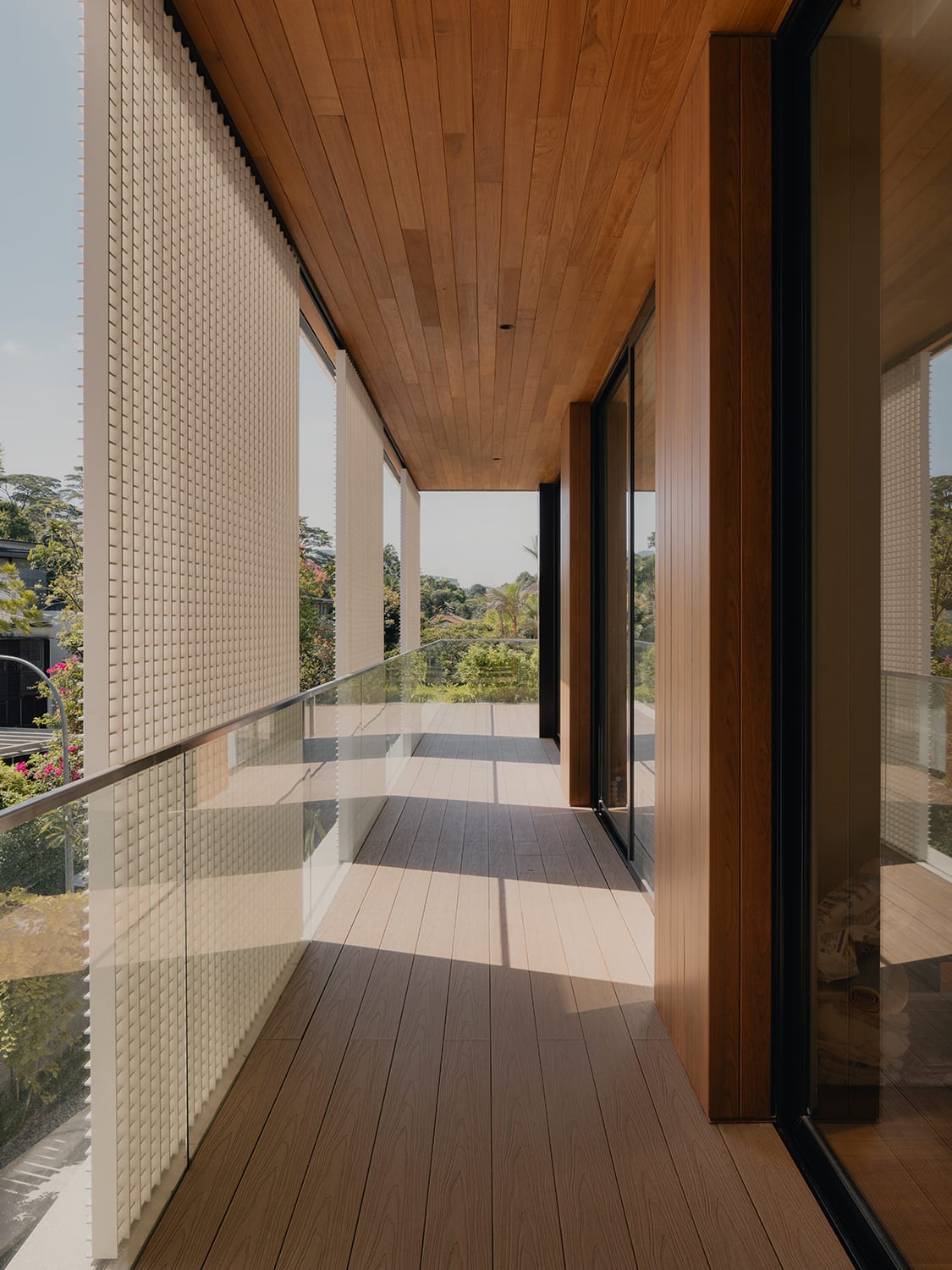
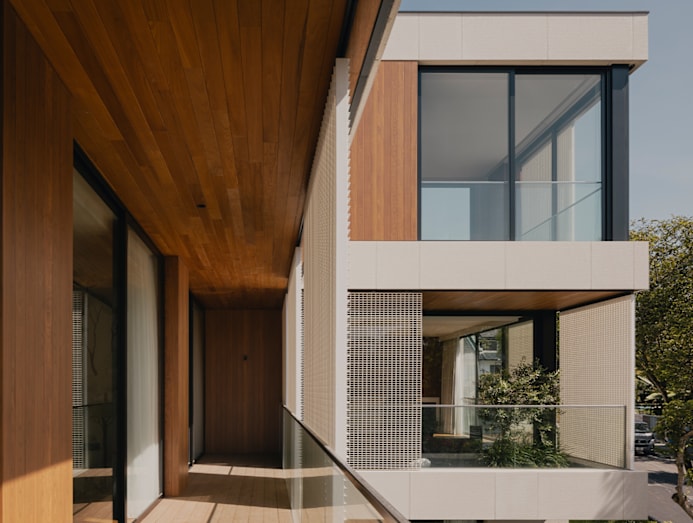
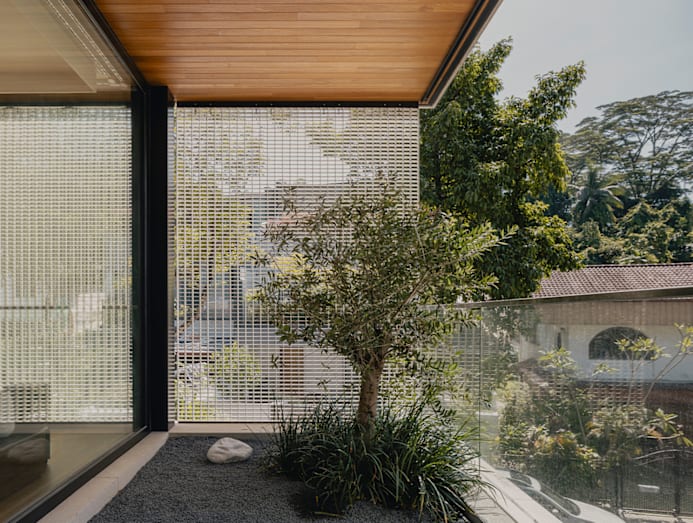
Back on the facade, several elements stand out. The first is the use of aluminium sliding screens on the upper floors. Each panel has a tight, uniform grid pattern that feels like a delicate piece of textile. Although lightweight in appearance, the screens serve as a barrier against heat and rain when pushed together, without compromising daylight or aesthetics.
The screens also add a pixellated texture to the facade design. They contrast with the smooth, beige, granite-clad walls, glass doors and Burmese teak panels. Greenery further softens the hardscape, including a thick fringe of shrubs edging the top of the car porch and a tree growing on the attic terrace.
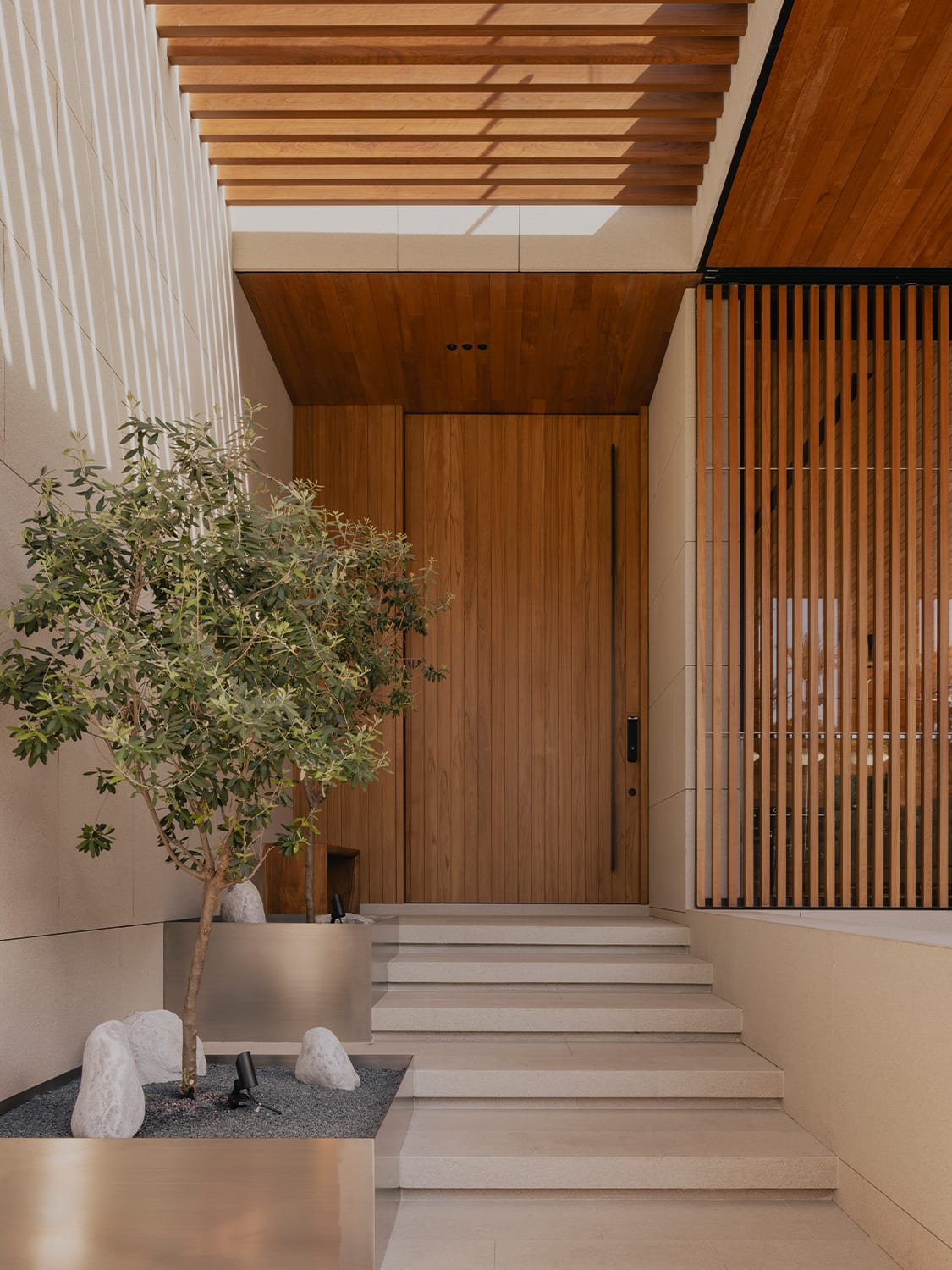
At ground level, the house is accessible via a gentle flight of stairs from the pedestrian gate. The contemporary tropical resort vibe is strongest here, with deep, wide steps wrapped around shiny steel planter boxes artistically filled with pebbles and stones. Overhead, a teak trellis demarcates the walkway and lets in sunlight.
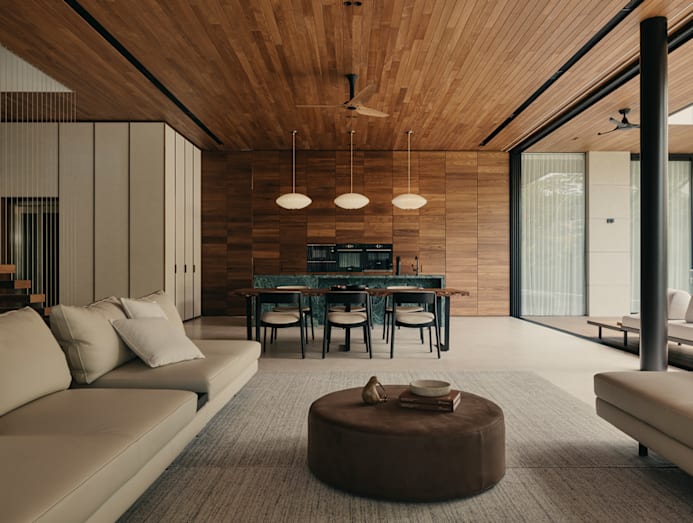
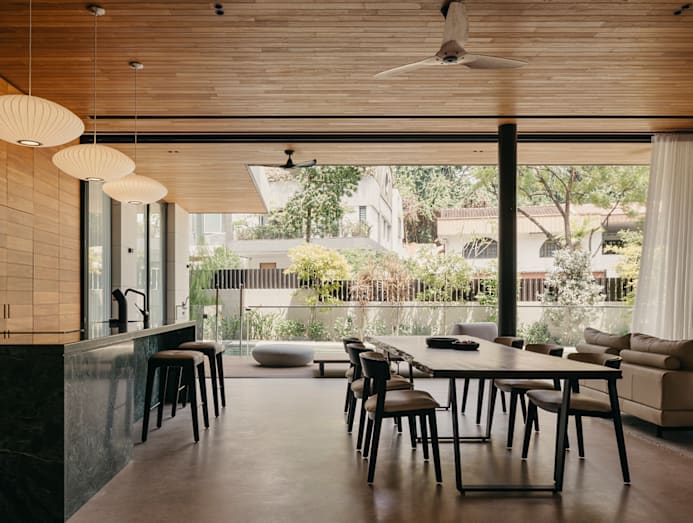
The main door soars 3.5m high, matching the ceiling of the first floor, where the public areas are located. Full-height glass doors along the living and dining room and dry kitchen open onto the pool deck, broken up only by structural columns discreetly painted black.
A standalone island in the dry kitchen is wrapped in Verde Alpi marble, its green boldly accenting the space. “We wanted something that has a very strong contrast to the creamy beige of the limestone floor tile, to make it pop,” said Tan.
The wall behind the dry kitchen is similarly covered in teak panels, albeit only a fraction of the length of those running across the ceiling. Apart from concealing a pantry, they also hide two doors: one leading to an en suite bedroom in the rear wing and the other to the wet kitchen and backyard.
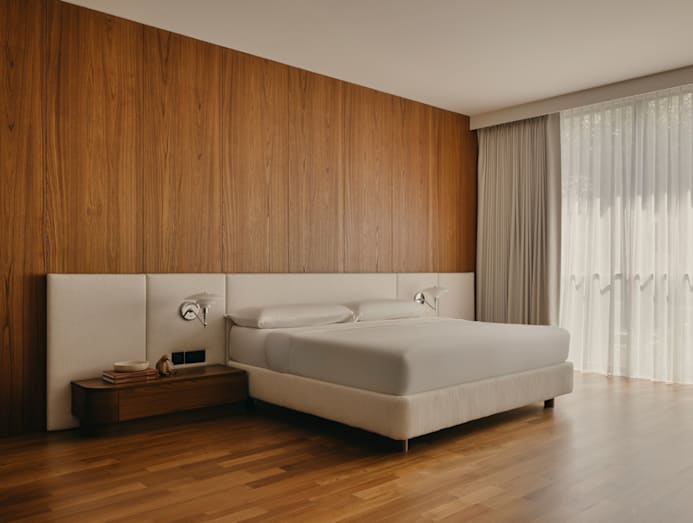
The former occasionally houses the homeowners’ parents, who visit to soak in the resort-like vibe Tan has created when they are in need of a breather. Opening the glass doors in the bedroom offers a seamless connection to the pool and garden. It is easy to imagine they are at an Aman or Park Hyatt – all that is missing is the sound of crashing waves and butler service.
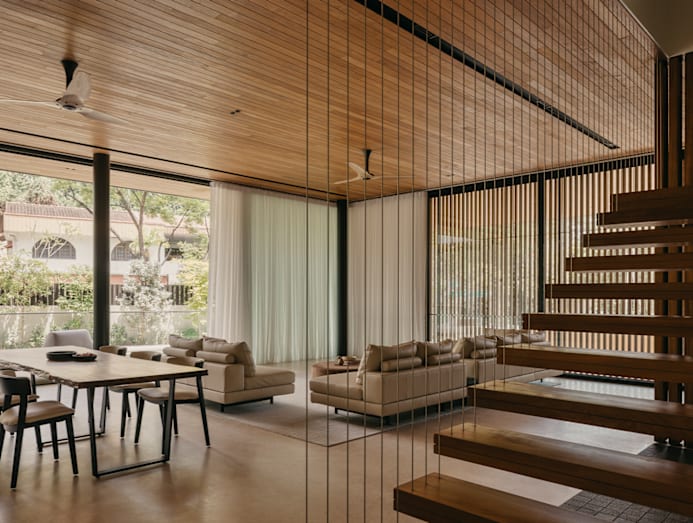
A flight of stairs with a cantilevered design and steel cables as a balustrade leads to the upper floors. The effect is a very light touch on the interiors, a deliberate move by Tan. “We always want to open up the house as much as possible, to make the space feel larger and more spacious.”
On the second floor, three bedrooms sit side by side, with the first two sharing a Jack-and-Jill bathroom. Corridors flank them, one internal and the other doubling as a wraparound balcony, shielded by the aluminium sliding screens. Three gardens have been inserted on this floor, two of them each occupied by a Casuarina tree.
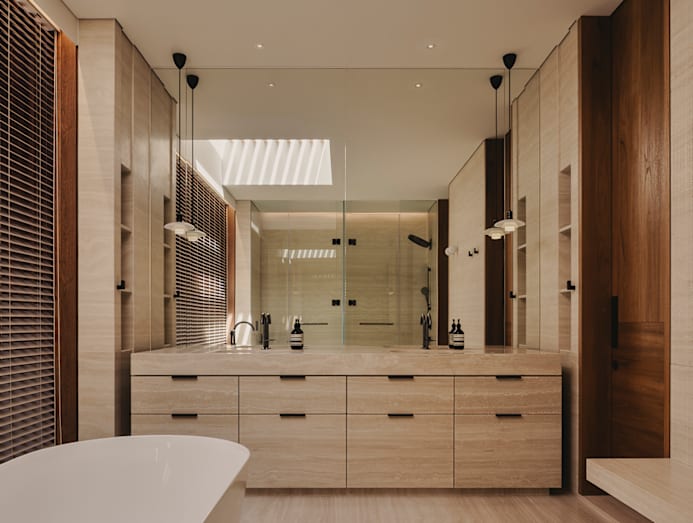
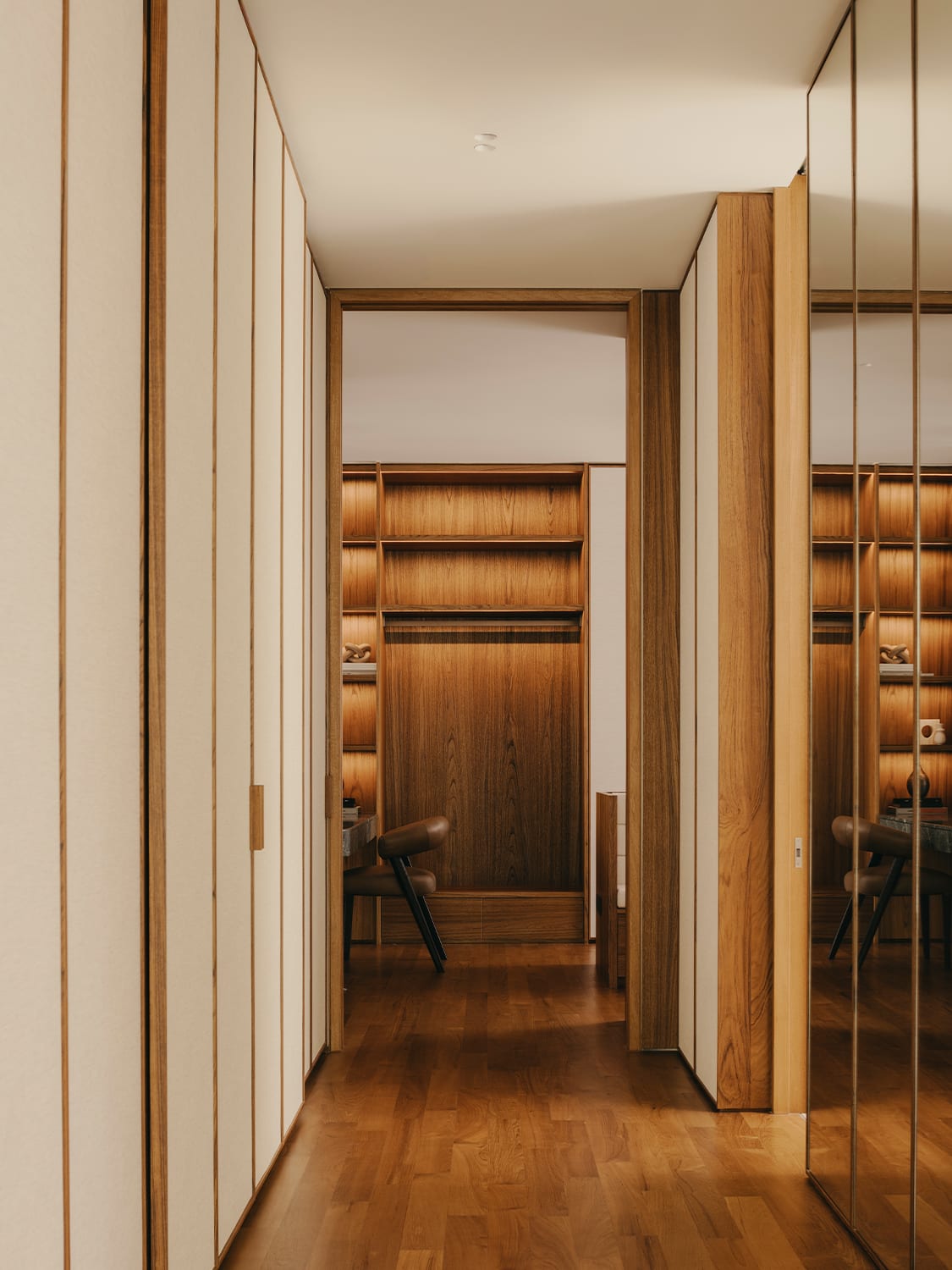
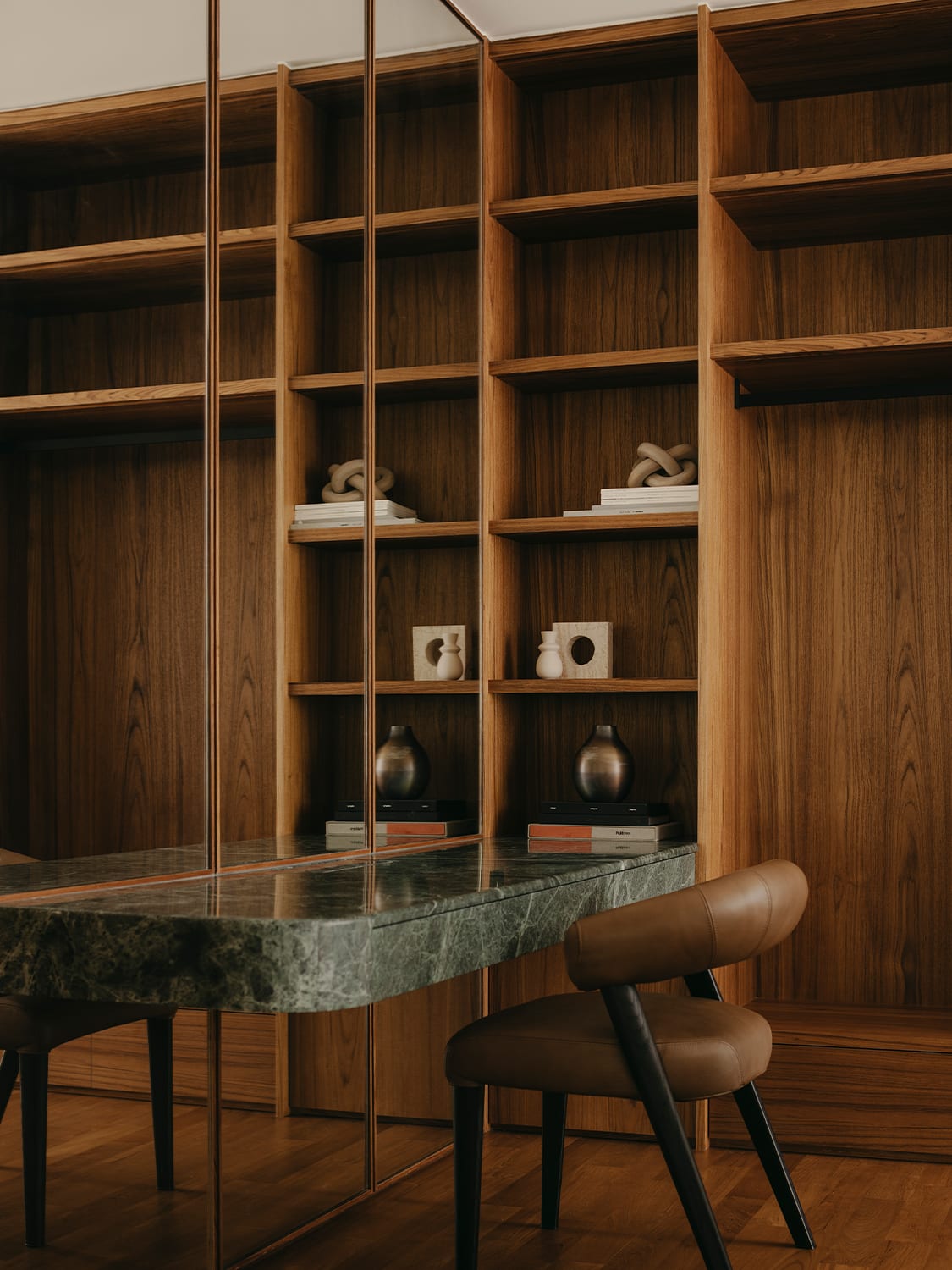
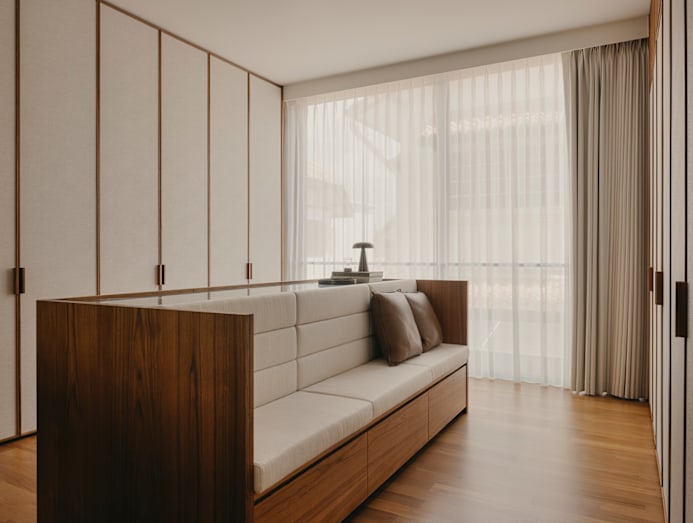
The master bedroom suite takes up the entire rear wing and is notable for its generously sized walk-in wardrobe, large enough to be a room on its own. There is a workstation along one wall, and an island sits in the middle, with a built-in sofa running its length. The countertop is clad once again in the same Verde Alpi marble.
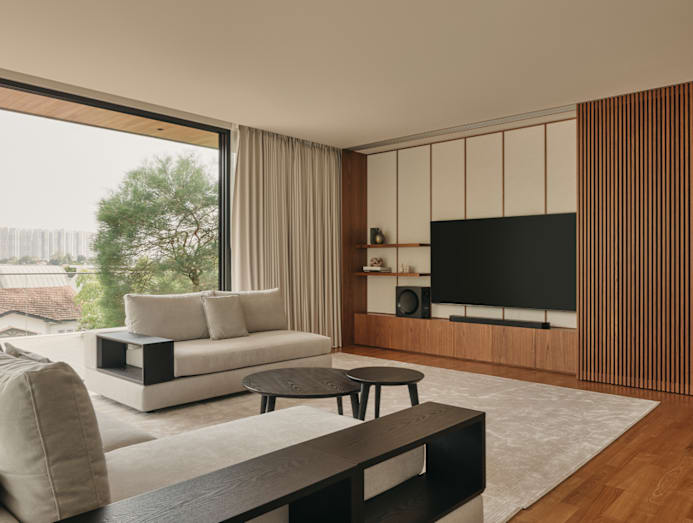
Taupe-toned fabrics cover the doors and sofa, lending a soothing and coherent feel to this everyday space. “Because of the amount of surface area, we decided against having this space completely clad in timber or it would become too dark,” shared Tan.
A second living room takes up most of the attic level, together with a his-and-hers study and home gym. Once again, spaces are carved out to accommodate small gardens large enough to grow a Casuarina tree. “These green pockets provide not only visual relief but also frame views, filter light, and enhance cross-ventilation, reinforcing a sense of living amid nature,” said Tan.
From the rooftop terrace, what is immediately audible – for now – is the sound of construction from the plot directly facing Horizon House. The residence there has also been designed by Tan and is currently being built. The owners commissioned him for the project after they liked what they saw in their opposite neighbour.
It is the ultimate endorsement Tan could receive that he has done a good job with Horizon House, reinforcing that his creative direction is the right one to pursue.
“I often receive comments that my projects do not look like they are located in Singapore. I draw inspiration from architecture all around the world, and am slowly developing my own interpretation of contemporary architecture suited to our local context and style of living,” he said.