The Maserati MCPura embodies the art of Italian luxury and racing precision
Combining sculptural beauty with racing DNA, Maserati’s MCPura represents the brand’s boldest expression of elegance and performance yet — where craftsmanship meets pure engineering brilliance.
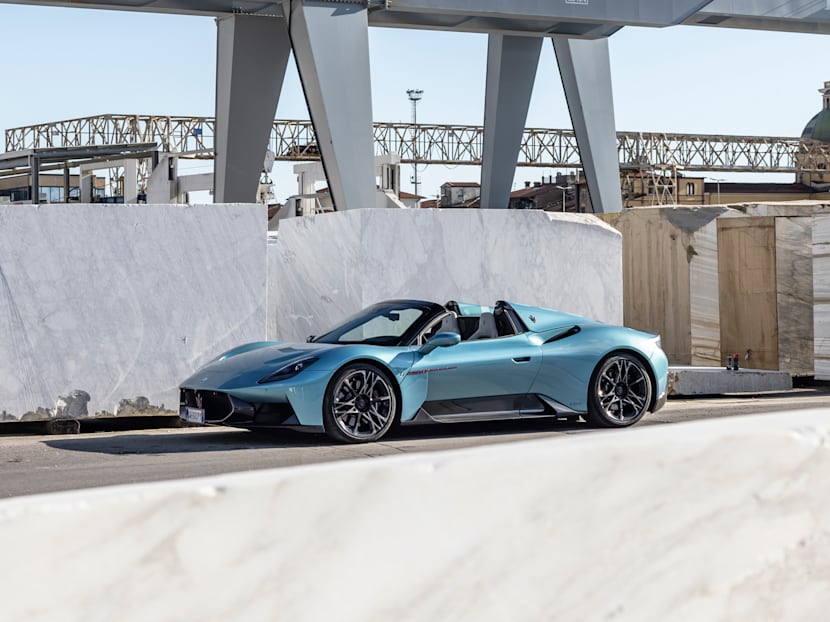
The Maserati MCPura. (Photo: Maserati)

This audio is generated by an AI tool.

Don’t be fooled by prior reviews you may have read about the Maserati MCPura. For those who crave both automotive theatre and technical mastery, the Maserati MCPura stands as an unmistakable statement. This is not merely a supercar – it's a sculpted expression of Italian design, honed with motorsport DNA and engineered for those who demand more from every drive.
ADAPTIVE SUSPENSION AND DRIVER-CENTRIC DYNAMICS
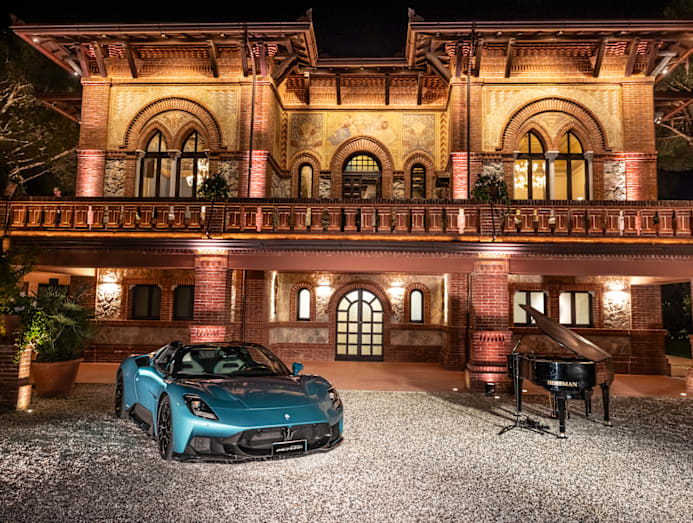
Maserati introduced the MCPura in September 2025, with members of the automotive media receiving their first experience of the vehicle in October 2025. The Modena-based manufacturer hosted us at Forte Dei Marmi, a renowned seaside destination that features both mountainous terrain and the Tyrrhenian coastline, complemented by distinguished beach clubs, elegant villas, and upscale hotels. The locale has attracted prominent residents such as the Agnelli and Armani families, Andrea Bocelli, Queen Paola of Belgium (who was born in the town), and if you looked further back in time, Charlie Chaplin.
“MC” stands for Maserati Corse, and cars bearing that carry on their shoulders the brand’s immaculate racing heritage. Through its storied past, the brand has captured trophies in the Grand Prix, with Sterling Moss being its most famous race car driver of the 1950s, and more recent wins at the FIA GT Championships with the MC12.
The Maserati MCPura (meaning ‘pure’) was formally unveiled at a welcome dinner held at Andrea Bocelli’s villa. Although Mr Bocelli was not present, the focus of the evening remained squarely on the new model. It targets luxury buyers seeking emotion, speed, and Italian style. The car is purely about aesthetics, while retaining its Nettuno soul.
We set off from a local beach club (where else!) for our test drives the following day toward Cava Della Cerviole, a marble quarry emblematic of the region. Winding mountain roads, switchbacks, tunnels, and blind corners notwithstanding, the MCPura was a pure joy to drive. I was at the wheel of the Cielo – a cabriolet variant – which proved ideal for open-top driving in early autumn weather.
The supercar presents a suite of adjustable suspension settings to tailor your drive: in Wet and GT modes, you can switch between 'soft' and 'mid' damping – 'soft' optimises plush compliance for daily grand touring. Put it in Sport mode, and you'll find the default 'mid' setting, which stiffens the suspension. In ‘Corsa’ mode, you can ramp up the attack, where 'mid' and 'hard' settings prioritise razor-sharp response, with 'hard' the factory default. Each change is effortlessly executed with a swipe across the glass touchscreen rotary controller – a tactile fusion of innovation and style at your fingertips, except for ‘Corsa’, where you’ll need to twist the controller to set it as it switches off the stability control.
Transmission mapping is equally versatile: a dedicated console button toggles between fully automatic and manual modes, regardless of your chosen drive setting. Flick to manual and take command of gearshifts via the sculpted carbon fibre steering wheel paddles, and tap into the heart of the Nettuno V6 engine for maximum engagement.
The car’s configuration parallels the type of layout you’d see on bespoke racing cars, including F1 cars, with double wishbones at the front and semi-virtual double wishbones at the back. The 90-degree V6 twin turbo engine is paired exclusively with an eight-speed automatic transmission.
Maserati has increased the MCPura Cielo’s stiffness in the rear suspension slightly to account for the extra mass of the roof on the rear axle, and recalibrated its e-diff to be less reactive, easing the load on the steering. Otherwise, the Cielo shares the same compact multilink suspension and Brembo carbon-ceramic brakes with the coupe.
INTERIOR CRAFTSMANSHIP AND ERGONOMICS
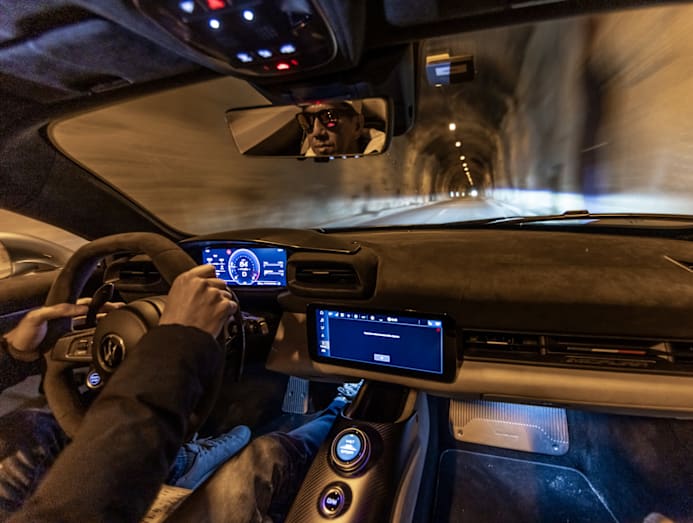
Inside, the MCPura channels a minimalist, motorsport-inspired atmosphere, a holdover from the MC20 it succeeds. However, the car now envelops its seats in Alcantara trims, dashboard, and door panels, reducing glare for high-focus drives but also shaving critical grams compared to traditional leather – a subtle nod to those who appreciate technical weight savings. Laser-etched accents in the Alcantara reveal flashes of contrast colour, adding both visual intrigue and bespoke character.
The new flat-topped steering wheel improves forward visibility, enhancing your connection to both the road and the digital, fully configurable instrument cluster – a must for track-day purists monitoring every metric.
The Maserati Intelligent Assistant (MIA) multimedia system includes two in-car screens: the digital cluster and central display, in similar forms and dimensions; they facilitate driving comfort by not requiring the driver to refocus when going from one screen to the other.
The 10.25-inch cluster is fully digital, with a Thin Film Transistor (TFT) display. The central display, again 10.25-inch, has an HD resolution and touchscreen functions typical of personal smart devices. The screen has a special anti-reflective coating to ensure maximum visibility even in direct sunlight.
You can opt for the standard six-speaker audio system or spring for a Sonus Faber 12-speaker system, which is sonically superior in my opinion.
Maserati has also distilled the MCPura’s controls down to the essentials: a precision rotary audio controller (mentioned earlier), window switches, drive/manual selectors, and the prominent drive mode dial, all intuitively clustered low on the centre console. As standard, it comes with adaptive dampers and a hydraulic nose-lift function so you can raise the nose on steep driveways or over speed bumps – useful for a car slung low to the tarmac.
Cabin storage is limited to a cup holder at the back of the console, a glove box, and that’s about it. It does offer a 100L boot behind the engine and a 50L shallow compartment under the bonnet at the front, perhaps sufficient for a quick overnight getaway. But don’t expect to do a grocery run with this car.
For open-air aficionados like myself, the Cielo variant’s roof mechanism is an engineering marvel, folding itself in 12 seconds. What I adored about the roof is its innovative, electrochromic PDLC (Polymer-Dispersed Liquid Crystal) glass roof, which transforms from crystal clear to opaque in an instant. However, the function is hidden in the central touchscreen menu – a quirk that means you might spend almost as long prodding the interface as the roof takes to fold away.
ON-ROAD COMPOSURE AND DAILY VERSATILITY
The MCPura is engineered as much for the weekday commute as the weekend blast. Even in the stiffest suspension setting, the ride remains unexpectedly supple, soaking up rough tarmac like a luxury grand tourer – a quality reminiscent of the iconic Quattroporte.
But make no mistake – this Maserati lives for performance. Its 3.0L twin-turbo Nettuno V6 delivers a linear surge of power, with an addictive snarl cresting above 4,000rpm. Linked to a rapid-fire eight-speed DCT, the gearing is perfectly spaced for both city sprints and Alpine passes, with a top speed of 320 km/h. The MCPURA may not eclipse a Ferrari 296GTB in raw launch times (0-100 km/h in 2.9 seconds), but its visceral road presence will turn heads everywhere you go.
The MCPura's handling is race-car sharp, and this is nowhere more evident than the curves on the beautiful Tuscan mountain roads. Point it at the turns, and the car steers wonderfully through a series of corners at breakneck speeds. Despite this, it isn’t overly harsh – handling is responsive and throttle response forgiving.
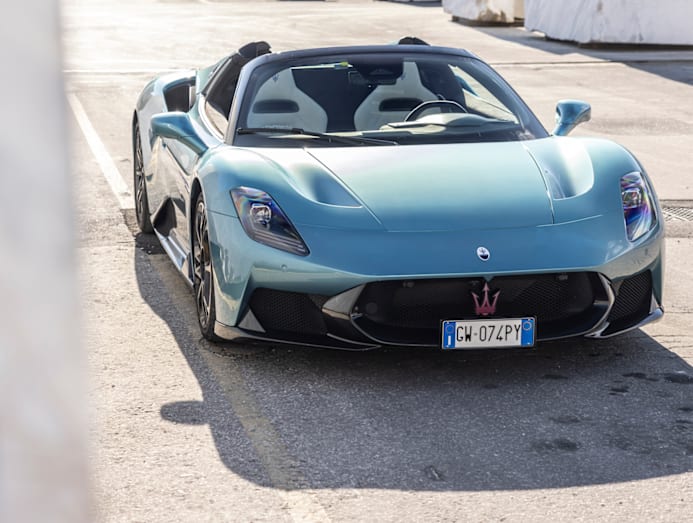
On the outside, the car is pure Italian poetry in motion. A redesigned front bumper inhales more air, and a restyled rear bumper wraps around a pair of exhaust outlets. A stronger rear diffuser better channels air from the closed underbody. All the wheel choices, except for the standard set, are forged. There is a new optional spoiler that integrates perfectly with the rear of the car, and you can order that in either raw carbon or painted to match the body.
Open the butterfly doors and you get an unobstructed look at the car’s design details. They make getting in and out of the cabin much easier, while also displaying the carbon fibre interior, aerodynamics, and exposed front wheel. It’s a combination of practical function and thoughtful design, highlighting features that would otherwise go unnoticed.
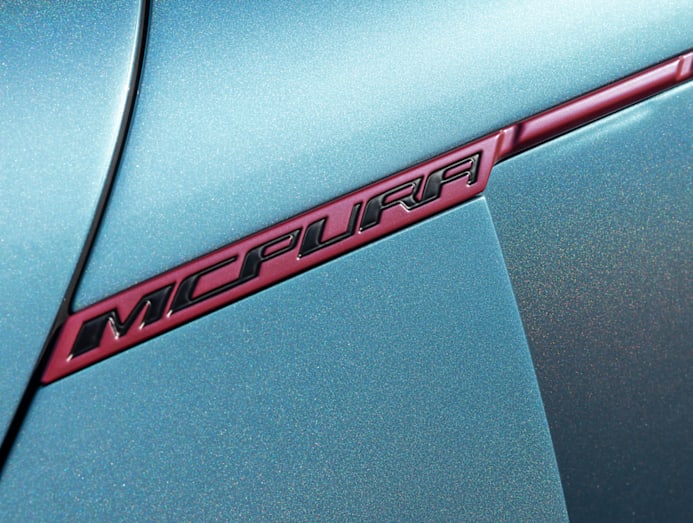
It looks the part from all angles, and its special matte paint job option called AI Aqua Rainbow shows off the car’s exquisite Italian craftsmanship and enduring style. Its production, painting, and personalisation are conducted entirely in Modena, representing the pinnacle of Maserati’s heritage and commitment to luxury.
As with luxury marques, Maserati’s Fuoriserie Program will customise whatever your heart desires, down to hand painting its logo on the side panels. You just need to be patient with final delivery.
GAPS IN ITS ARTISTRY
Where the MCPura needs to step up its game are with its exhaust notes – it sounds overly polite after the twin turbos spool and launch. The company has offered an aftermarket upgrade that raises exhaust pipe levels by +20 decibels, but it’s a shame this is not part of the standard specs.
Braking by wire is a science, but getting it just right is an art. The huge ceramic Brembo brakes lack the satisfying feedback you get from a proper mechanical setup, and can be daunting down a mountain road when cold. I’d suggest Maserati improve its braking feel – something like what you find in the new Honda NSX. That would make all the difference for me.
Another minor annoyance is with its fully digital rearview mirror, which relies on a rear camera to transmit a wide view of traffic behind you. While this is great for safety, it misses the mark when the sun is in your rear view. You’re literally blind from the sun’s reflection.
Facing front, when the sun shines in your eyes, its tiny sun visors are so thin they might as well rename them angel hair pasta – they offer no shade whatsoever.
EXCLUSIVE APPEAL AND PRODUCTION RARITY
These minor grumbles aside, choosing the MCPura isn’t just a matter of specs; it’s a declaration of taste. The MCPura is the evolution of the MC20 halo car that Maserati launched in 2020. With only about 1,700 units rolling out of Maserati’s Viale Ciro Menotti factory each year, exclusivity is virtually guaranteed.
If you’re a driver who appreciates the artistry of Italian engineering fused with track-bred capability – and you want your next car to be as emotionally rewarding on the road as it is in the paddock – the MCPura (for me, the Cielo is model to pick) is a machine that deserves your attention.