In review: Milan Fashion Week Spring 2024 collections
Quiet luxury, soft layers and handbags galore.
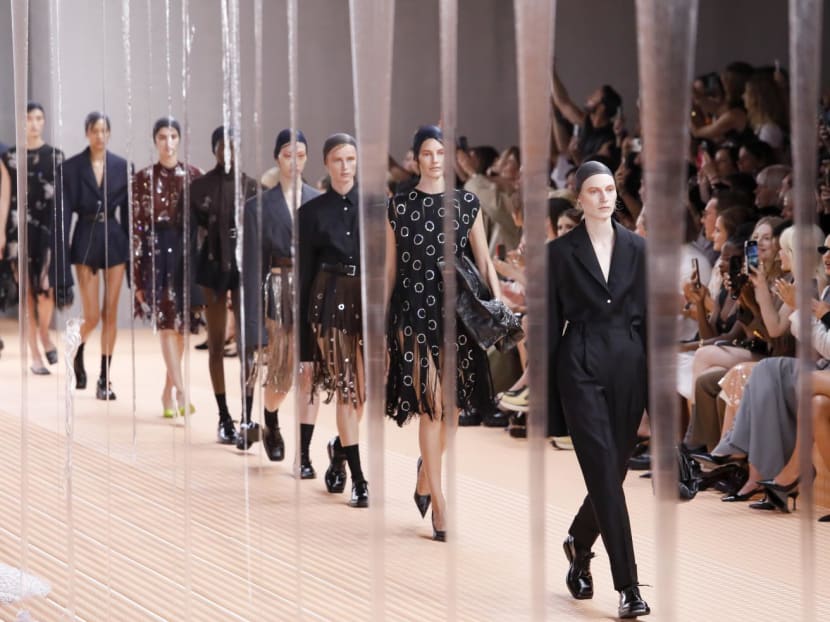
Prada's spring/summer 2024 collection. (Photo: Prada)
And so we get to Milan and the meat course of the fashion menu. At around the halfway mark of the seasonal fashion presentations, and with the heterogeneous scramble of New York, and the flutter and frivolity of London behind us, real fashion came quickly into focus in Milan and suddenly, it became clear what summer 2024 will be all about – or at least we are getting into the ballpark.
We get down to business in Milan – the snappy business of selling luxury. To understand what you are seeing in fashion, as in everything else in life, you need to wear dollar-tinted glasses. Follow the scent of money like a hound, and you will begin to understand fashion in all its various expressions.
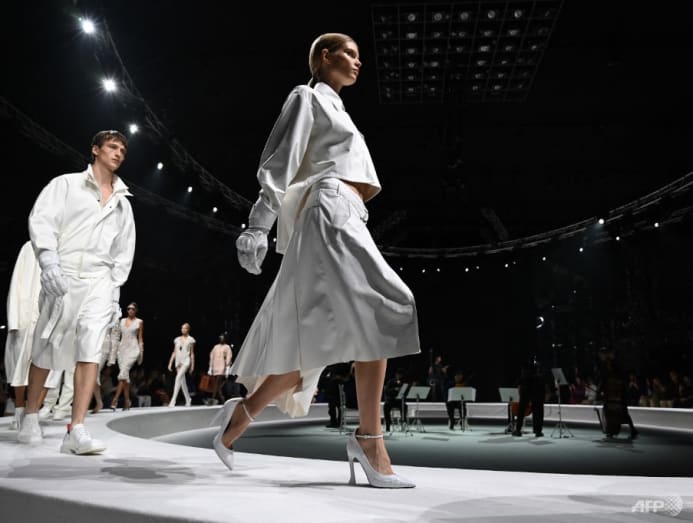

Milan Fashion Week, which was inaugurated in 1958, has always put an emphasis on quality fabrics and luxury experiences. It still holds true today, not only in fashion but in sports cars (for example Ferrari) and yachts (Ferretti). Ferrari, which showed a competent fashion collection (by Rocco Iannone) full of vrooming reds and leather mechanics overalls, cannot be understood without seeing the runway as something of a branding exercise.
Milan is considered more business-oriented for its long tradition of textile production and export, dating back to the Middle Ages. The city was a major hub for the silk trade, and for wool and cotton. Today, Milan is home to many fashion manufacturers and suppliers, who provide high-quality materials for the luxury fashion industry. Historically, Italy has been synonymous with the high-quality leathers and the fine leather craftsmanship, which has resulted in the curious effect of some of the fashions we saw this season – the clothes, though ostensibly the subject of the show, seemed but a bland backdrop to highlight leather handbags and shoes. It was sometimes hard to judge which was the dog, and which the tail – but eventually the handbag won.

DISQUIETING LUXURY
Luxury is a perfume with many layers and notes. Creative directors express luxury and brand values through the choices they make in fabric, silhouette, a splash of colour here and a dash of sex there. These accords convey the prevailing mood, emotion, and direction of the fashion zeitgeist.
This season in Milan, the soaring, optimistic and energetic notes of New York Fashion Week, and the romantic fancies of London came crashing down to earth with a serious, if streamlined luxury. A case in point would be Salvatore Ferragamo, which showed tastefully voluminous caftans, neat tailoring and an ivy green leather, which though innocuously sophisticated, had the whiff of the “business as usual”. Many other labels in Milan also took the quiet luxury trend on a deep dive, only to plumb depths of a grim minimalism, a discreet canvas on which to highlight belts, booties and a Baguette or two.

Prada
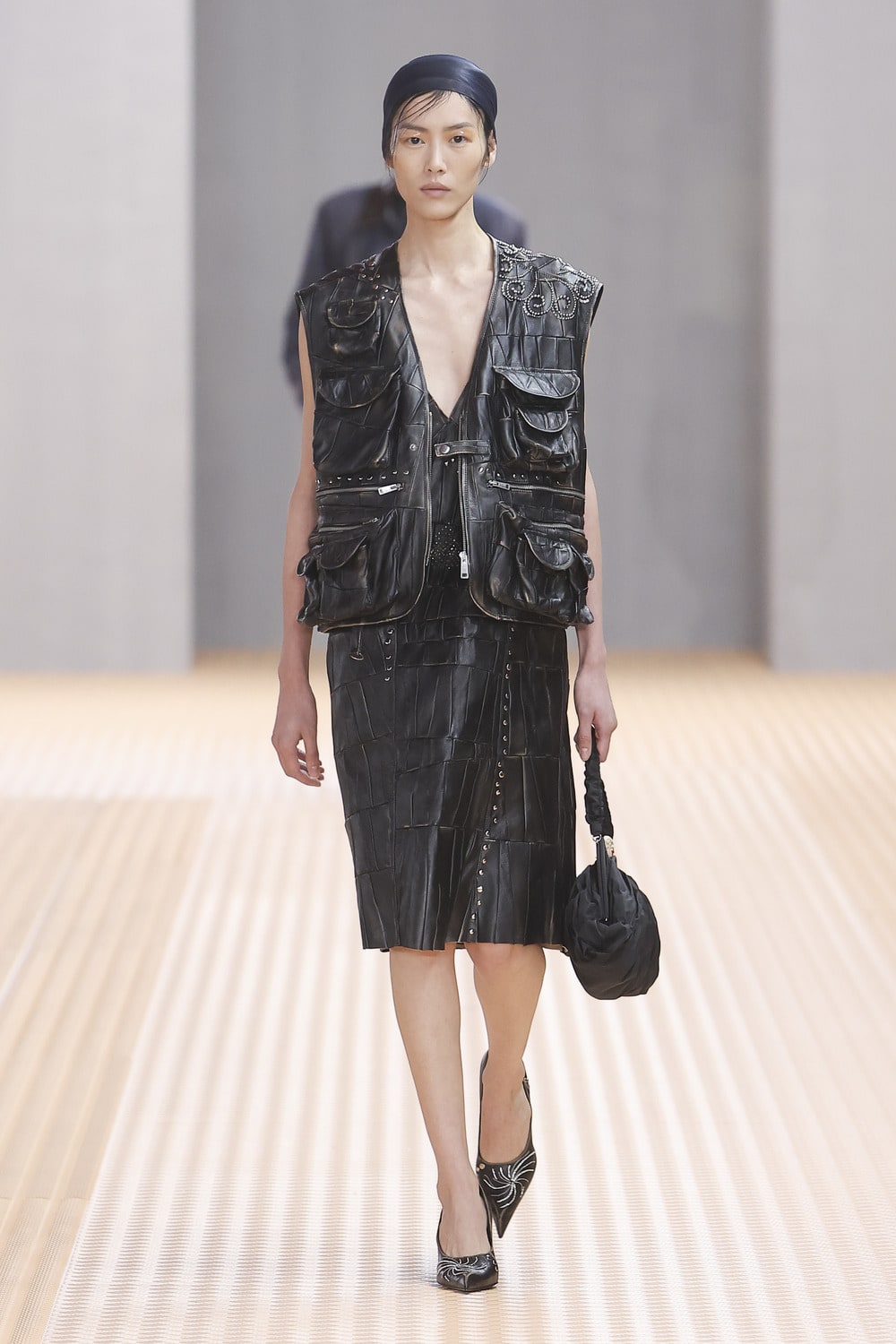
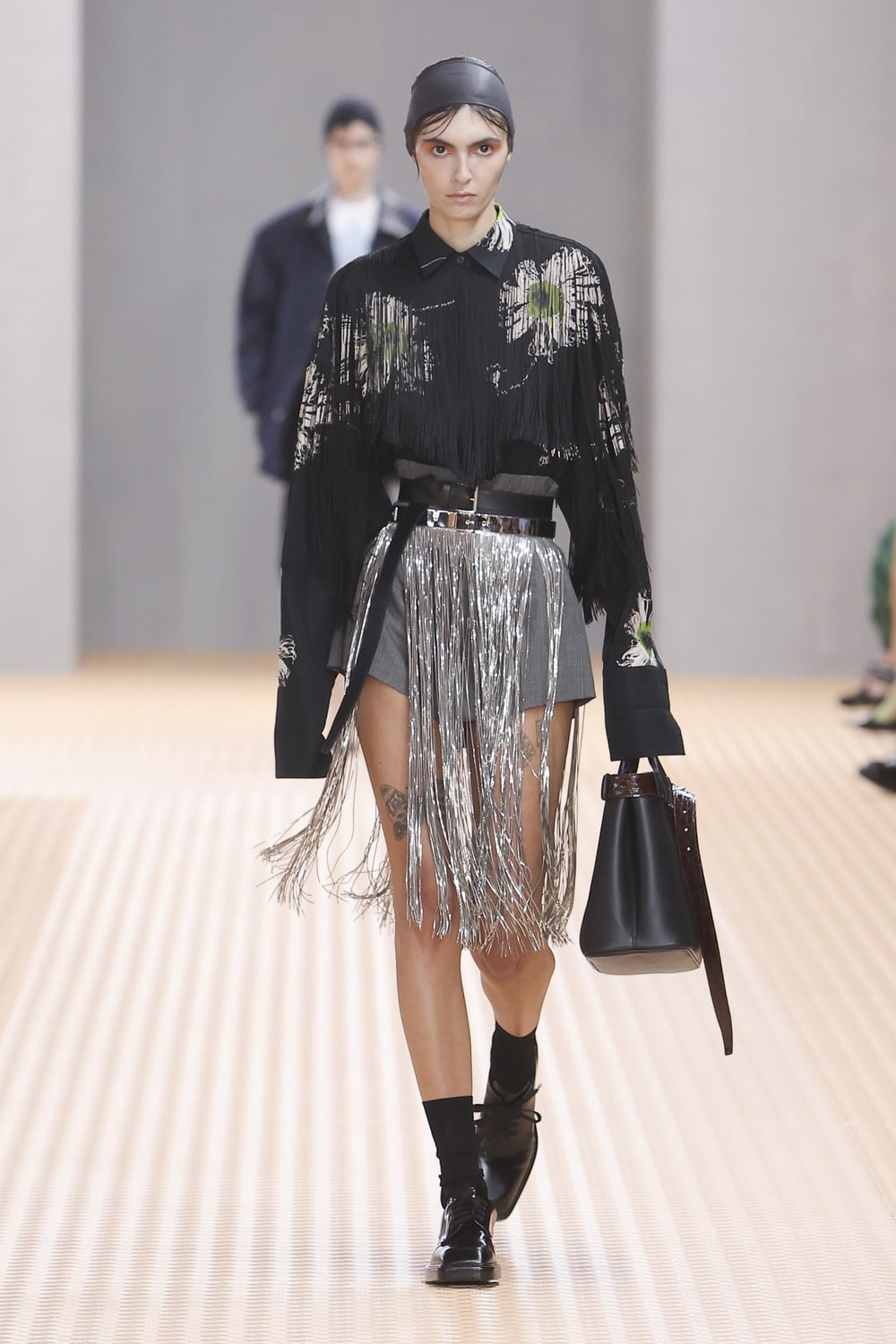
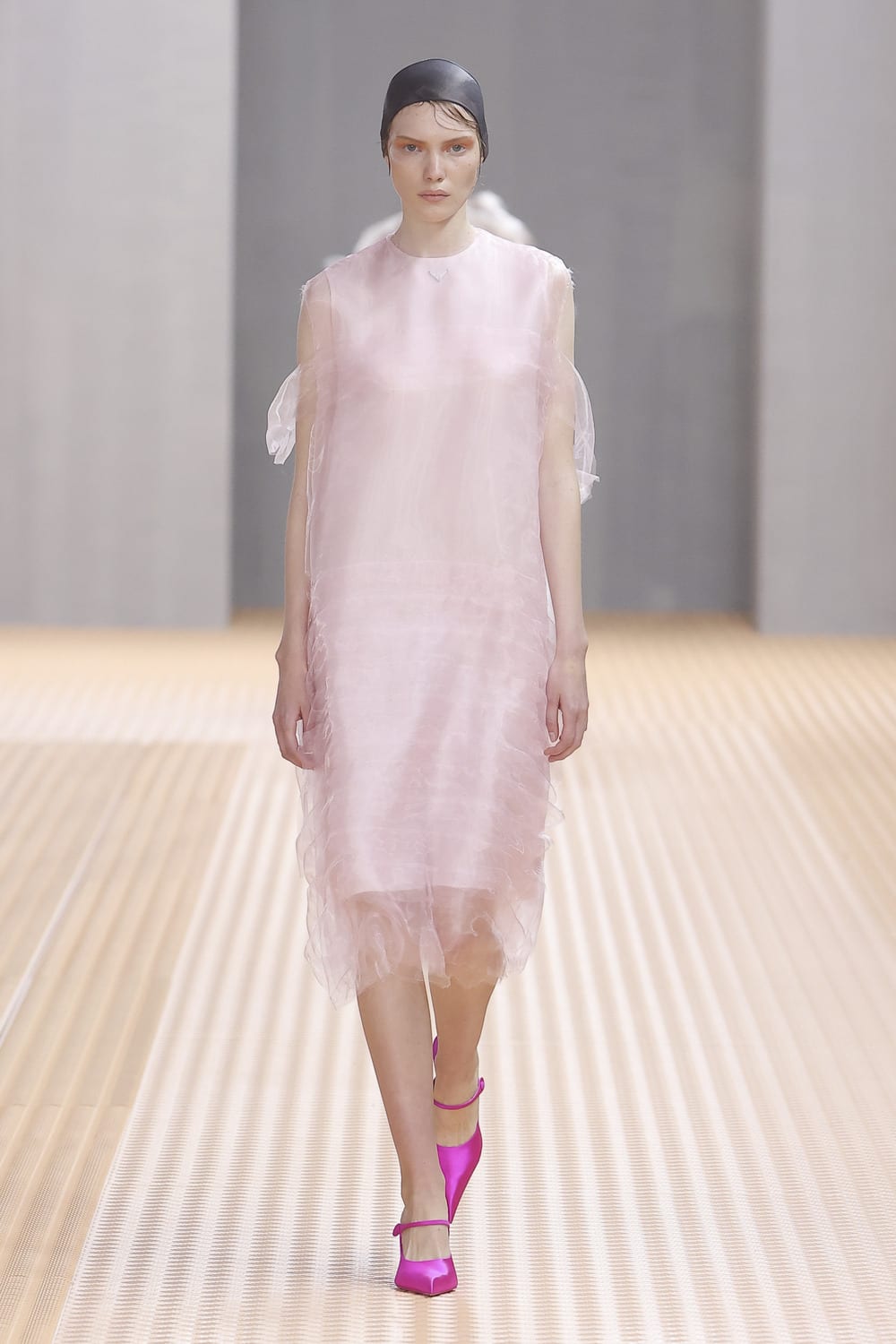
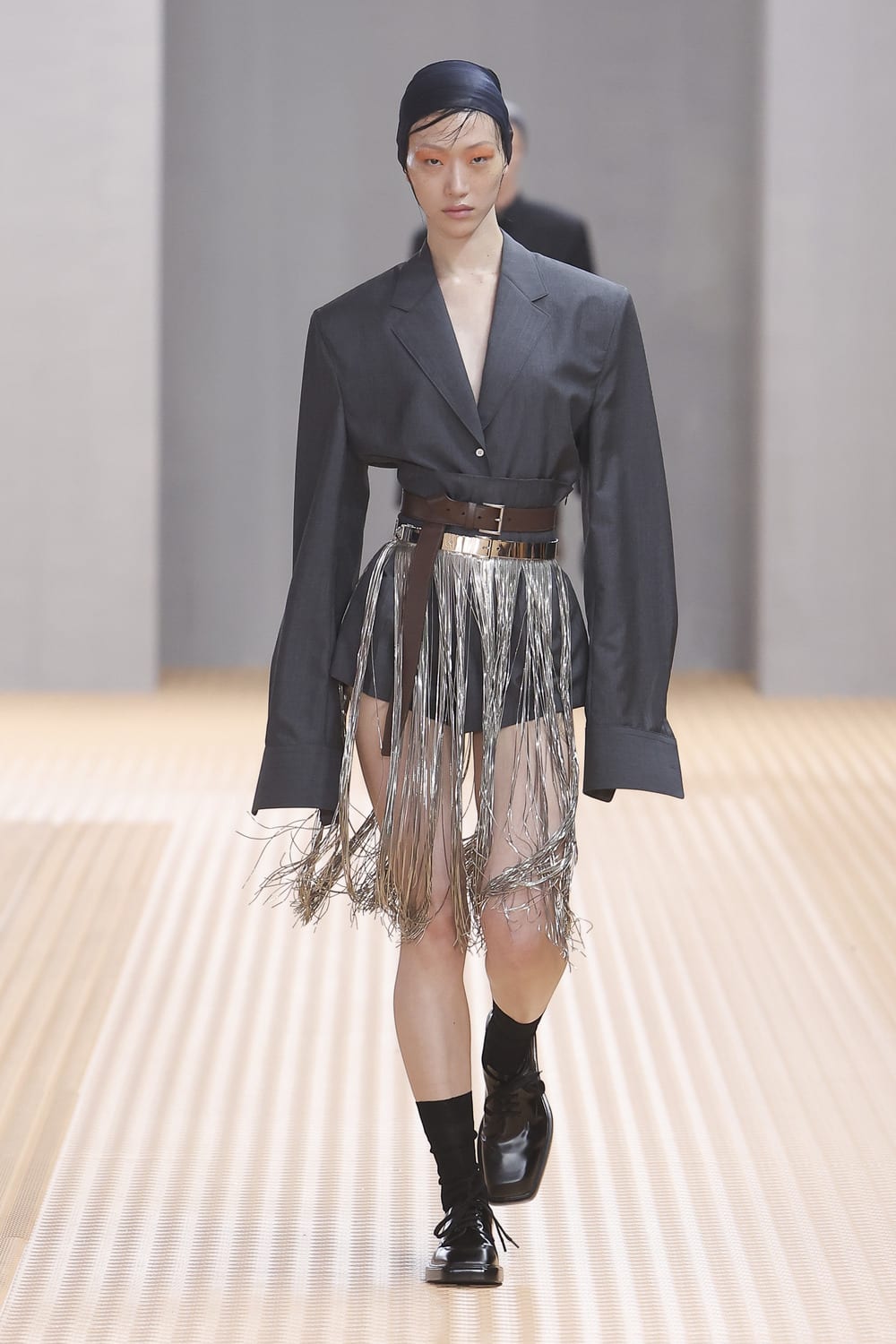
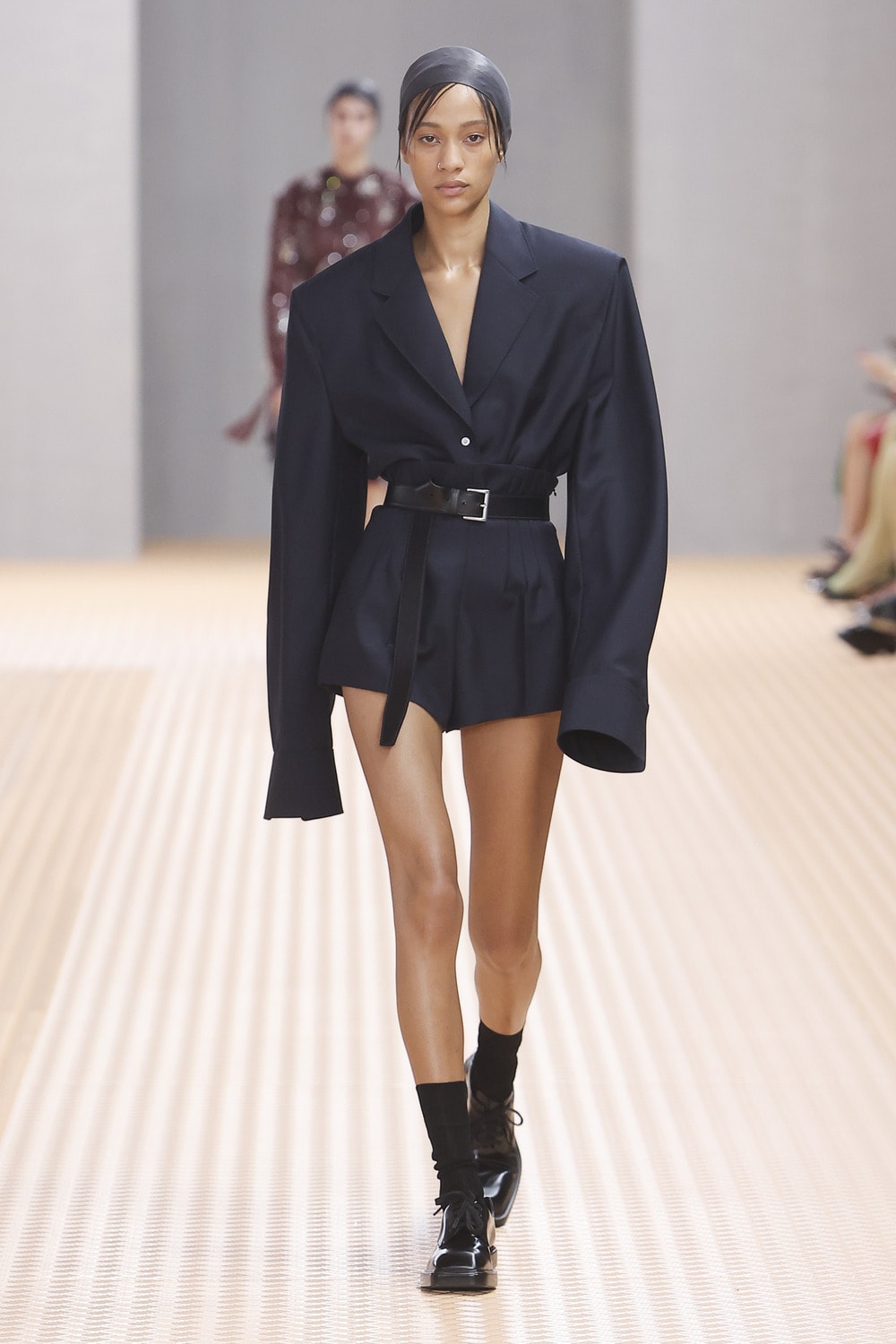
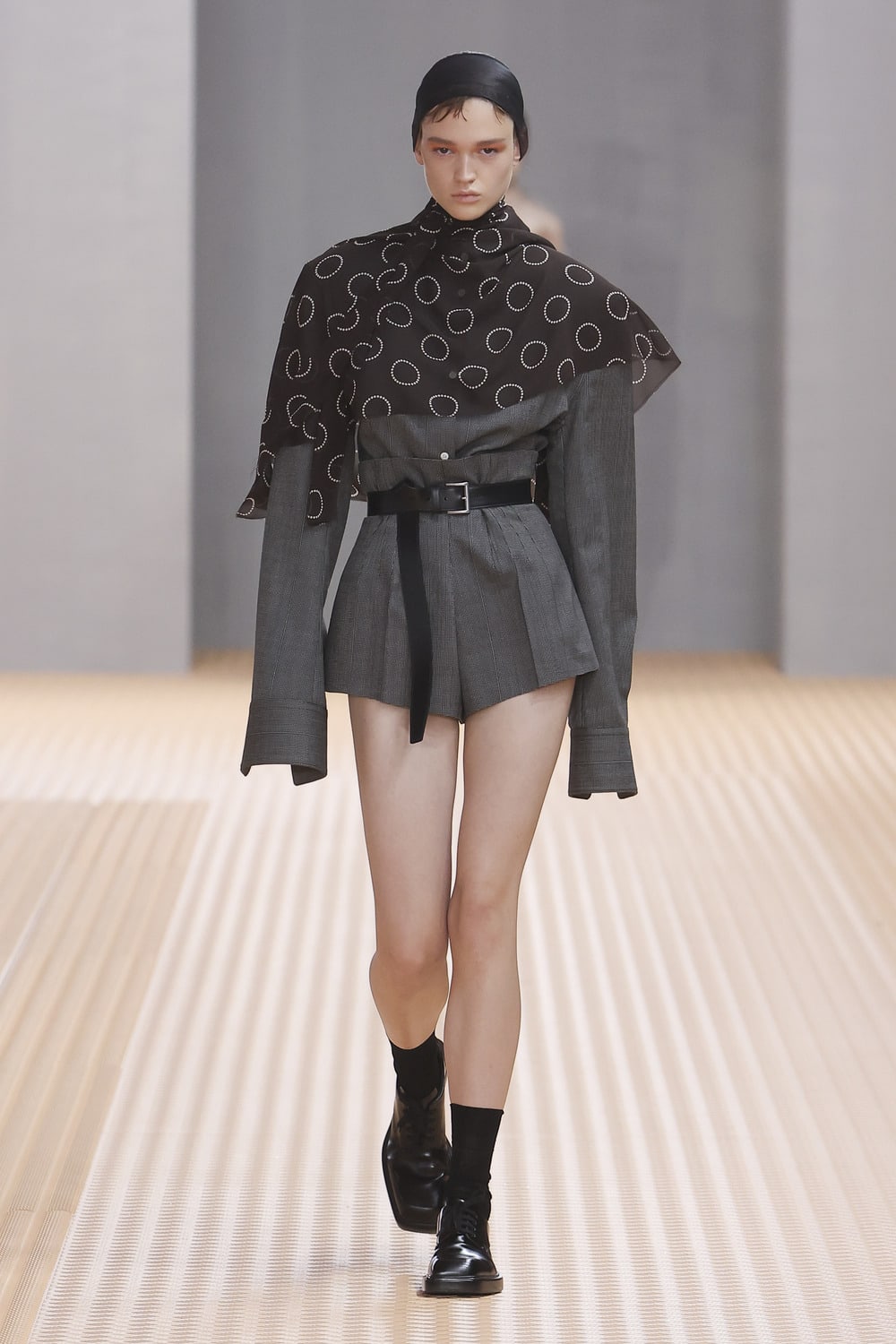
This was a collection all about the fringe that followed Raf Simons everywhere: He showed deep fringe when he was at Jil Sander, then when he went to Dior, and then more fringe at Calvin Klein. At Prada, the fringe became a decorative talking point that tied the collection together, appearing as a blue shirt front, a peekaboo floral print, or glittering from a belt as a cascade of gold.
For a collection that used decoration so generously – grommets, studs, beaded starbursts, rhinestone swirls, and a shawl/cape thing that covered the shoulder – it was nonetheless minimalist, a minimalism that doth protest too much, underpinned by heavily repeating uniform-utilitarian grey suiting with an exaggerated belted waist, pleated shorts, pants, a micro pant, a long skirt.
At automated intervals, one of Prada’s classic shift dresses came glowing out in delicious gelato pastels, swathed in a mist of super sheer organza, as mysterious as the gloopy slime that came down in sheets on the sci-fi runway.

Fendi
You can see how front row guests can give any collection an internet-breaking boost. At Fendi, the star-studded list included supermodels Naomi, Linda, Christy and Cindy, Kate Moss, Amber Valetta, Cara Delevinge, the ageless Demi Moore (how does she do it?), and the inevitable Cardi B were just a few friends of creative director Kim Jones’ who made for one of the buzzier presentations this season.
Monolithic representations of Fendi’s iconic handbags loomed like cathedrals about the catwalk, and emphasised just what the presentation was all about, just in case you were mistaken. Out trotted the First, the Peekaboo, the Baguette and the Origami bags giddying variety, and introducing the new Flip bag, a tote that folded flat into a clutch. Flats, heels, snakeskin boots and gloves stood out in glittering array. Knitwear anchored the collection combined with sumptuously tailored leather coats and pants in streamlined elegance. Stripped-away column dresses of silk and jersey stood out with majestic presence.
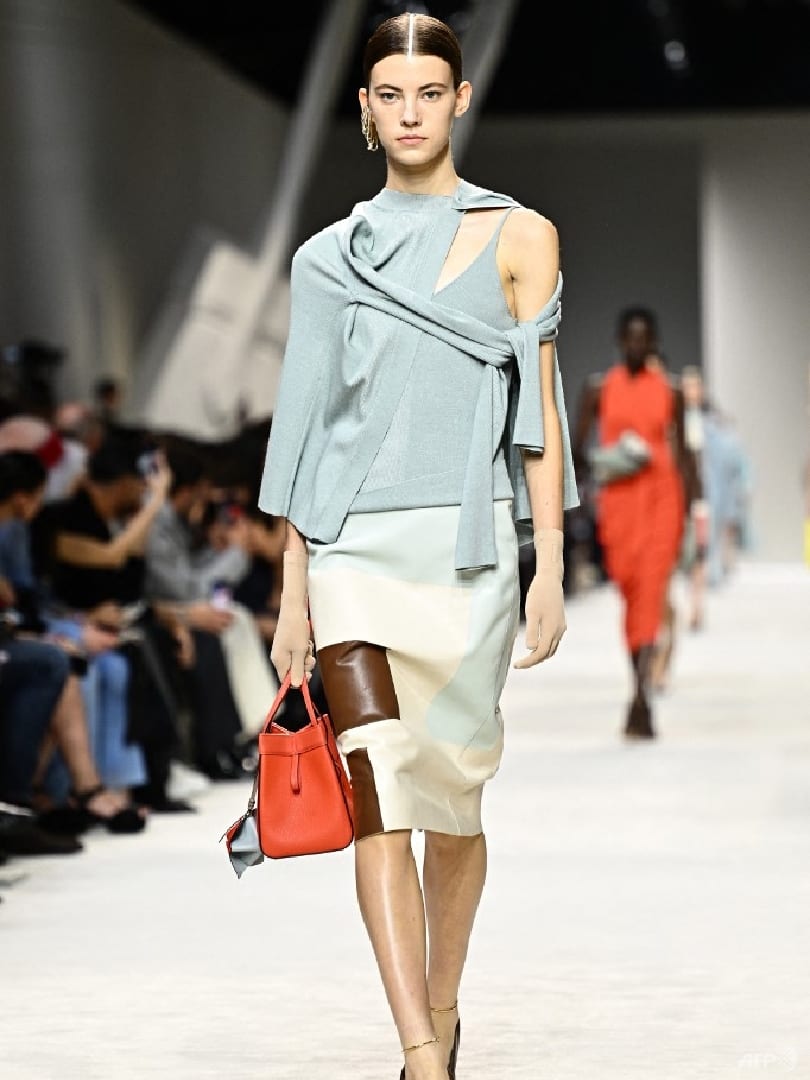
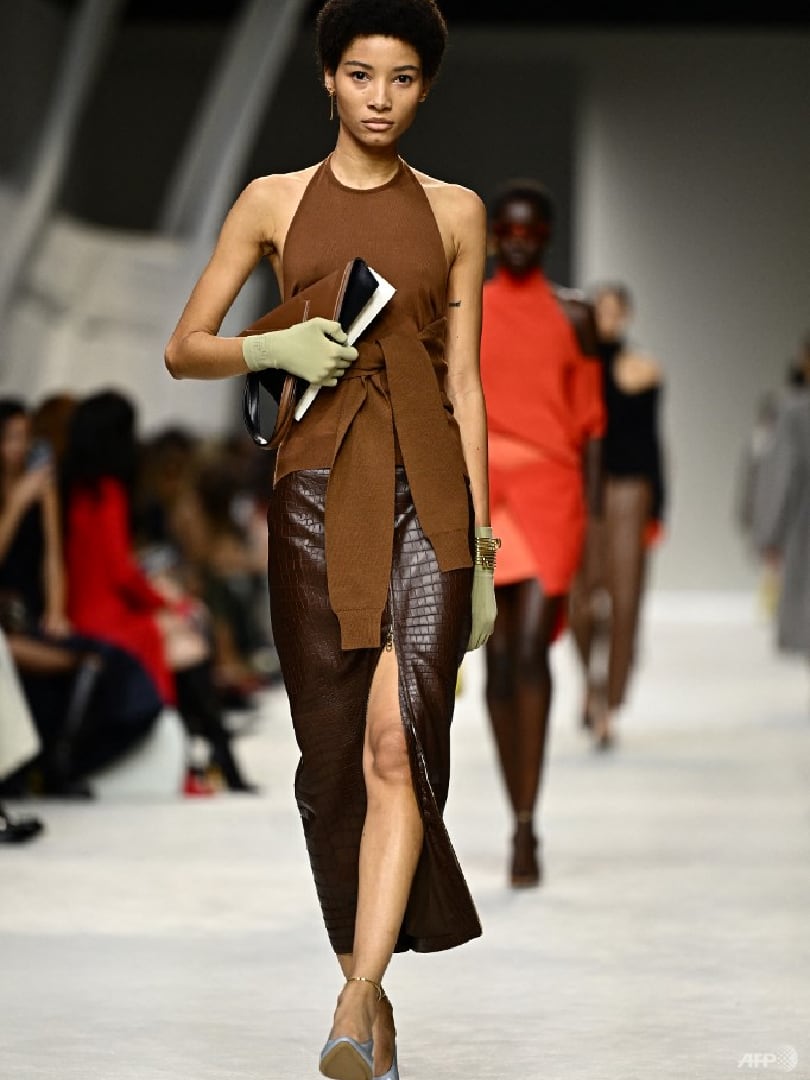
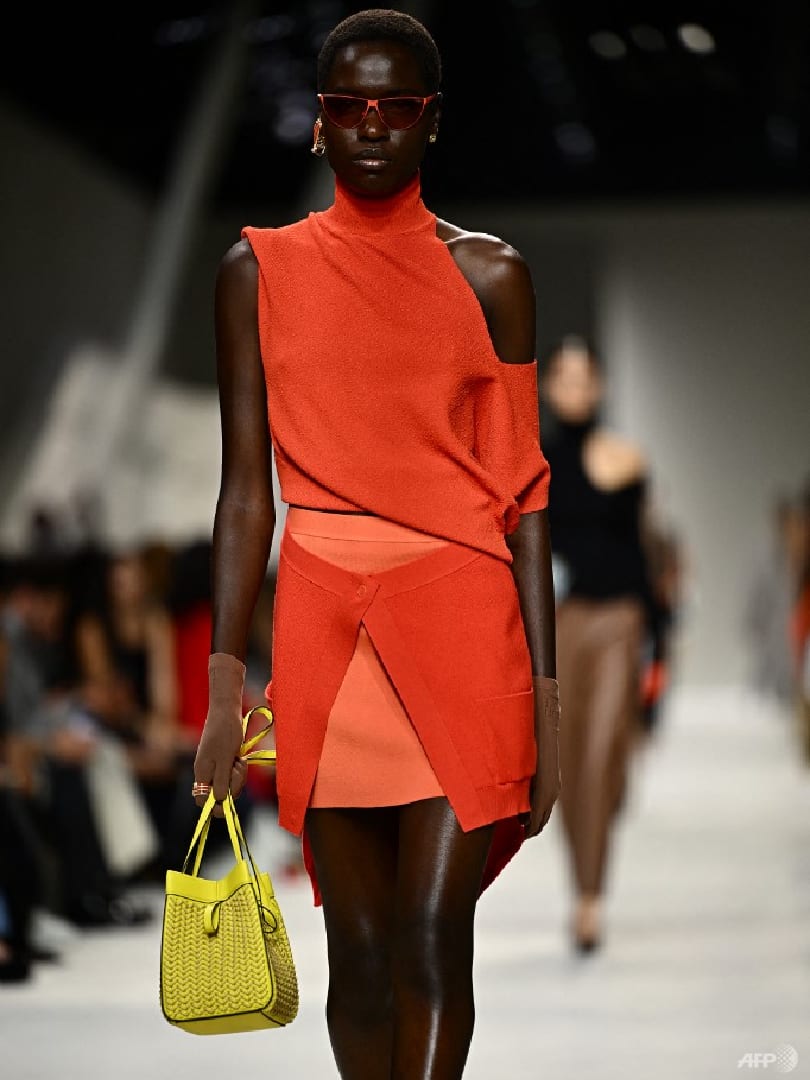
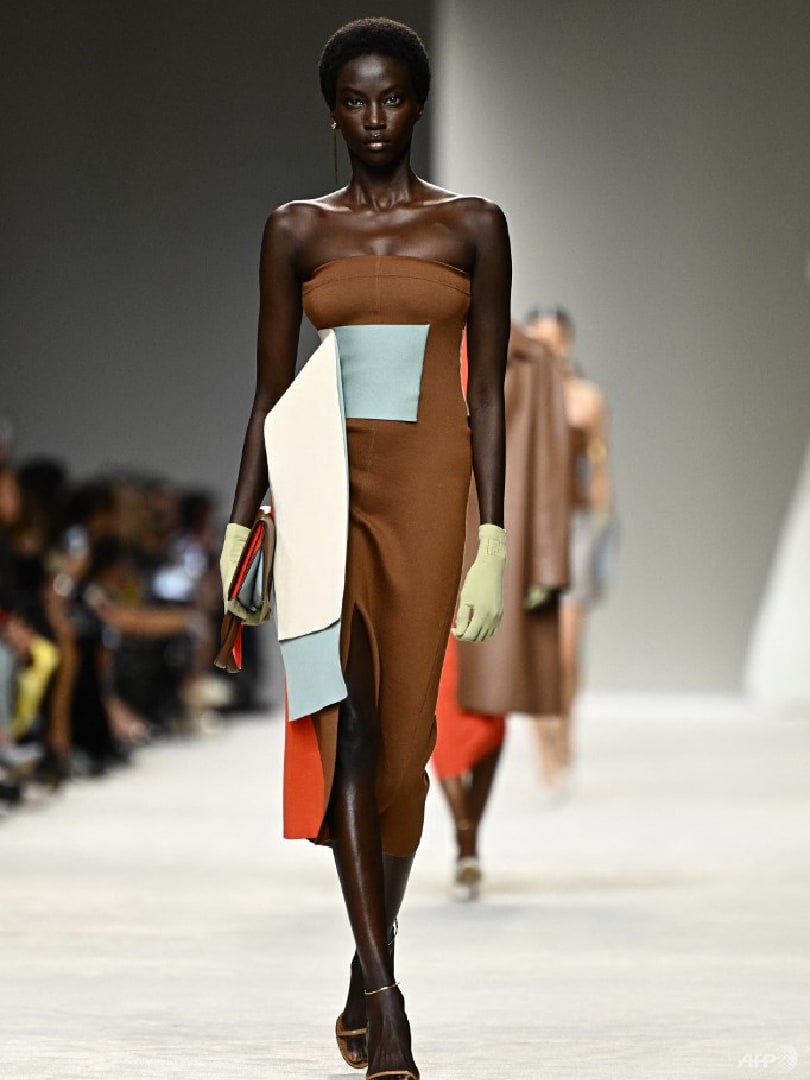
Inspired by Fendi’s 1999 spring collection designed by Karl Lagerfeld, it was the restrained palette of colour blocking, from caramel to Aperol orange to Fendi yellow, muted blues and steely greys that endowed each outfit with sophistication and grace.

Sabato de Sarno’s Gucci debut was, predictably, a complete volte-face from former creative director Alessandro Michele’s magpie maximalism. De Sarno took minimalist tailoring and meshed it with the leggy-ness, the lacy camisoles, the petroleum slickness and unbuttoned shirts — which is what Tom Ford did but dialled down to ‘subdued’ by the new creative director. The result hewed more closely to the Gucci from Frida Giannini’s era, hailed, and then vilified, for her wholesome boxy tailoring, Flora print, and inoffensive pinafore dresses, and sporty separates which were tasteful but quite droll. A dash of crystals, a shake of beaded fringe (fringe is shaping up to be a key 2024 trend), pops of lush colour and tendrils of ostrich feathers were De Sarno’s additions to the formula – and bags, lots of shiny new Jackie and Bamboo bags iterations, and a wonderful white platform loafer that Claudia Cardinale would wear.

Tod’s
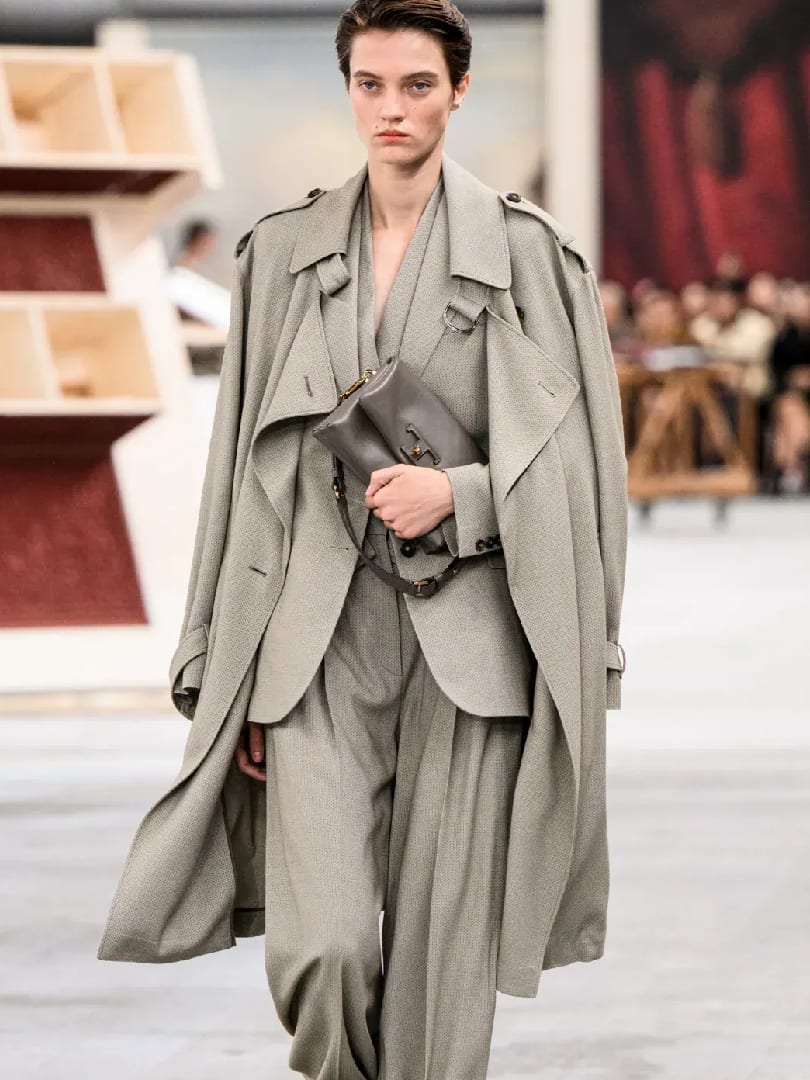
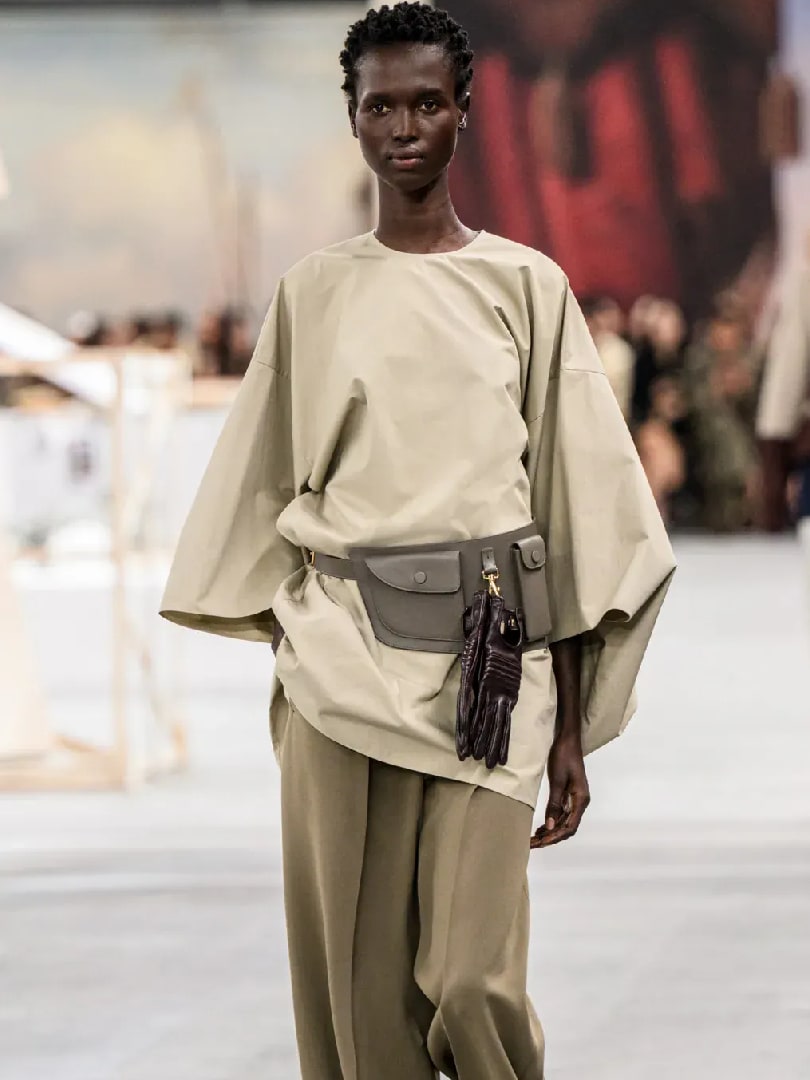
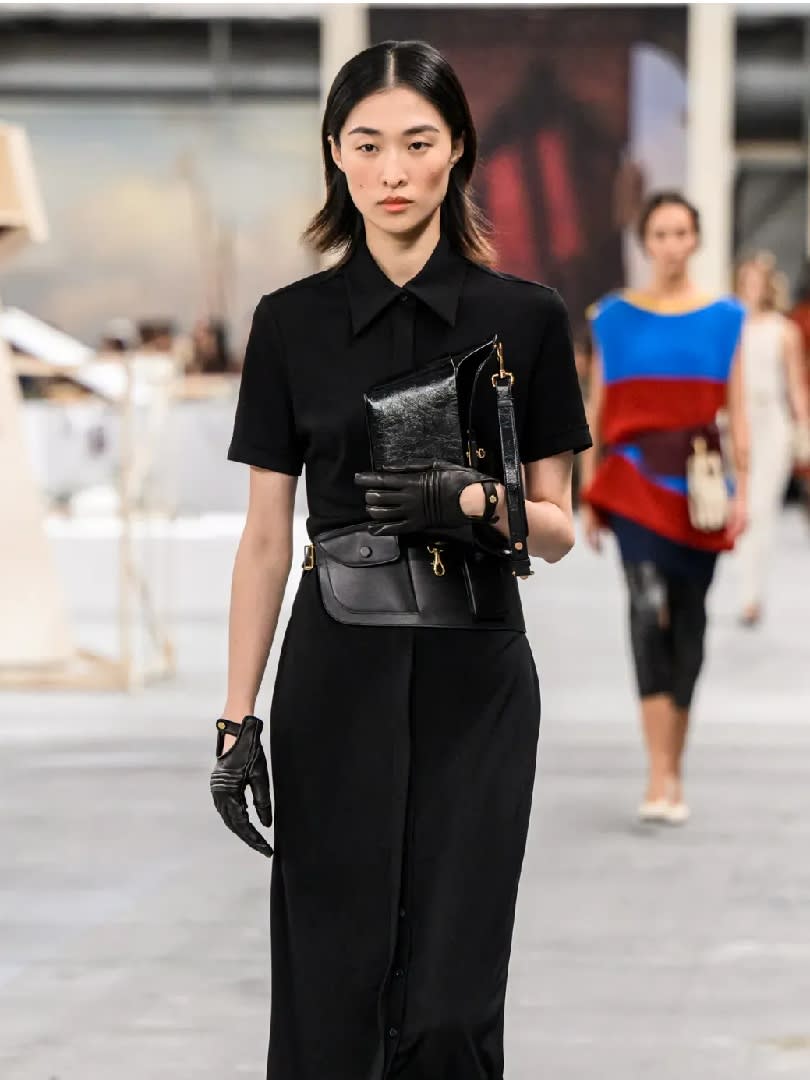
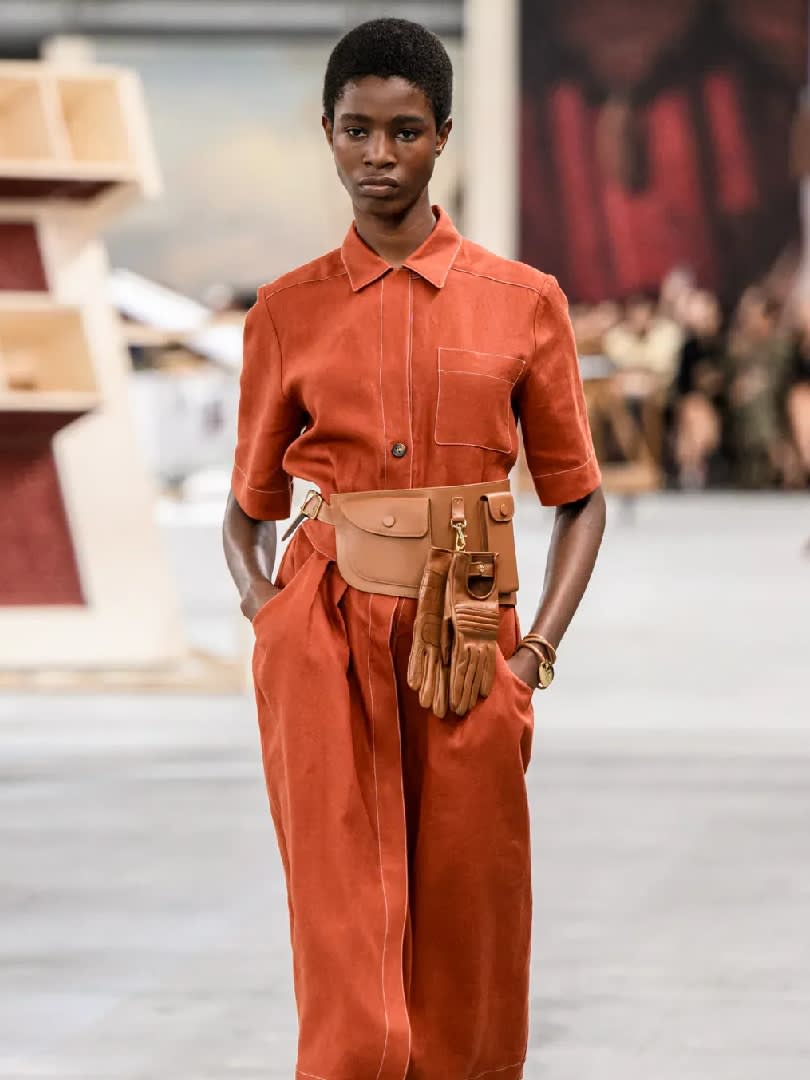
Walter Chiapponi, in his farewell collection for Tod’s, showcased one of his strongest offerings to the heritage leather label. There was ample menswear tailoring, cut from beautiful light fabrics and fine leather in earth tones, with pleating and draping to create a voluminous silhouette made for eternal coats, pants and skirts. It was also a regal medium to highlight Tod’s Di Bag, ballerina flats (like hoofs of chartreuse, taupe and black), and tool belts, which has multi-use practicality and fetish charm. Outstanding were a couple of overblown tunic tops, one in khaki and one in baby blue.

LAWS OF ATTRACTION
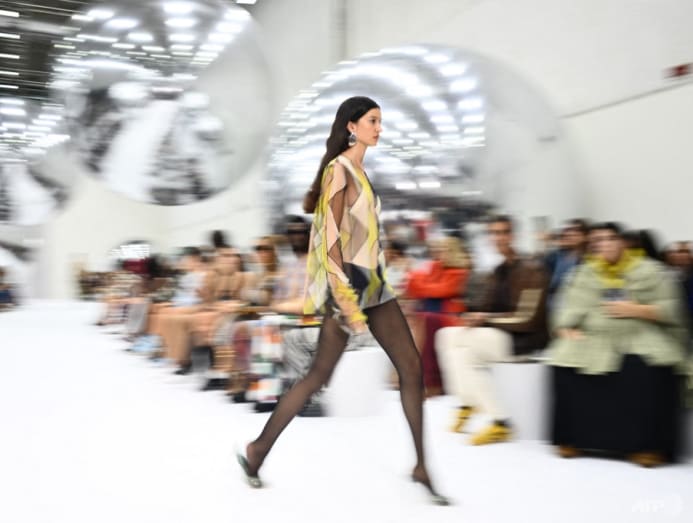
In contrast to the collections that featured a streamlined and stripped-away minimalism, there were labels whose focus was to keep the lights on in the house with recognisable brand signifiers.
Although house codes could be seen as safe but predictable options, to be sure, they were made relevant and updated in terms of sumptuous fabrics (such as at Missoni, where the signature kaleidoscopic knits were slimmed down to sheer barely there dresses), dollops of siren sensuality especially in terms of bare-to-there legs, and a lushly delicious palette. Giorgio Armani showed signature soft tailoring in sugary Burmese pastels and miniscule beaded fringes and tassels.

Etro
Etro, loved for its lush fabrics in complex prints, focused on its strengths by showing swags of seductive baroque silks in singular gowns and dresses paired with some generic oversized leather blouson, striped knit and swimming denim flares in not-so-precious ways.
Brilliantly-coloured brocades with an oriental vegetal design, tie-dye patterns and voluptuous swirls of renaissance heraldic motifs, were clashed with savage romance by creative director Marco De Vincenzo, with everyday clothing items that made the decorative fabrics shine.
Tom Ford
Peter Hawkings’ debut as creative director of Tom Ford ticks all the boxes of Tom Ford’s greatest hits in streamlined separates. This collection was literally Tom Ford without Tom Ford.
Sold to the Estee Lauder Companies earlier this year, the label showed all the sexiness of the old Tom Ford DNA for a new generation to obsess over. It is evident in this show that Hawkings is no amateur acolyte. Working under Ford for 25 years, he knows the codes backwards and showed them all in one swoop ‒ sculpted metal belt buckle, sexy Mick Jagger suits, fringed dresses, velvet smoking coats, Halston aviator shades, and swagger.
Versace
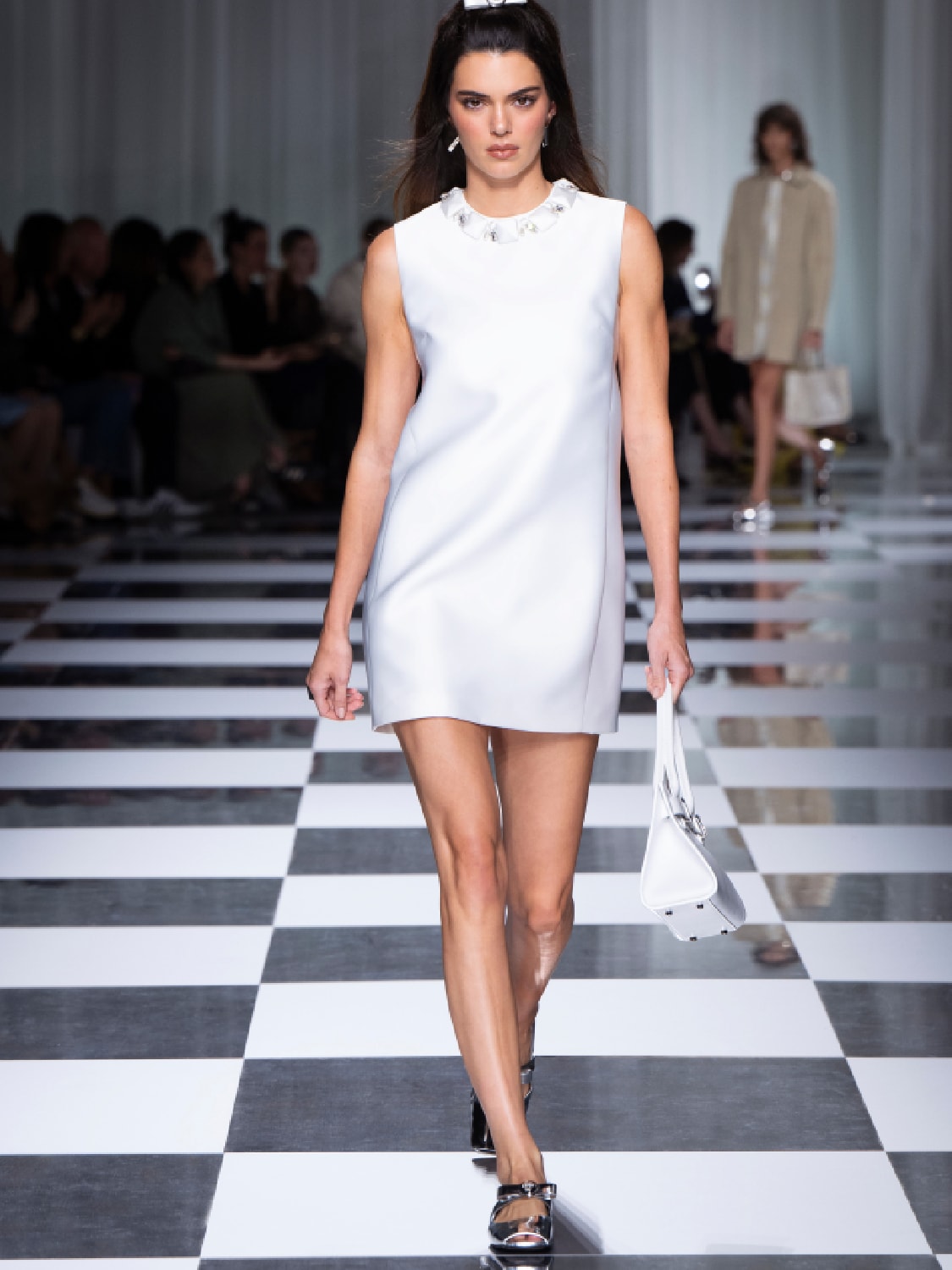
From the archives, Donatella Versace took Gianni Versace’s Fall 1995 collection as inspiration, to present one of her best collections in years. Although it evoked a 1960s shape, the nostalgic references felt fresh and delightful, rather than dusty and predictable.
The house aesthetic was unapologetic glamour from day one, and this collection did not disappoint ‒ from the moment Kendall Jenner opened the show (in a pill-white gogo shift dress and a poodle bow hairclip), to Claudia Schiffer closing it (in a signature chainmail slip dress with lace trim). And in between strutted Gigi Hadid, Iris Law. Liu Wen and Vittoria Ceretti, it was a meditation on glamour.
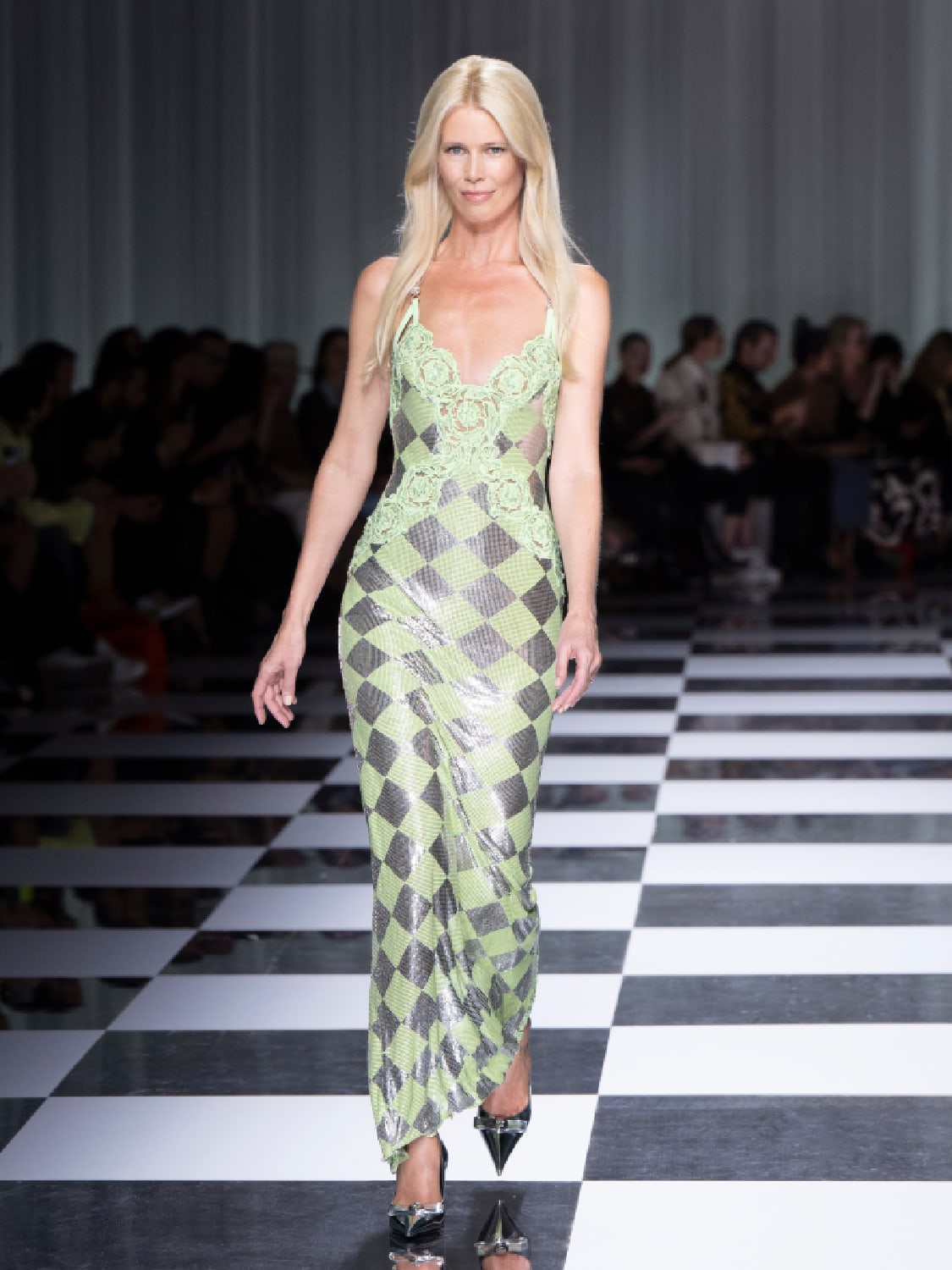
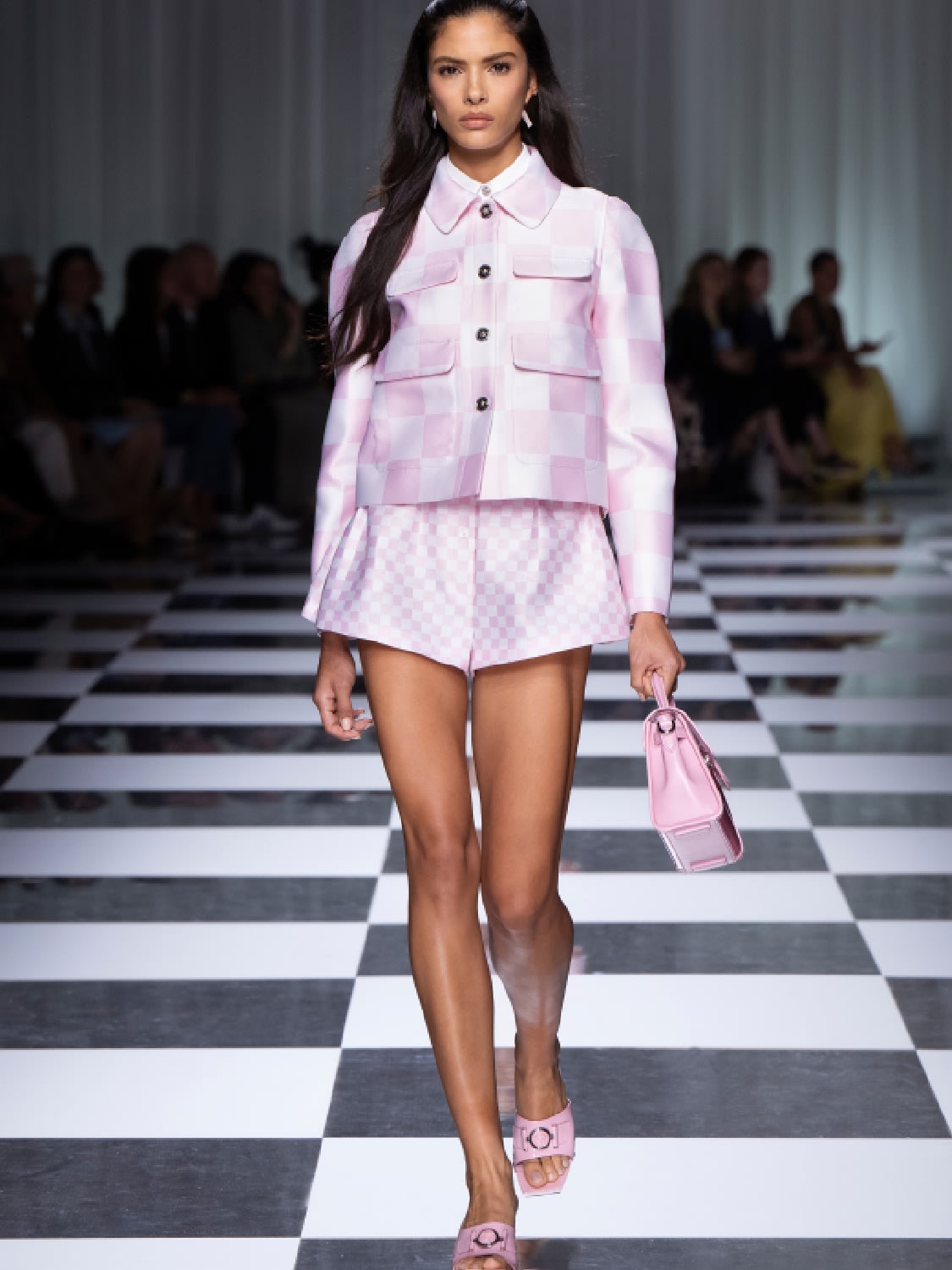
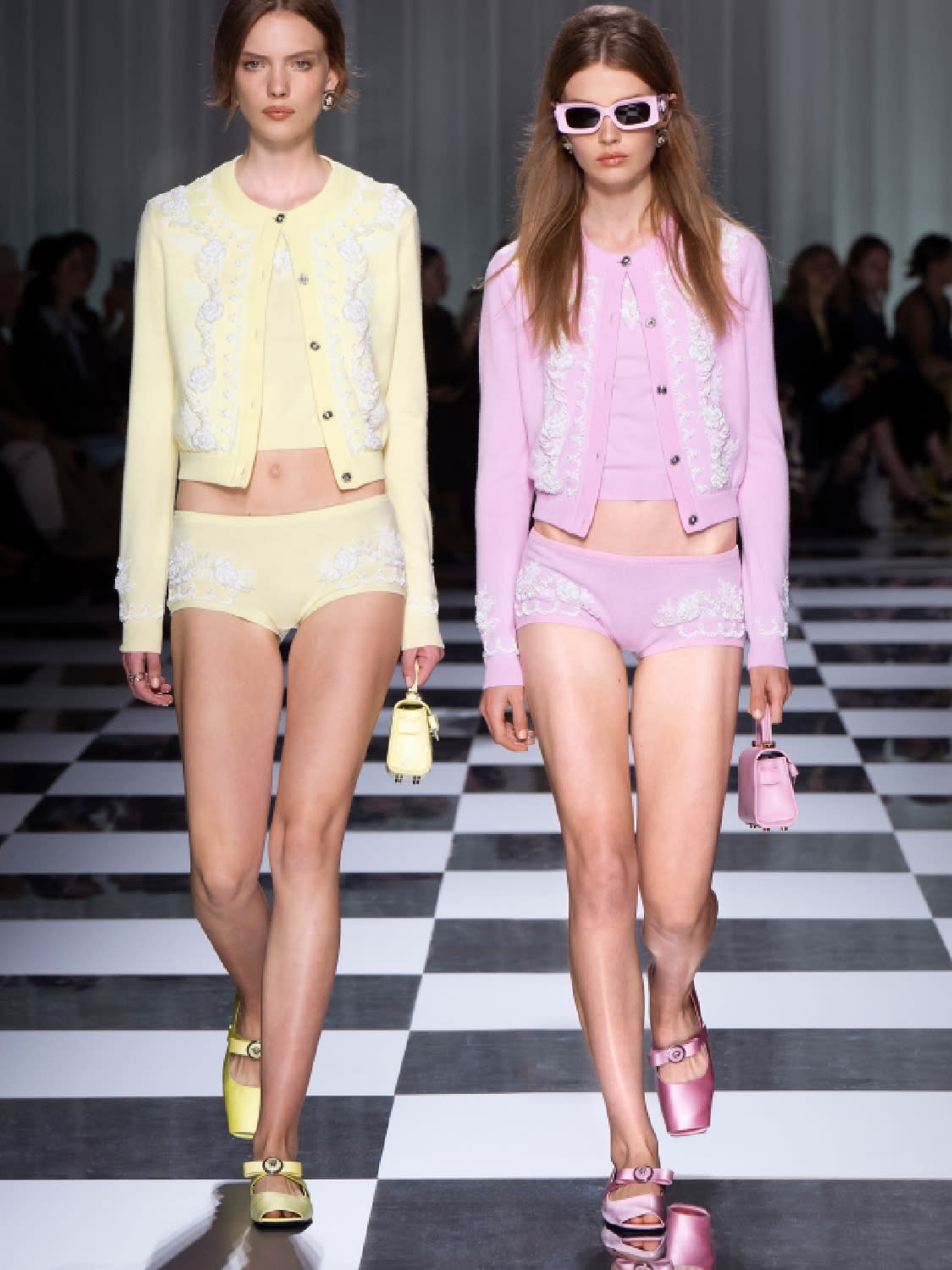
This powerful testament to the timelessness of fashion, pulsated with vitality and youthful energy ‒ in satin shorts paired with boxy tops, cute dresses, swingy or cropped coats and boleros, daytime pajamas, and draped chainmail dresses.
Quiet luxury be damned – this was Versace’s signature audacity down to the lime green checker box print. In truth, the sugar almond pastels did the heavy lifting here, redefining minimalism as joyful rather than safe.
Bottega Veneta
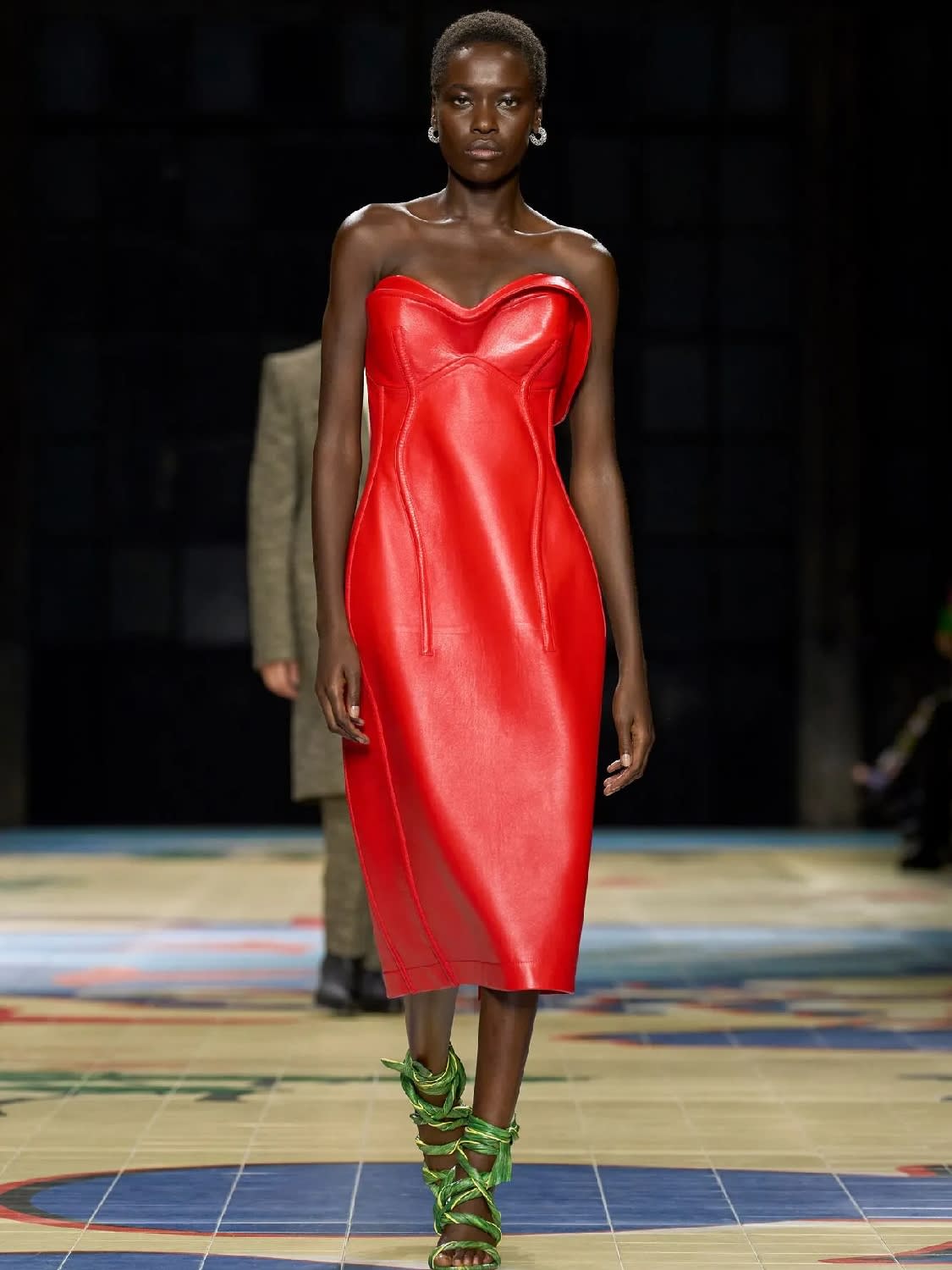
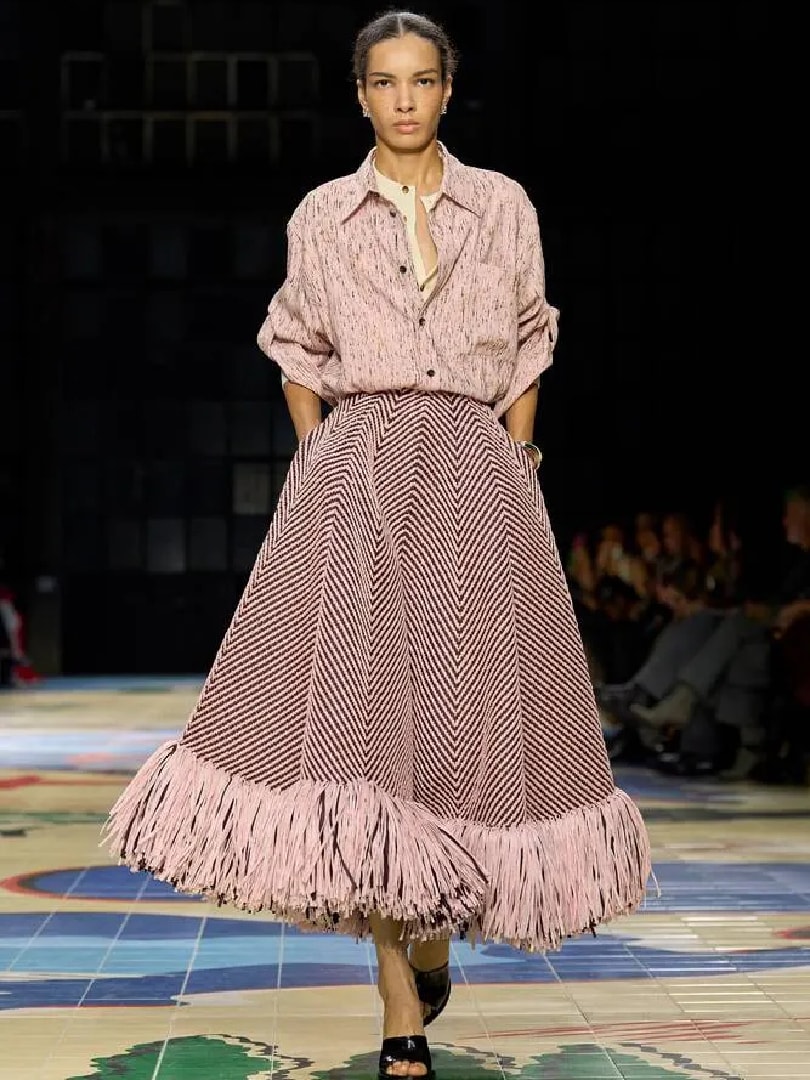
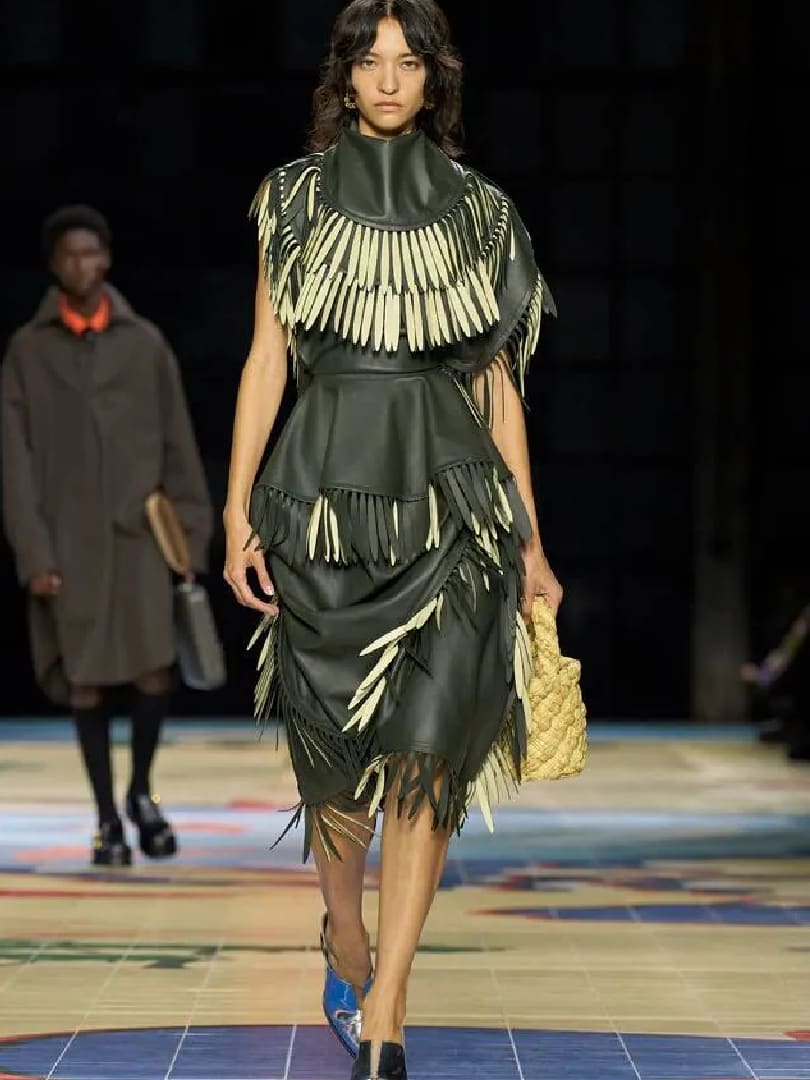
It was everything, everywhere all at once for Matthieu Blazy’s third collection for the brand. This was an absolute tour de force of all the incredible craftsmanship traditions of the world. The house’s leather intrecciato technique (rattan weaving is prehistoric, and predates pottery) was used to make a large “straw” bag, among various dazzling interpretations, before Blazy went on to explore other weaving methods. These then resulted in items of glorious strangeness: Knit net dresses with huge pompoms, shaggy Paul Poiret coats trimmed in tufts or fringe (fringe again!).
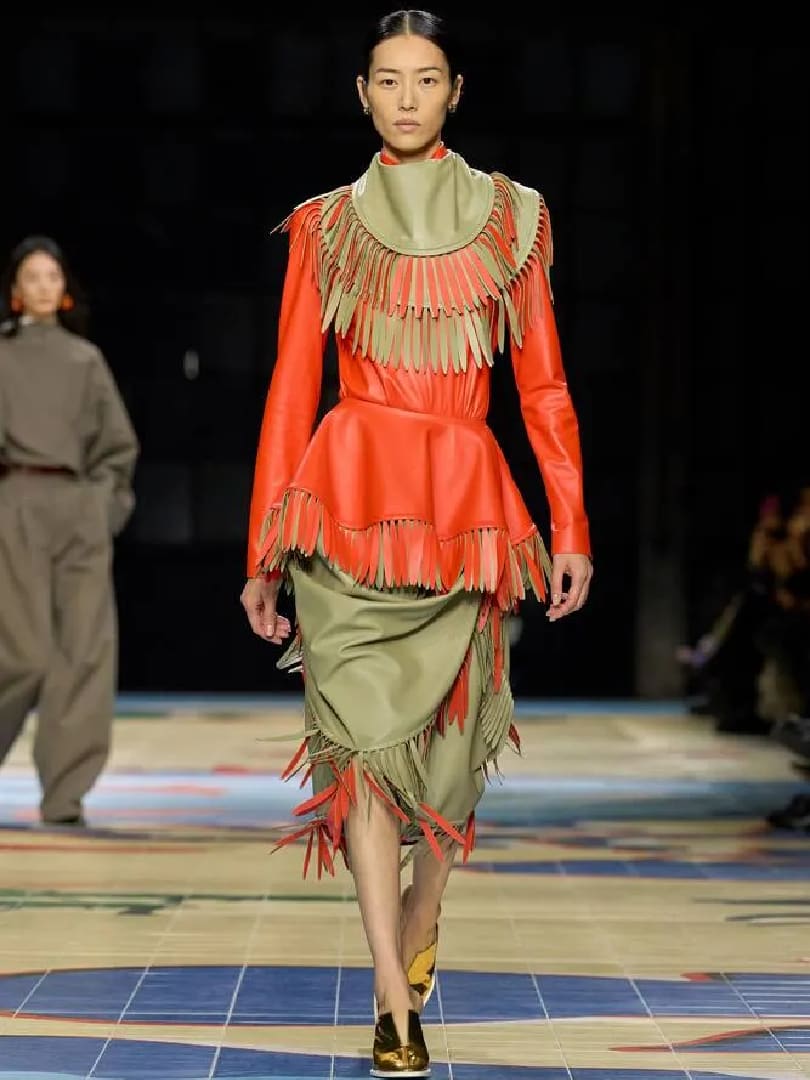
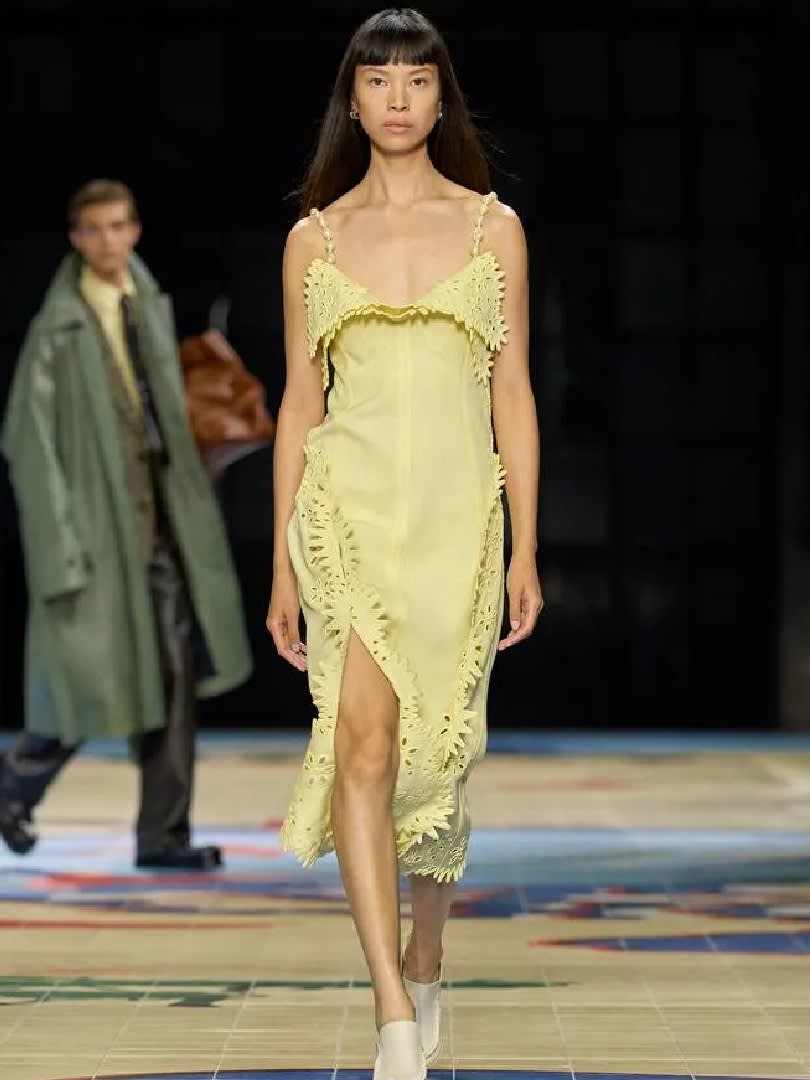
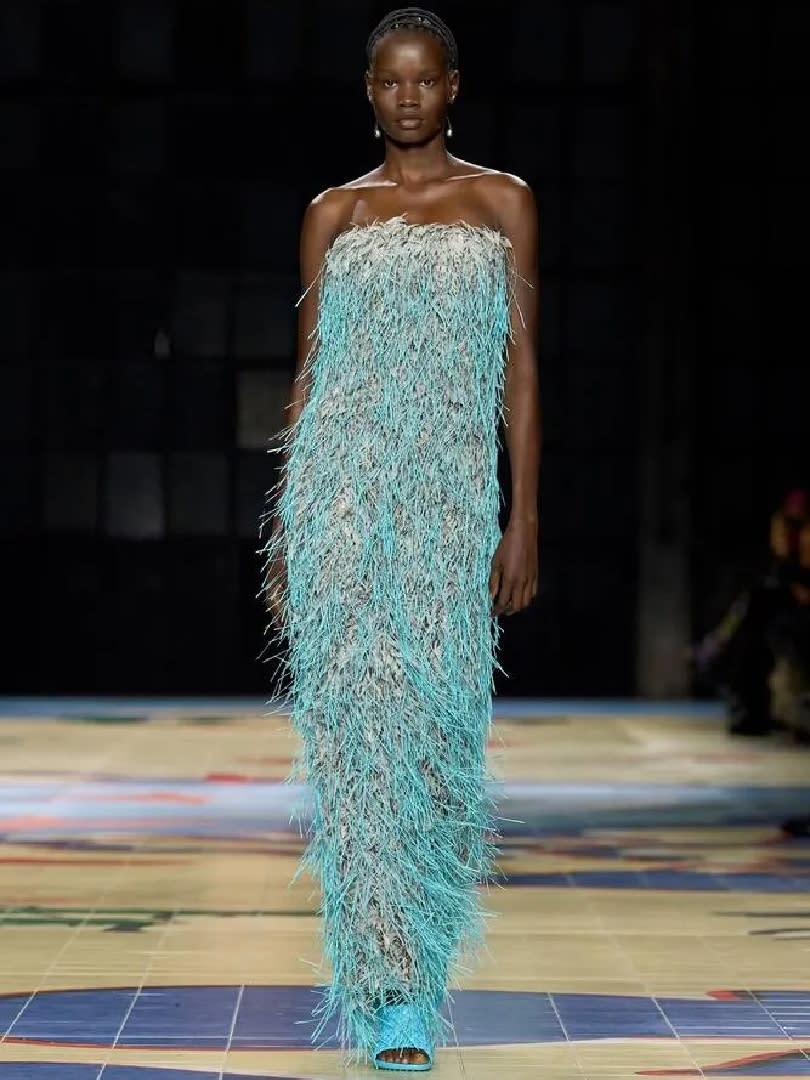
Then there were the tweeds that became sculptural dresses, suits and coats. Of course, there was leatherworking techniques, this being a leather house: Strips of leather got pieced together into sensuous cowled tunics; leather “banana leaf” sandals; papoose bags and the wide trousers, oversized blousons and fishing baskets – everything in leather.
The wealth of materials, fabrics and techniques used to create clothes was nothing short of a rapturous celebration of human craft. That all these riches were harnessed into the making of dazzling clothes for men and women says a lot for the vision and creativity of the label and the designer.