S$40 vs S$4,000: What’s the difference between regular and designer women’s white shirts?
From heritage mill fabrics to hand-finished buttonholes, we break down what separates a S$40 shirt from a S$4,000 one – and speak to a local bespoke expert about where the real value lies.
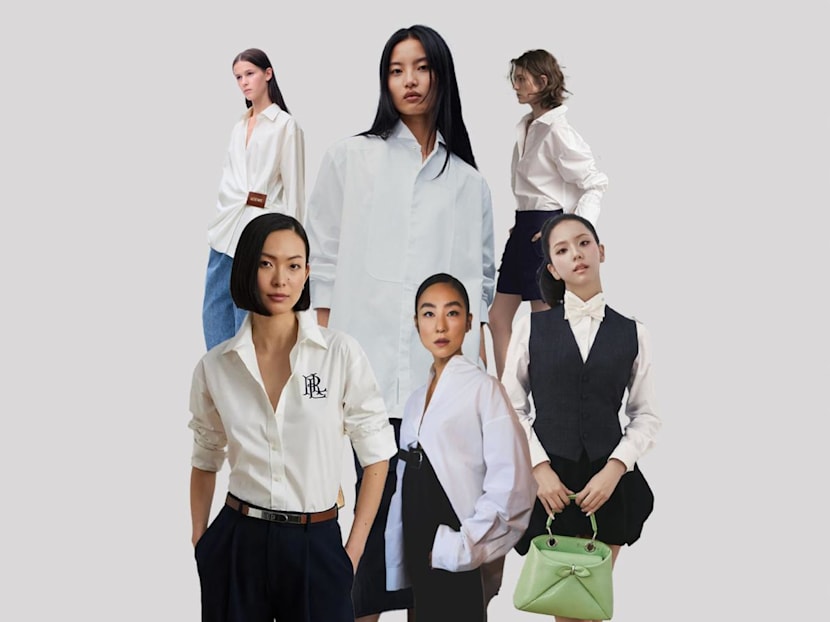
Are all white shirts equal? (Art: CNA/Jasper Loh)

This audio is generated by an AI tool.


Of all of my elusive wardrobe quests – the crisp white tee, the ideal pair of jeans, the forever little black dress – none has been quite as enduring as the search for the perfect white button-up shirt.
At some point after the pandemic, as post-work drinks became reaching for a cold-brewed tea from my kitchen fridge, I gave up on the LBD entirely. The white shirt, on the other hand, has only grown more essential.
Crisp yet easy, polished yet effortless, it is fashion’s ultimate blank canvas. While our male counterparts might head to their tailors to perfect a dress shirt, women arguably have more fun. Off the rack, we’re spoilt for choice: Classic cotton poplins, oversized boyfriend cuts, cropped or tuxedo styles, silk or satin variations.
Naturally, prices vary. You can pick up a boxy Oxford from Uniqlo for under S$40, a refined cotton poplin from COS or In Good Company for under S$250, or spend thousands on a luxury designer version.
That upper echelon came into focus at Chanel’s Spring/Summer 2026 show, which unveiled a collaboration with storied Parisian shirtmaker Charvet. For his Chanel debut, artistic director Matthieu Blazy discovered that Coco Chanel herself once favoured Charvet’s shirts – and brought them in to create crisp button-ups styled untucked over sweeping skirts. (A quick note: While often used interchangeably, a button-down shirt has buttons on the collar, while a button-up does not.)
The collection drops in March 2026, pricing undisclosed but likely north of S$4,000 – roughly what Chanel's cotton poplin cost last season.
It's a striking figure for what appears to be a wardrobe staple. Which raises the questions: What actually accounts for that price difference? Beyond the logo, what are you really paying for?
THE FABRIC
Ever wondered why some shirts just feel different – smoother, softer, somehow crisper? It starts with the fabric.
Mid-range brands use standard cotton poplin or broadcloth, perfectly fine for daily wear. While luxury labels like Prada and Saint Laurent don’t typically disclose their suppliers, an old Forbes report noted that Albini counts them among its clients. Established in 1876, the Italian mill is known for its superior cottons and is considered the industry benchmark – and here's where it gets interesting.
Fine cotton refines; polyester blends thin and loses shape.
“We also carry Albini fabrics at our atelier,” says Adele Chung, second-generation owner of Singapore's Meiko Tailor and founder of its sub-label, Uncommon Hem. It’s where bespoke makers can match the big names.
That’s because Albini’s premium cottons, like Egyptian Giza and Caribbean Sea Island, have exceptionally long fibres that feel silkier, resist pilling, and improve with age. The kind of upgrade you notice after the 50th wash.
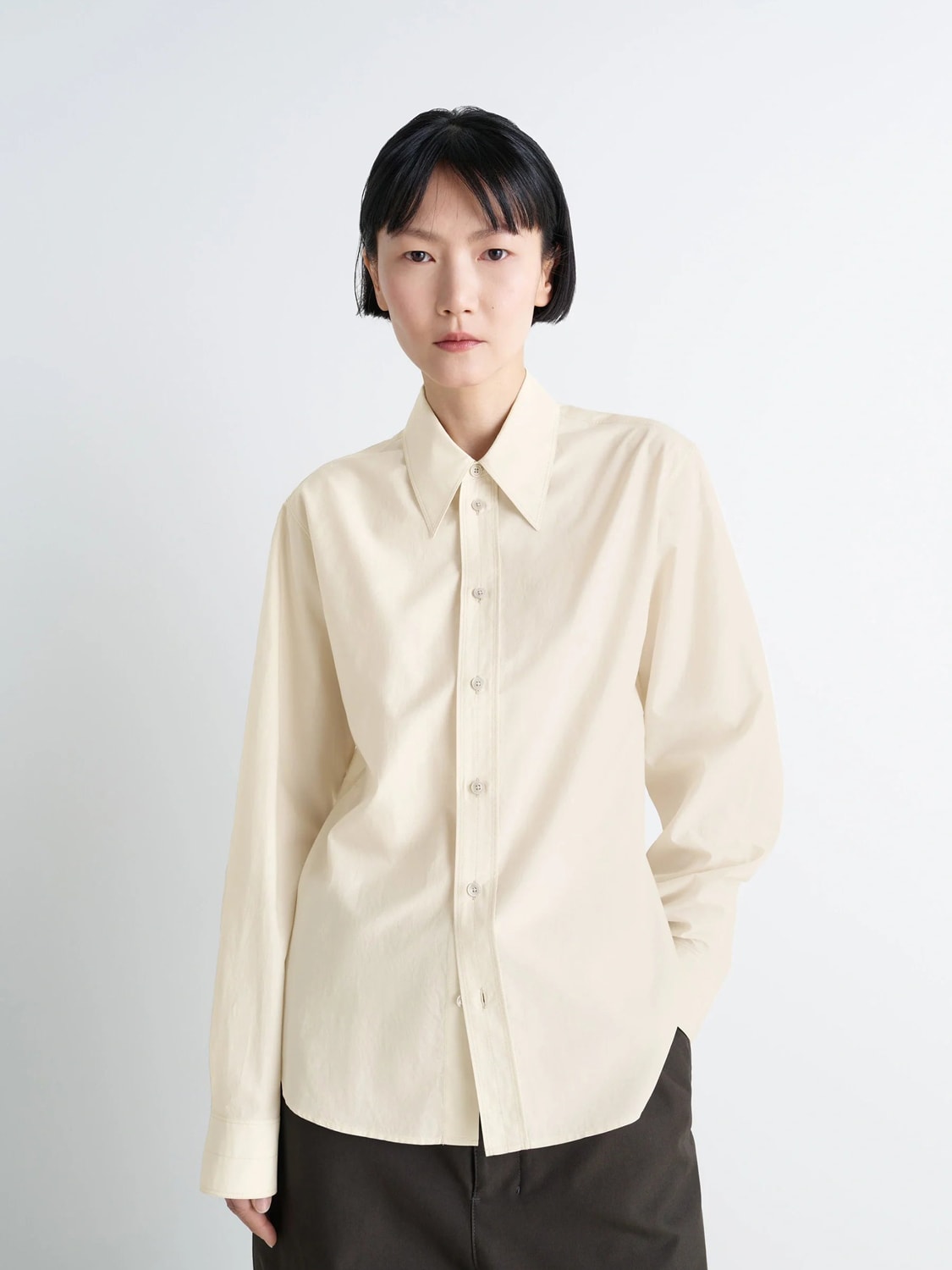
Some designers like Lemaire and Toteme add silk for fluidity. These hybrids move beautifully, crease less, and develop that worn-in softness rather than just wearing out.
By contrast, high-street poplins depend on shorter fibres or chemical finishes to fake smoothness. They may look comparable off the hanger, but time will reveal the truth: Fine cotton refines; polyester blends thin and loses shape.
THE CONSTRUCTION
Fabric sets the tone, but construction determines the fit – whether a shirt skims or bunches.
Mass-market shirts use double-needle stitching: Fast, durable, but more prone to puckering. High-end shirts, on the other hand, favour single-needle stitching – a slower, more meticulous process that requires greater precision to keep the lines perfectly straight. Each seam is often sewn twice for reinforcement, resulting in around 18 to 22 tiny stitches per inch.
The difference may be invisible to the casual eye, but you’ll feel it in how the shirt moves.
The difference may be invisible to the casual eye, but you’ll feel it in how the shirt moves. The seams lie flatter, the fabric drapes more naturally, and there’s no ridge or stiffness against the skin. It’s what gives a premium shirt that effortless, almost fluid fit.
Chung says construction plays an especially crucial role in women’s shirting. “Many designs are either too oversized or too fitted, with excess fabric bunching out in awkward places. A well-constructed shirt should flatter the figure.”
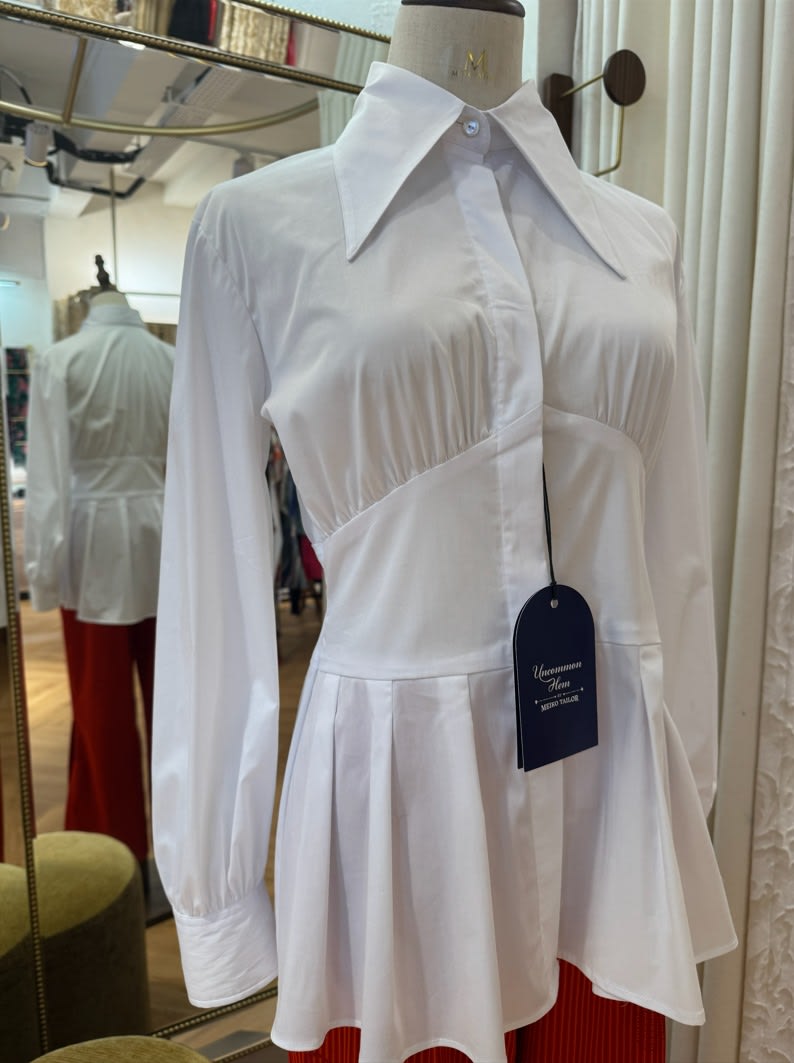
Take Seraphina, a bespoke women’s shirt Chung designed for Uncommon Hem. Priced from S$599 by pre-order, it’s crafted from Albini cotton sateen, and combines traditional tailoring with subtle architectural detailing such as a pleated peplum hem, cinched waist, and softly gathered bustline. “The construction is more complex than an ordinary shirt,” she said. “But that’s what makes it work from office to cocktails.”
THE DETAILS
Few elements reveal a shirt’s pedigree faster than the collar. A good one sits cleanly – neither stiff nor collapsing. The secret lies in what’s inside.
Mass-market shirts use fused interlining (glue that eventually bubbles). Luxury makers like Hilditch & Key – Karl Lagerfeld’s go-to – use floating interlinings: Cotton or linen delicately stitched to hold shape while breathing naturally.
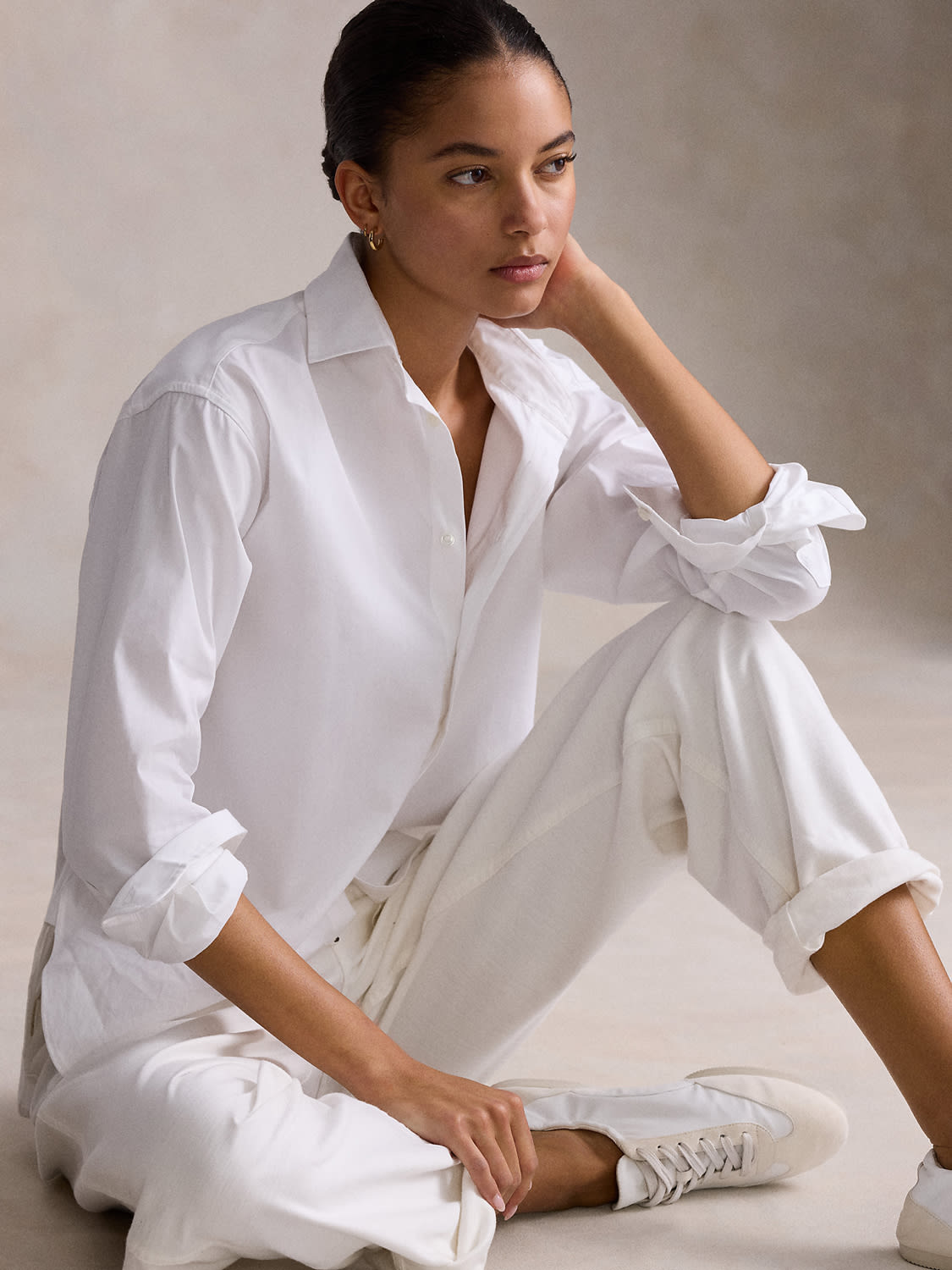
Cuffs matter, too. The best ones feature crisp, even stitching. On many luxury women’s shirts, cuffs are intentionally softened so they fold elegantly when rolled for an effortless, polished finish.
Then there are the buttons. Most designer shirts use real mother-of-pearl, cool to the touch and subtly iridescent. They’re attached with cross-stitching and a thread shank that prevents puckering. High-street shirts rarely bother; their buttons are machine-sewn flat for speed.
Even buttonholes count. The finest are hand-sewn or densely stitched to create a firm edge. Small touches, like the last buttonhole stitched horizontally for a superior hold – a detail noted in some of Ralph Lauren’s Purple Label shirts – are marks of thoughtful craftsmanship.
“Hand-finished details like pick-stitching enhance the aesthetic and certainly have a premium feel,” added Chung. “But for everyday wear, machine stitching with high-quality threads and refined hand-finishing is perfectly sufficient and ensures durability.”
THE IDENTITY
Beyond construction and fabric, every luxury house leaves its signature.
Dior’s shirts, for instance, are defined by tailored precision – clean lines, structured shoulders, sharp even when casually styled. Loewe experiments with sculptural sleeves and asymmetric draping that challenge classic shirting codes.
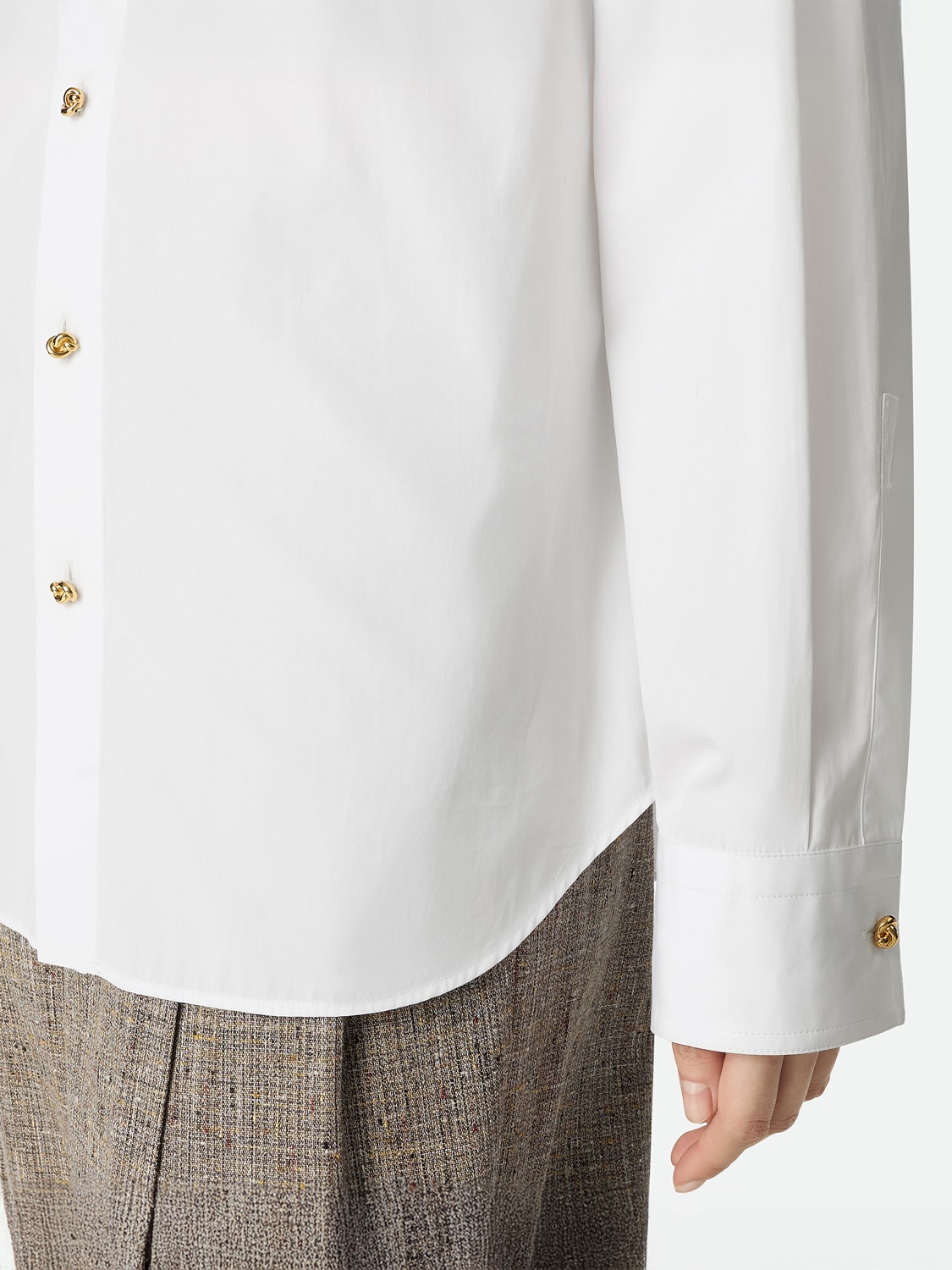
Sometimes, it’s nearly imperceptible: Hidden embroidery referencing archival motifs, custom buttons cast in the brand's signature hardware. These are intentional choices designed to convey identity without broadcasting it.
THE VERDICT
After digging into what goes into luxury shirts – fabric, construction, finishing – some price differences make sense. You can genuinely feel the upgrade.
But quality typically plateaus before four figures. Once a shirt crosses S$1,000, you’re largely paying for the name, design vision, and the emotional currency of owning something collectible. That’s not necessarily a bad thing, after all, fashion has always been about fantasy – but it’s good to recognise it for what it is.
As Chung puts it: “Off-the-shelf luxury brand shirts often have inflated prices due to branding or design, not a direct reflection on the actual quality, especially when most are mass-produced.”
If you’re after craftsmanship rather than a logo, you can find it for considerably less. Meiko Tailor offers custom shirts from S$230 for their house 100s two-ply cotton. “Our shirts are individually cut and sewn – that’s where the workmanship differs,” said Chung.
Even off-the-rack, labels such as COS, In Good Company, and Uniqlo U deliver smart cuts in substantial cotton. You lose hand-stitched buttonholes and mother-of-pearl buttons, but gain solid construction at accessible prices.
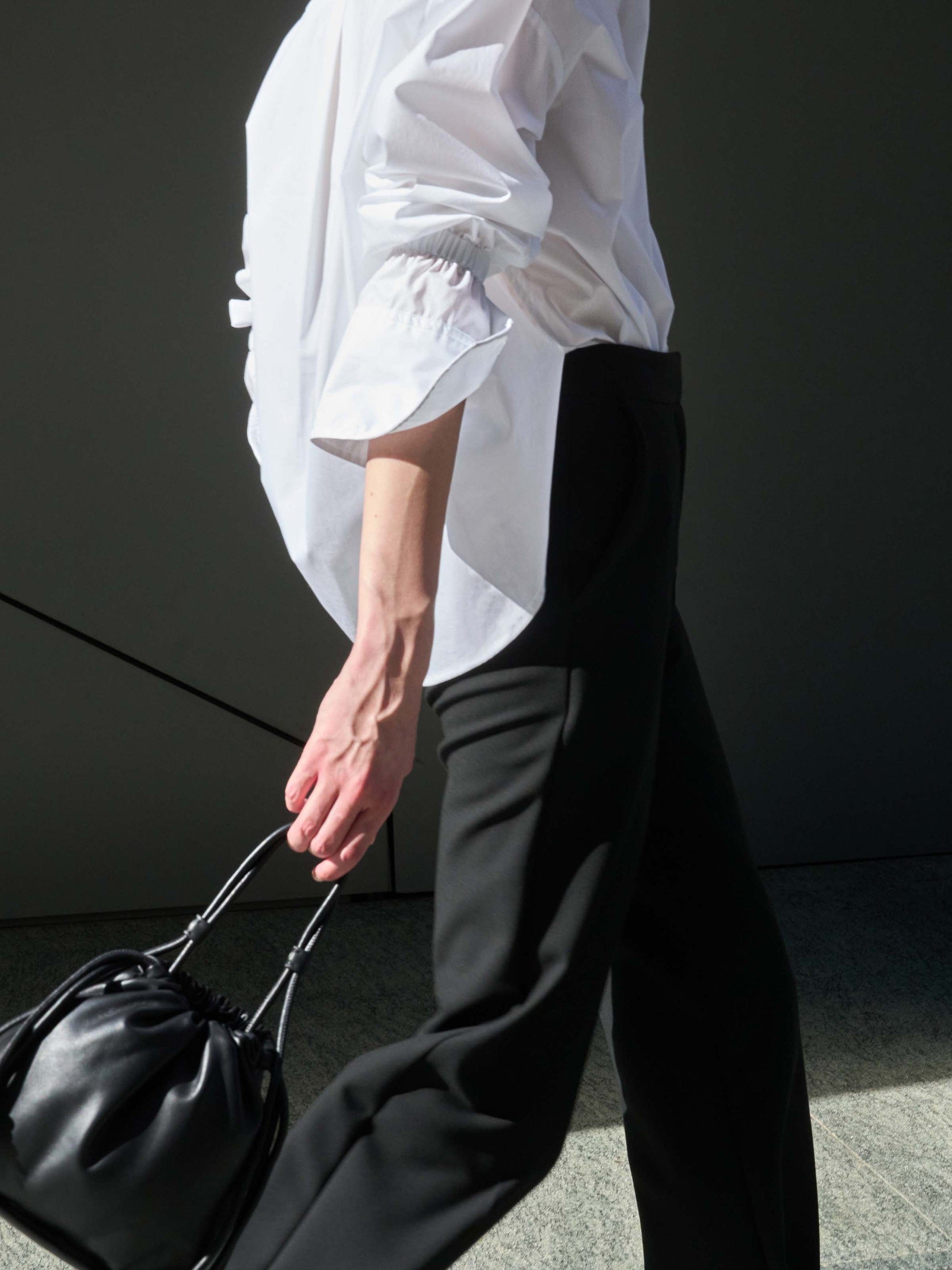
So unless you’re collecting fashion history or truly want a specific designer’s vision, the premium may not be necessary. If you care about weave, drape, and perfect collar sit, you can absolutely find all that without the luxury markup.
HOW TO SPOT A GOOD SHIRT
Feel the fabric. Run your hand along it – it should feel smooth but not slippery, dense but breathable. “Check if it has a good drape,” said Chung. “If it feels hot or traps heat easily, it’s likely not suitable for our weather.”
Check the shoulder. “Make sure it sits well, without any pull at the back or fabric bunching,” she advised.
Test the collar. Fold and unfold it – does it roll gently, or feel glued into place? The best collars keep their shape without being stiff.
Examine the seams. Look for neat, flat interior stitching. If you see loose threads or puckering, it won’t age well.
Mind the fit. A shirt that skims rather than squeezes always looks more polished. If it’s not quite perfect, bring it to a tailor. “Alterations such as nip-in or let-out sides, adjusting sleeve length, shirt length or adding in or taking out darts or slight adjustment to the shoulder can improve fit, proportion and silhouette,” explained Chung.
Know your mills. Certain shirtmakers that use fabrics from Albini, Alumo or Thomas Mason often state it on their tags or product pages – proof that you’re paying for substance.