Are six-pack abs a real sign of fitness? Here’s why just doing sit-ups and crunches won’t cut it
Been training for ages but still can't see your abs? Find out why they're so hard to achieve and why a strong core is more important than a chiselled midriff.
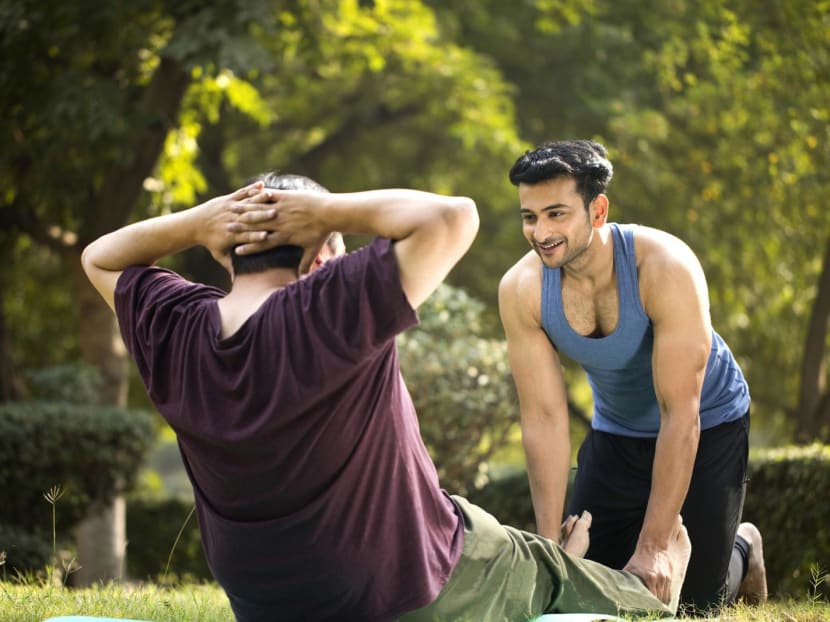
(Photo: iStock/triloks)

This audio is generated by an AI tool.


We’re pretty hard on how our tummy looks, aren’t we? Too protruding, too saggy, too wrinkly… it’s always doing too much and not in the way we want. Six-pack abs? Nah bruh, it’s giving one big, united parcel of abdominal fat instead. But why are we so obsessed with abs ripped enough to scrub clothes on in the first place?
“My personal opinion would be that ‘six-pack abs’ is visually appealing, and it’s often seen as a sign of a strong and fit individual with a well-maintained physique,” commented Dr Nicholas Leong, an associate consultant sports physician with Tan Tock Seng Hospital’s Department of Orthopaedic Surgery.
“The entertainment industry, mainstream media and social media also tend to promote the idea that ‘six-pack abs’ represents physical attractiveness, and this can be seen on movie stars with this physique in leading roles on the big screen,” he added.
If you’re a gym-goer, torching belly fat would most certainly top your list of fitness goals. But really, are ripped abs a hallmark of fitness? We find out.
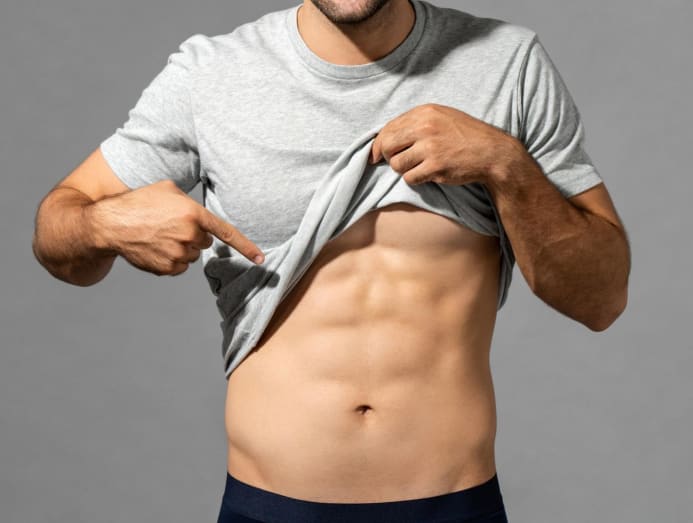
WHAT ARE THE MUSCLES THAT MAKE UP “SIX-PACK ABS”?
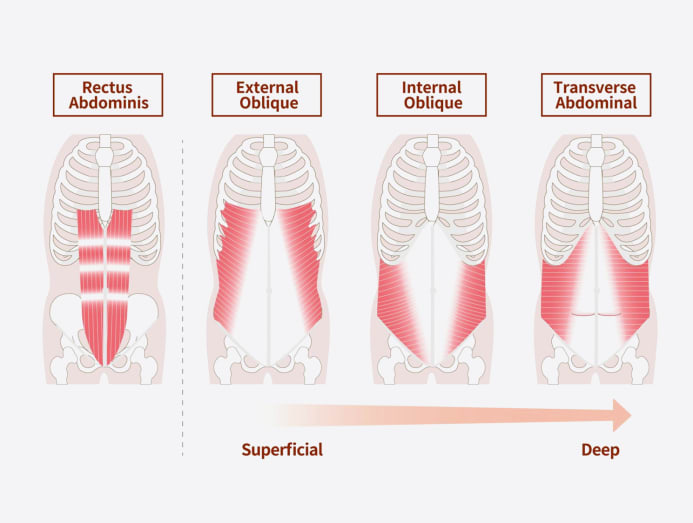
If you scraped away all that abdominal fat, the first layer of muscles you’d see is the rectus abdominis running vertically down the middle of your abdomen.
“The ‘six packs’ is the rectus abdominis that all of us have, and is part of our core muscle group that is crucial for maintaining our posture and performing day-to-day activities and sporting movements efficiently,” said Dr Leong. “It is not something that we lack, just not visible.”
The rectus abdominis is divided down the middle by a connective tissue known as linea alba, explained Joy Ong, a physiotherapist with Singapore General Hospital. The rectus abdominis is further segmented by fibrous bands called tendinous intersections, giving you the appearance of an opened durian showing four to eight segments.
“The number of visible segments depends on how many tendinous intersections a person naturally has, which is genetically determined,” said Ong.
Of course, other than the rectus abdominis, there are other abdominal muscles that make up your core, including the external obliques, internal obliques and the deeper transversus abdominis (or transverse abdominal) and pelvic floor muscles, that provide stability, support movement and aid in breathing.
ARE CHISELLED ABS A SIGN OF A STRONG CORE?
Not necessarily, said Lynn Yee, the principal physiotherapist from Core Concepts. “It’s what you see when body fat percentage is low and muscle tone is high,” she said, adding that “they don’t always reflect true strength or overall wellness”. “Someone can have very strong core muscles without visible abs, especially if there’s a layer of fat covering them.”
A strong core goes beyond aesthetics. Think of your core as a can, said Ong. “When all the muscles are engaged and functioning properly, pressure is evenly distributed and the ‘can’ is solid and strong.
“But if one part isn’t doing its job, the internal pressure becomes uneven – and just like a dented can, your body becomes vulnerable to collapsing under stress, often resulting in pain or injury, especially in the lower back,” said Ong.
LOW BODY FAT PERCENTAGE KEY TO TONED ABS? HOW LOW ARE WE TALKING ABOUT?
There is no magic number because “there is no evidence on an ideal range of body fat percentage that guarantees visible six packs,” said Ong. “It differs among individuals and relies heavily on diet, exercise and genetics.”
But if you’re curious, here’s what you're up against:
|
Body fat percentage: |
Body fat percentage: |
|
| Men | 10% to 22% | 10% to 12% |
| Women | 20% to 32% | 16% to 20% |
If you were a guy with a 22 per cent body fat, you'd need to lose at least 10 per cent of your body fat. Women, who naturally have a higher body fat composition, have it even tougher; they'll have to shed 12 per cent body fat to achieve those coveted abs.
As if that's not difficult enough, “with age, your body tends to hold more fat and skin elasticity reduces”, said Ong. “Older individuals may need to drop (even) lower in fat percentage to get the same definition.”
Even if you have a will of steel to stick to a fat-cutting programme, it may not be healthy for you. “Although a lower percentage may have more (abdominal muscle) visibility, it is challenging to maintain as fat is still needed for metabolic processes,” said Ong. “For some individuals, a very low body fat percentage may trigger physiological disruptions such as reduction in nutrients absorption, immunity, fertility and even bone health.”
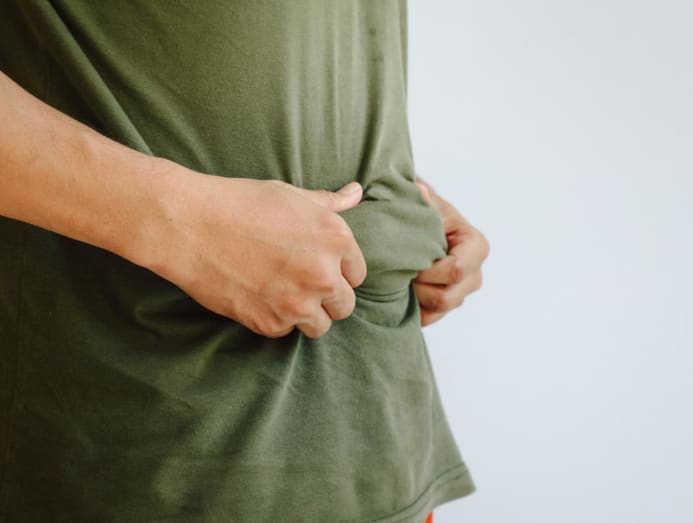
WHAT ELSE CAN THWART YOUR EFFORTS TO GET DEFINED ABS?
If you have been pregnant before, you might have diastasis recti, which makes it more difficult to achieve chiselled abs, said Dr Heng Tung Lan, a consultant obstetrician and gynaecologist from Ascensus Health.
“Diastasis recti is the separation of the rectus abdominis muscles along the linea alba, the connective tissue running down the midline of the abdomen,” explained Dr Heng. “It most often occurs during pregnancy when the growing uterus stretches the abdominal wall. Hormonal changes that soften the connective tissue, combined with increased intra-abdominal pressure, can weaken the linea alba, leading to this separation.”
Dr Heng explained that “the separated muscles are less able to generate tension across the midline, and the stretched connective tissue can cause persistent abdominal protrusion”.
The risk of developing diastasis recti increases with the number of pregnancies, especially when they are closely spaced. Dr Heng added that while there’s no fixed percentage increase with each pregnancy, studies show that up to 60 per cent of women may experience it postpartum. “Women with weaker core strength before pregnancy are more susceptible.”
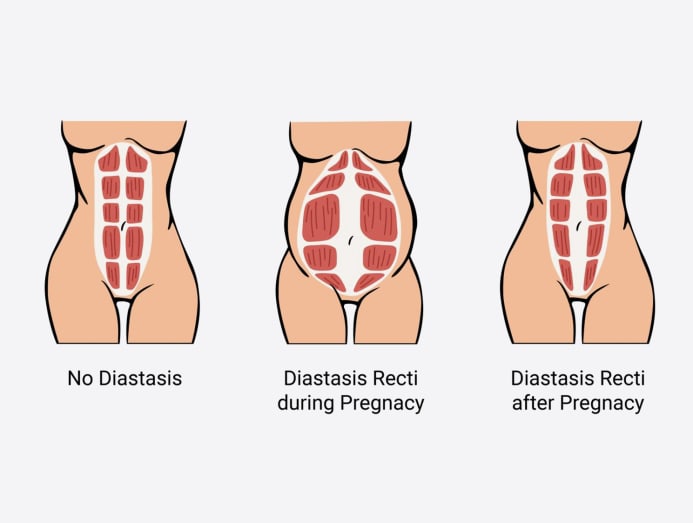
Men aren’t off the hook entirely when it comes to diastasis recti, “especially those who have experienced rapid weight gain, abdominal obesity or perform heavy lifting that increases intra-abdominal pressure”, said Dr Heng, as do those who have had a hernia before.
You can try this simple self-check at home: Lie flat on your back with your knees bent and feet flat on the floor. Lift your head slightly as if doing a small crunch.
“If there’s a visible bulge or a soft gap in the midline of the abdomen, especially around the belly button that measures more than about two finger-widths, it could be diastasis recti,” said Dr Heng. “A proper assessment by a doctor can help confirm the diagnosis.”
DOES DIASTASIS RECTI REQUIRE TREATMENT?
It depends on the diastasis recti’s severity, which a doctor would be able to assess. “Most cases are mild, asymptomatic and do not require treatment,” said Dr Heng, adding that they can often improve with core strengthening exercises that activate the transversus abdominis and pelvic floor muscles.
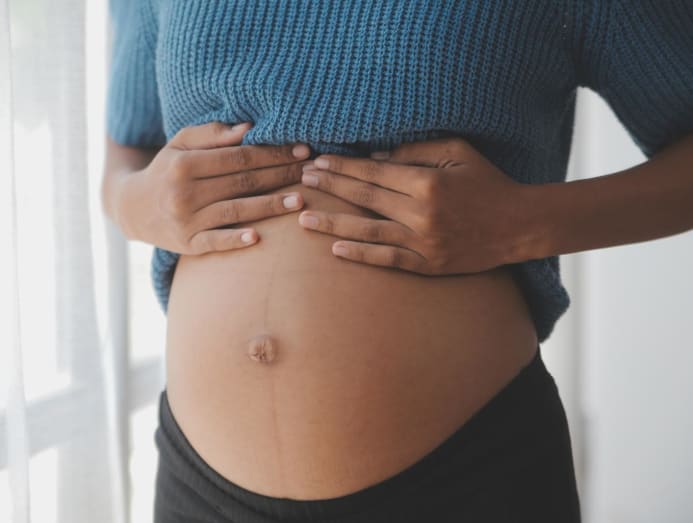
But don’t ignore more significant cases as they can lead to lower back pain, poor posture, pelvic floor dysfunction and continued abdominal bulging, she said. “High-impact exercises or traditional sit-ups may worsen the condition and should be avoided.”
Surgery may be needed if the gap is large, symptomatic or does not respond to physical therapy. For women, abdominoplasty or a "tummy tuck" is usually recommended only after they have completed childbearing, said Dr Heng.
WHY DON’T SIT-UPS AND CRUNCHES WORK?
It’s like trying to see the fish in a murky pond. Resistance exercises such as sit-ups and crunches can work on the abdominal muscles, including the rectus abdominis, said Dr Leong.
But when you still have a considerable layer of fat sitting on top of the muscles, the latter aren’t going to be very visible. “Fat above the muscles and below the skin (aka subcutaneous fat) would mask the borders of the rectus abdominis,” said Dr Leong. And that is why resistance training alone may not be sufficient to achieve visible six-pack abs, he said.
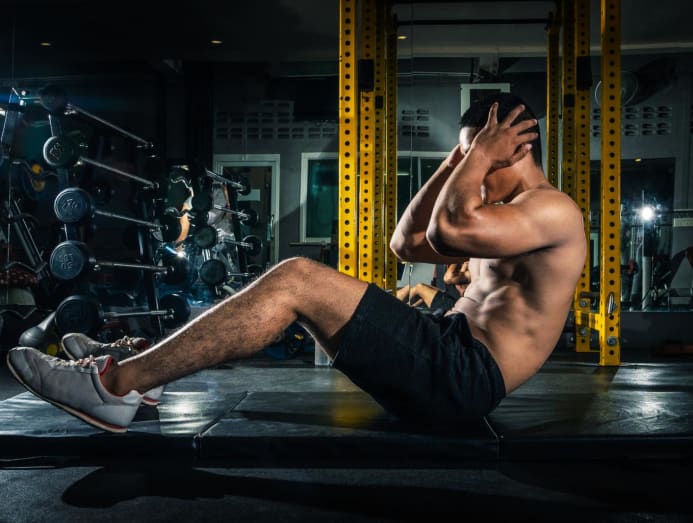
You’ll need a two-prong approach – and as a bonus, strengthens the core, too: Get 150 to 300 minutes of moderate intensity aerobic exercise per week, said Dr Leong. Then, hit your abs with core-targeting exercises such as sit-ups, crunches, lying leg raises, front planks and side planks performed on a cushioned mat to avoid abrasion and pressure-related pain, he advised.
Beginners can start twice a week, while the more experienced with no medical history can start by holding a forward plank for 20 seconds, perform 10 repetitions of sit ups and 10 repetitions of lying leg raises per session. “Progress on the time and repetitions when comfortable,” said Dr Leong.
If an acute and functionally limiting backache is making you say "no" to crunches and sit-ups, get your back evaluated by a general practitioner first, advised Dr Leong. If the discomfort is of "muscular origin such as a low back strain, some of these exercises would be helpful to improve the symptoms of backache".
While you’re at it, look into your diet, too. “Protein is an important fuel for muscle growth or hypertrophy, especially after they have been put through resistance exercise,” said Dr Leong, who recommended seeing a dietitian for a tailored dietary plan that is optimised for muscle growth.
And put away those salted egg potato chips; you want to achieve a negative balance of fat that you’re getting from doing cardio.