Sleep, swim, sweat – and still shine: 'Ouch-free' jewellery you never have to take off
These won’t irritate your skin or deteriorate quickly, making them better options for wearing around the clock.
(Photo: iStock)

This audio is generated by an AI tool.
We love our jewellery. So much so that some of us are reluctant to remove it, choosing to wear it into the shower, while working out in the gym and even to sleep.
One problem, though, is that it can be a tad uncomfortable wearing them 24/7, especially in bed – being awoken by piercing pain from the ends of your ear studs is not quite the same as waking up to the sweet aroma of freshly brewed coffee. Then there’s the wear and tear to worry about. Sweat from a killer workout, salt water or chlorinated water from a swim can damage your jewellery.
But if you are one of those divine creatures who simply cannot be seen without jewellery, there are options that are not restrictive to wear and are durable enough to stand up to the rigours of constant use. Here are some hardy, ouch-free options.
PERMANENT JEWELLERY
Clasps have long been an essential component of necklaces and bracelets, until someone came up with the idea of permanent versions of these.
Such bracelets and necklaces are termed “permanent” because they are welded close around your neck or wrist. Since they have no clasp, they are more comfortable to wear and are great for those who find it a chore to remove their jewellery on a daily basis.
Made with solid gold chains, they are typically more durable than gold-plated jewellery and stand up better to exposure to water and the knocks and bumps that come with long periods of wear. The only con is, since they have no clasp, they cannot be removed unless you cut them off.
MAGNETIC CLASPS
Don’t want to go “permanent”? Then try a necklace or bracelet with a magnetic clasp – these jewellery closures tend to have a more streamlined or rounded shape, as compared to typical hook-on clasps, and are, therefore, more comfortable on skin. They are also much easier to fasten and unfasten than traditional clasps, making them a safer choice for doing sports in.
FLATBACK EARRINGS
Huge, chunky earrings are, obviously, not ideal for sleeping, but even tiny studs can be seriously uncomfortable to sleep with. Imagine your earlobes squashed against the back of the ears when you’re sleeping on the side, there's a chance the posts of the studs can jab into the flesh – not a pleasant sensation.
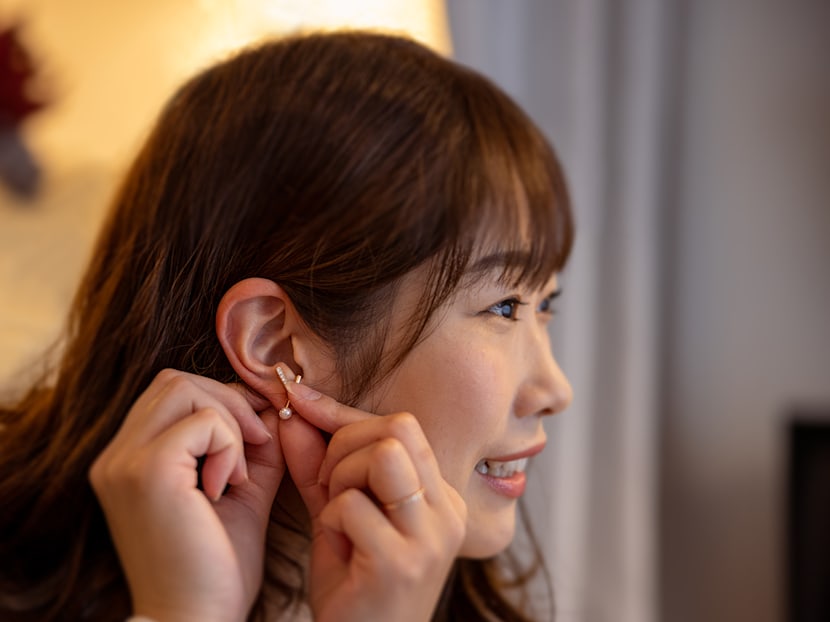
Try, instead, earrings with flat backs, which are compact and cover up the tips of the posts, so they cause irritation. These back screws are known to stay on securely, which means you can wear them in the shower or during activities like swimming. Flatback earrings typically come in a few standard post lengths, so that they suit piercings on lobes of different thickness, and also on various parts of the ear.
HUGGIE HOOPS
These tiny hoop earrings are compact, lightweight and wear closely around the earlobes (which explains why they are called huggies). In fact, they are so comfortable to wear that you’re likely to forget that they are on your ears. If you have multiple piercings on your ear, they're a great way to add variety and interest to your earring stack.
SLIP-ON BRACELETS
Bangles that slide on and off are effortless to wear, especially if you opt for a lightweight and minimalist style. Elasticised and adjustable bracelets are particularly ideal for wearing comfort since they can be loosened or tightened easily to suit one’s changing requirements.
SILICONE RINGS
For those who do a lot of sports, a silicone ring is a fun, skin- and movement-friendly choice to metal rings. Silicone is a rubber material that will flex when you bend your finger, but is also extremely durable. It’s also waterproof and chemically stable enough to withstand exposure to sweat, salt in seawater and chlorine in pool water.
We don’t recommend you go to sleep wearing rings (since your fingers might swell overnight) but if you must, a silicone ring could be more comfortable since it stretches and is less likely to result in constriction.
HINGED OR OPEN RINGS
Hinged rings are an invention that allows those with large knuckles to wear a ring of their ideal fit. These rings come with a hinge mechanism, which allows the ring shank to be opened and placed around the base of the finger directly, and do not have to be slipped over the knuckle.
Another departure from the closed-circle ring is the open ring, which features a gap or opening in the band. This design accommodates for slight size adjustments, particularly when fingers swell or shrink due to temperature changes.
HYPOALLERGENIC AND WATERPROOF MATERIALS
Certain metals can trigger skin allergies – nickel is the most common culprit among metals, which is why many jewellery brands avoid it.
If you have sensitive skin or intend to wear jewellery for long periods of time, wear only jewellery that are labelled nickel-free or hypoallergenic. Pieces made with gold, sterling silver or platinum are less likely to cause allergic skin reactions.
Avoid swimming in fine jewellery since solid gold or silver can discolour and tarnish from exposure to chlorine and seawater. If you are an avid swimmer, consider waterproof jewellery – typically made with stainless steel – as these are sweat-proof and therefore safer to wear while working out.